
Standards & Compliance
Slimline Windows in Bushfire Zones: BAL Ratings, Glass Thickness and Screens
By Sheng Xu · 2 October 2026
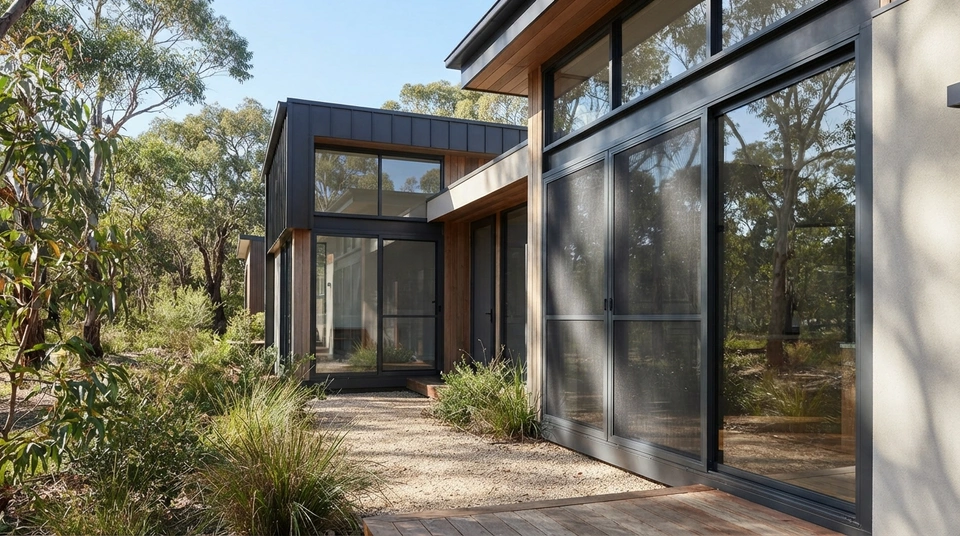
AI-generated illustrative image. Not a product test, certification record or project evidence.
Slimline aluminium windows can be used in bushfire prone areas, but frame width is not a BAL criterion. Compliance depends on the whole window system, either the AS 3959:2018 deemed-to-satisfy specification or a system tested to AS 1530.8.1. Under the deemed-to-satisfy summaries, windows need at least 5 mm toughened glass at BAL-29 and 6 mm at BAL-40, plus metal mesh screens on openable sections.
Slimline aluminium windows can be used in bushfire prone areas, but frame width is not what AS 3959 measures. The deemed-to-satisfy clauses summarised by NSW certifier My Building Certifier set the frame material, hardware, glass and screens for each Bushfire Attack Level, and they do not set a frame width. Compliance attaches to the whole window system, either by following those clauses or by using a system tested to AS 1530.8.1.
That makes a narrow sightline a question of evidence rather than eligibility. Thin sections, seals, glass size and installation details are exactly what a test report or a specification pins down, so the useful question is not whether a window looks slim, but which tested or specified configuration you are actually buying.
This guide is general information based on published summaries of AS 3959:2018. The BAL for your site, and the compliance route for your project, must come from an accredited bushfire consultant or your building certifier.
What does a BAL rating mean for a window?
A Bushfire Attack Level is a measure of the ember, heat and flame exposure a building site may face, and the National Construction Code uses it to set construction requirements, according to the NSW Rural Fire Service. CSIRO's bushfire best practice guide sets out the heat flux bands. BAL-12.5 is up to 12.5 kW/m2, BAL-19 is 12.5 to 19, BAL-29 is 19 to 29, and BAL-40 is 29 to 40, where flames from the fire front may intermittently contact the house. BAL-FZ is above 40, where flames are likely to engulf part or all of the house.
Two points matter for buyers. First, a BAL belongs to the site, not to a product. A window is described by the BAL level it is specified or tested to meet. Second, CSIRO describes BAL as a relative estimate of exposure rather than a precise measurement, and recommends an accredited bushfire consultant for help with BAL assessments.
Does a slim frame change BAL compliance?
Not by itself. For BAL-29 windows, the deemed-to-satisfy summary from My Building Certifier allows frames and joinery in bushfire-resisting timber, metal or metal-reinforced PVC-U, with metal external sash hardware. At BAL-40 it requires metal frames and hardware. Neither summary mentions a minimum or maximum frame width.
Where thin sections can matter is in how the whole system behaves under heat. Jensen Hughes, a fire testing laboratory, notes that thicker glass and frames generally perform better than thinner counterparts, and that combustibles such as seals and gaskets make good performance less likely. It also reports that point fixings can introduce weak points. A slim frame can still comply, but those details are what a test report or a specification needs to cover.
Thermally broken frames raise a further question because they contain a polymer strip. One Western Australian supplier states that thermally broken aluminium frames can be certified for BAL-40 through the tested pathway. We did not find a neutral source on how such frames are treated under the deemed-to-satisfy route, so ask the supplier for the test report rather than assuming. Thermal break performance itself is covered in our article on slimline aluminium windows and energy efficiency.
What are the three ways a window can comply?
Bushfire Design Consultants lists three options for BAL-29 and BAL-40 windows. The first is a system tested to AS 1530.8.1. The second is a window completely protected by a compliant bushfire shutter. The third is following the deemed-to-satisfy provisions of AS 3959:2018. Jensen Hughes notes that AS 1530.8.1:2018 covers BAL-12.5 to BAL-40, while AS 1530.8.2:2018 covers BAL-FZ.
The Australian Building Codes Board's bushfire handbook describes what the tests look for. A tested element must not develop an opening through which a 3 mm probe can penetrate, and must not sustain flaming for more than 10 seconds on the non-fire side during the test and monitoring period.
Because the result applies to the tested assembly, glass supplier Viridian points out that glass cannot be certified for bushfire resistance on its own. It adds that substituting frames or changing installation details may void compliance.
How thick does the glass need to be?
Under the 2018 deemed-to-satisfy text, as summarised by My Building Certifier and Bushfire Design Consultants, windows need toughened glass at least 5 mm thick at BAL-29 and at least 6 mm thick at BAL-40. Glazed doors need at least 6 mm at both levels. Where double glazed units are used, My Building Certifier's summary notes that the requirement applies to the external face of the window assembly.
Check which edition a source is quoting. The 2009 edition of AS 3959 required toughened glass of at least 5 mm for BAL-40 windows, so older documents and some online forum posts quote different figures from the 2018 summaries.
Large panes need extra care, which matters when slim frames are chosen to carry big areas of glass. One national aluminium window system supplier publishes BAL-40 test results with a maximum glass area. Its single glazed products are listed up to 4.50 square metres, with at least 8 mm toughened glass required above 2.90 square metres. Its larger double glazed assemblies need a 6 mm toughened, 8 mm air gap, 6 mm toughened combination. Those are one supplier's results, not a general rule, but they show that a rating depends on the tested size and glass build-up.
Low level glazing has its own rule at BAL-29. Bushfire Design Consultants states that window glazing within 400 mm of the ground, a deck or similar elements must be screened externally.
What do screens, mesh and hardware have to do?
Openable window sections need ember screens at every BAL level, according to Bushfire Design Consultants, using mesh or perforated sheet with an aperture of no more than 2 mm. At BAL-29 the mesh can be corrosion-resistant steel, bronze or aluminium. At BAL-40 it must be corrosion-resistant steel or bronze, and aluminium is not allowed. The same consultancy states that at BAL-40 all deemed-to-satisfy glazing must be protected by externally fitted screens, so fixed panes are screened as well as openable ones. My Building Certifier's summaries also require externally fitted sash hardware to be metal at both BAL-29 and BAL-40.
State and territory rules can add to this. My Building Certifier notes NSW variations under Planning for Bush Fire Protection 2019, and the 2016 edition of the National Construction Code included a South Australian variation barring aluminium mesh in window screens at BAL-19 and BAL-29. Confirm local requirements with your certifier. Our articles on security screen mesh and on AS 2047 cover mesh and window testing fundamentals, so they are not repeated here.
What should you ask before accepting a slimline BAL quote?
Ask for evidence for the exact window you are buying rather than a general statement that a range is bushfire rated. Weatherall, a Victorian window supplier, suggests five questions. What BAL is the product tested to, and does the certification name the testing authority and the tested configuration? Is the rating for the whole system rather than the frame alone? Does it cover the window type you want, since sliding, awning, fixed and hinged units may carry different ratings? What sizes are rated, because some suppliers reduce ratings on larger sizes? And are screens, mesh and seals included in the quote?
Add two more checks. Confirm the window will be installed as tested, since Viridian notes that changed installation details may void compliance. And check the same window against your other requirements, because a bushfire rating does not replace the energy rating or the wind rating. Our articles on slimline energy efficiency and wind ratings cover those, and the slimline buyer's checklist covers the wider quote questions. The fixed aluminium windows page explains the double glazed fixed window systems in more detail.
Frequently Asked Questions
Can slimline aluminium windows be BAL-29 rated?
Yes, if the specific window follows the deemed-to-satisfy clauses or has been tested to AS 1530.8.1 for that level. Frame width is not a criterion in the summaries from My Building Certifier and Bushfire Design Consultants, so ask for the certificate or specification for the exact configuration you are buying.
Do BAL-29 windows need toughened glass?
Under the deemed-to-satisfy pathway, yes. The 2018 summaries require toughened glass of at least 5 mm for BAL-29 windows. Systems tested to AS 1530.8.1 may be built differently, which is why the test certificate matters.
Do BAL-rated windows need screens?
Openable sections need a mesh screen with an aperture of no more than 2 mm at every BAL level, according to Bushfire Design Consultants. At BAL-40 under the deemed-to-satisfy route, fixed glazing is also protected by external screens. If you are buying a tested system, check the certificate to see which screens are part of the tested assembly.
Can I use double glazing in a bushfire zone?
Yes. My Building Certifier's summary says the deemed-to-satisfy requirements apply to the external face of a double glazed unit, and one supplier's published BAL-40 results include a 6 mm toughened, 8 mm air gap, 6 mm toughened unit. Confirm the exact build-up on the certificate for your window.
Next steps before you order
Start with the BAL for your site from an accredited bushfire consultant or your building certifier, then decide which compliance route you are using. Ask the supplier for the test report or specification before you order, and make sure the glass thickness, mesh material and screens in your quote match it. None of this replaces advice from a certifier who knows your site. Compliance with AS 3959 improves a building's chances in a bushfire but does not guarantee survival, as Weatherall notes in its summary of the standard.
Our Products
Fixed Windows
View system
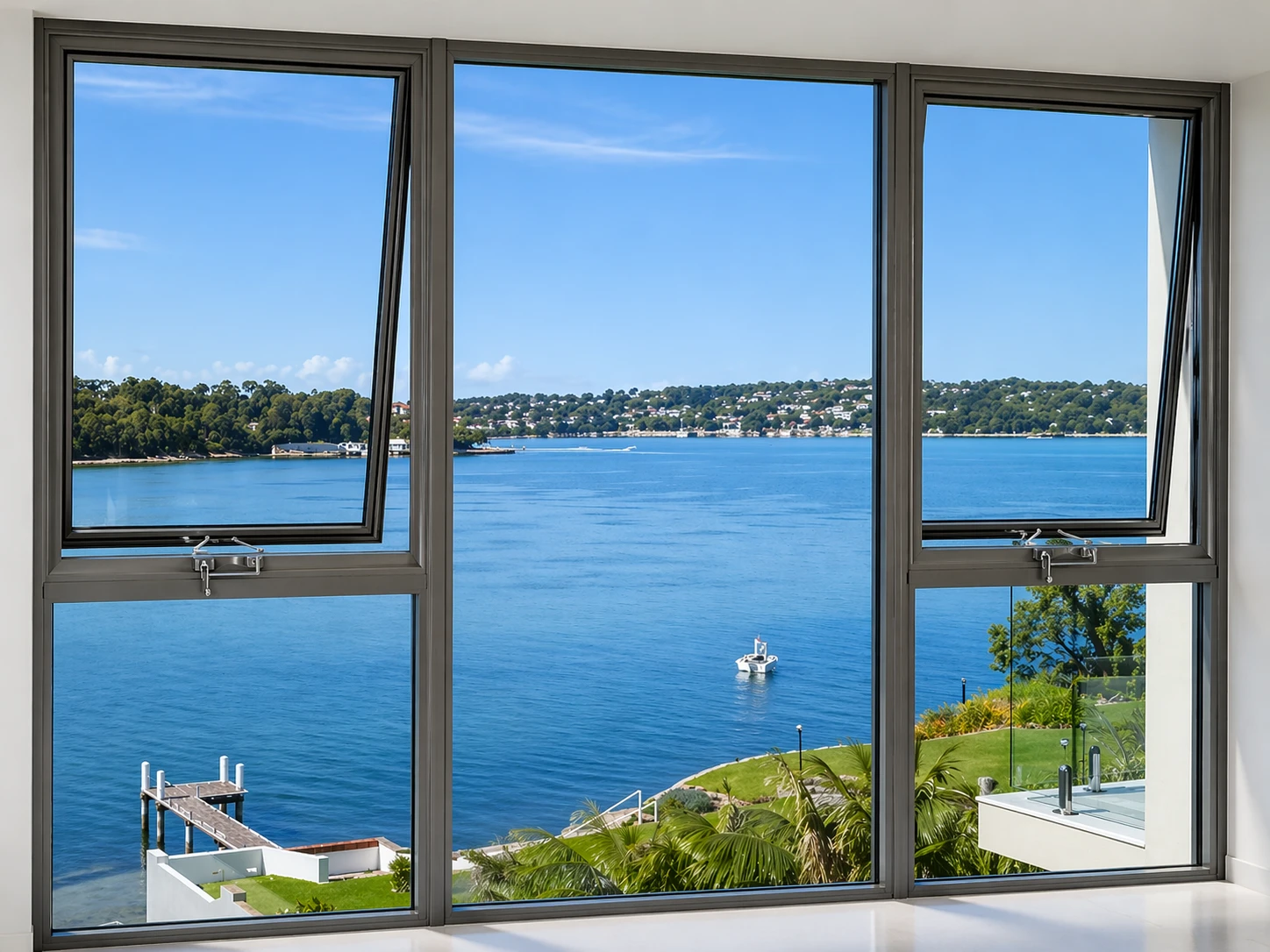
Awning Windows
View system
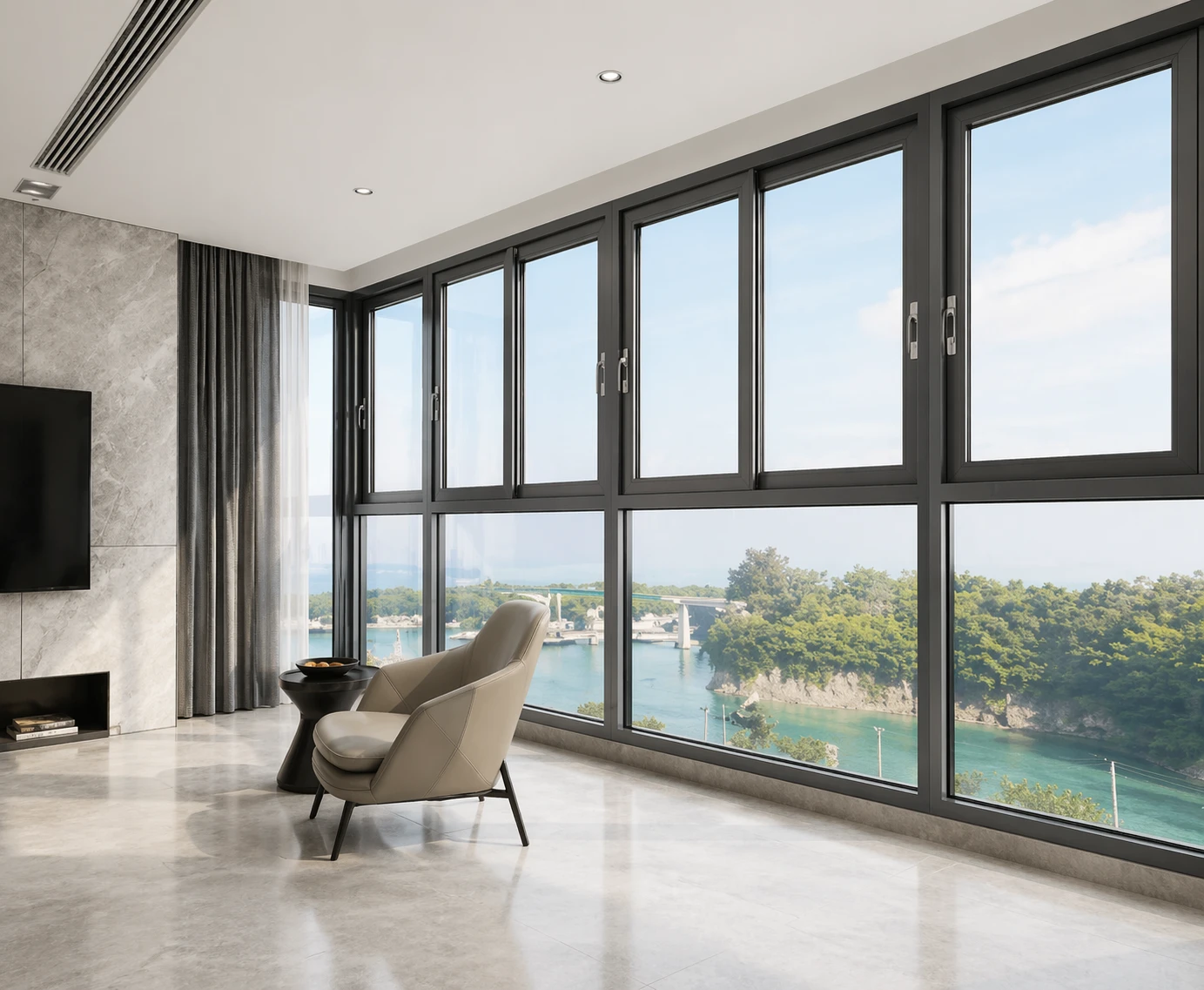
Sliding Windows
View system
Sliding Doors
View system
Stacker Doors
View system