
Industry Insights
Practical window and door Q&A for Australian projects.
Short answers on standards, glazing, energy performance, screens and project decisions, backed by selected industry sources and SMIRO project context.
Quick browse
Latest industry Q&A
Anti-dumping measure on aluminium windows
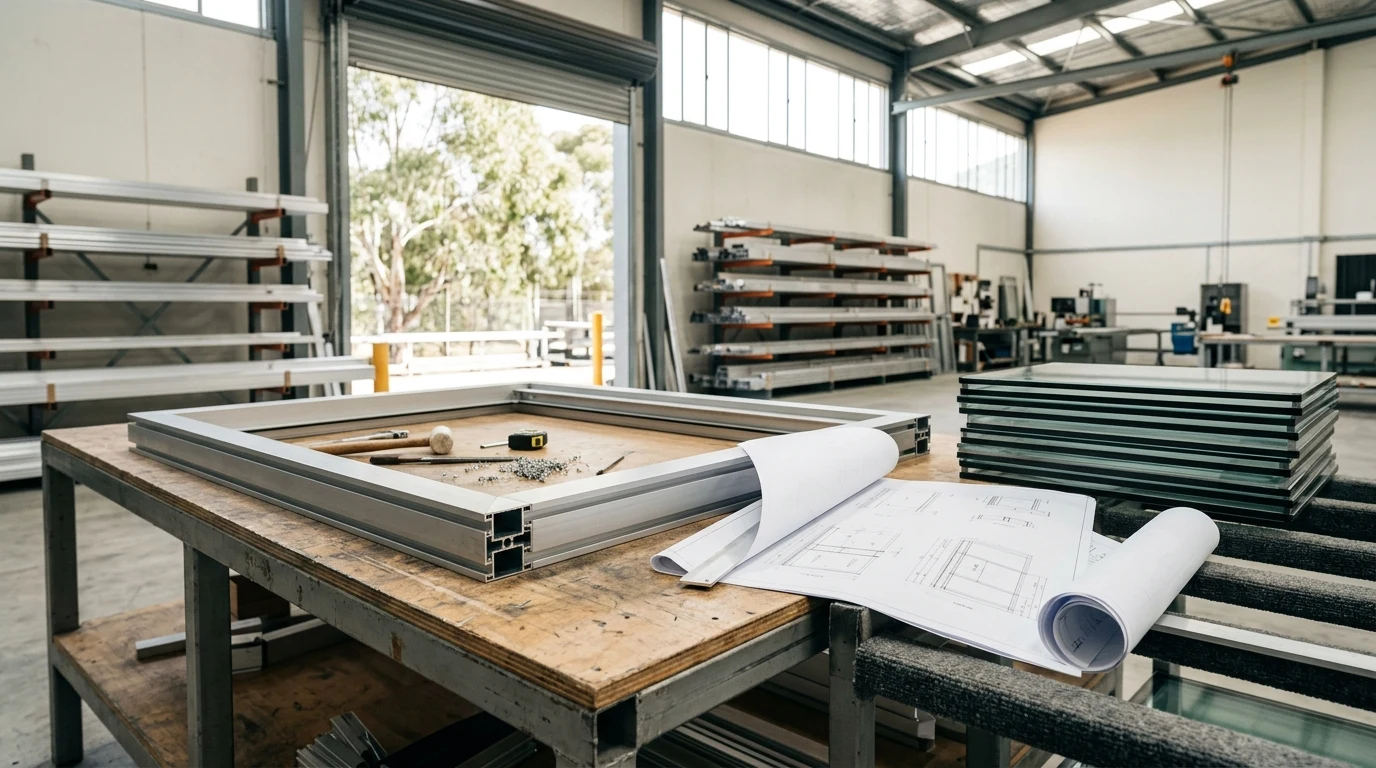
A preliminary determination in the Australian anti-dumping case covering aluminium windows and doors has introduced provisional securities on affected imports. Securities are set per exporter rather than as one rate across the board, so two suppliers shipping comparable product can face very different numbers, and importers must lodge the security at the border before goods are released. Provisional rates run from 5.3 to 73.3 per cent depending on the exporter, under Trade Remedies Notice TRN 2026/147. The determination is preliminary and the final outcome has not been confirmed.
Are Louvre Windows Worth It?
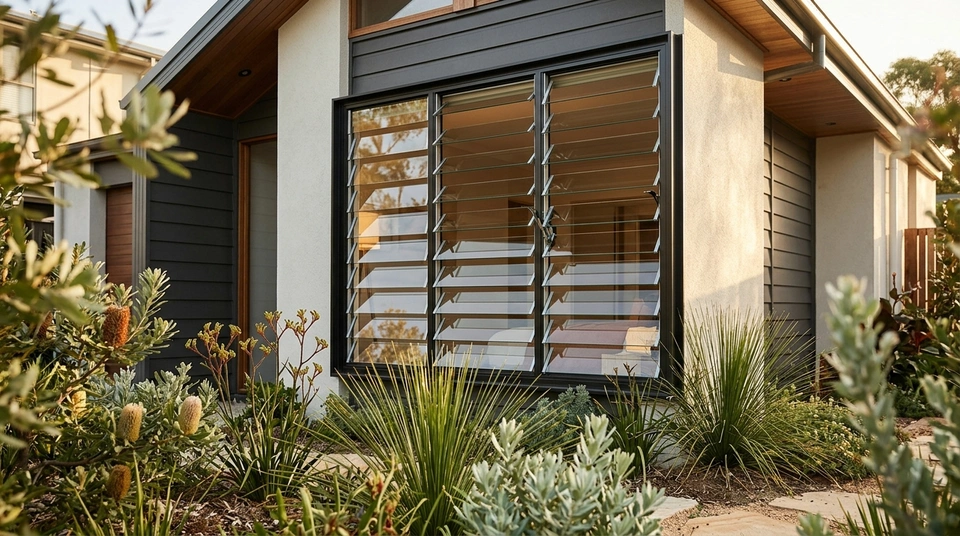
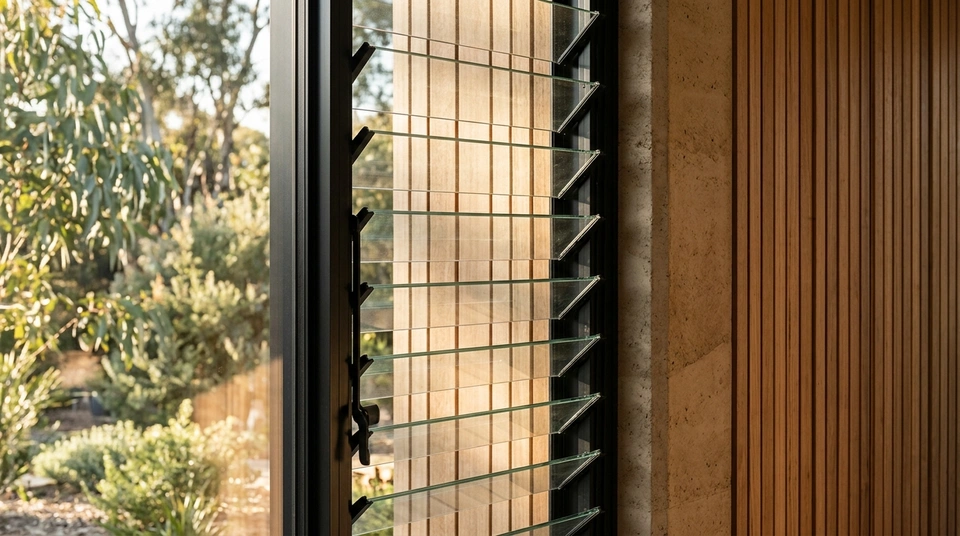
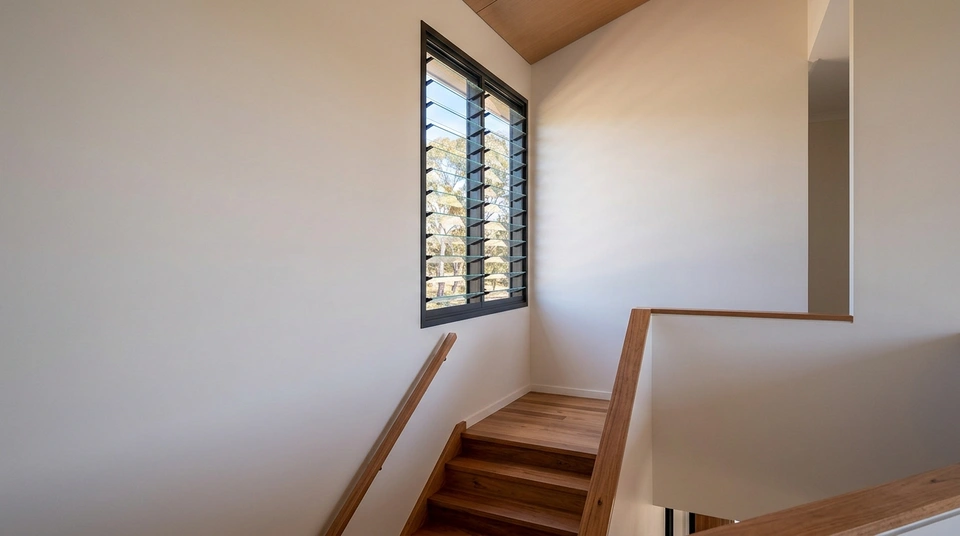
Louvre windows are worth it where airflow matters more than a perfect seal. YourHome rates a louvre's maximum opening at 90 per cent of the window, against 45 per cent for a slider and 20 to 30 per cent for a chain-wound awning, but closed louvres leak more air, heat and sound. They are the right window for bathrooms, laundries, kitchens, stairwells and warm-climate living zones, and the wrong one for a cold-climate bedroom or any ground-floor opening left unscreened.
Glass Louvre Windows: Blades & Security
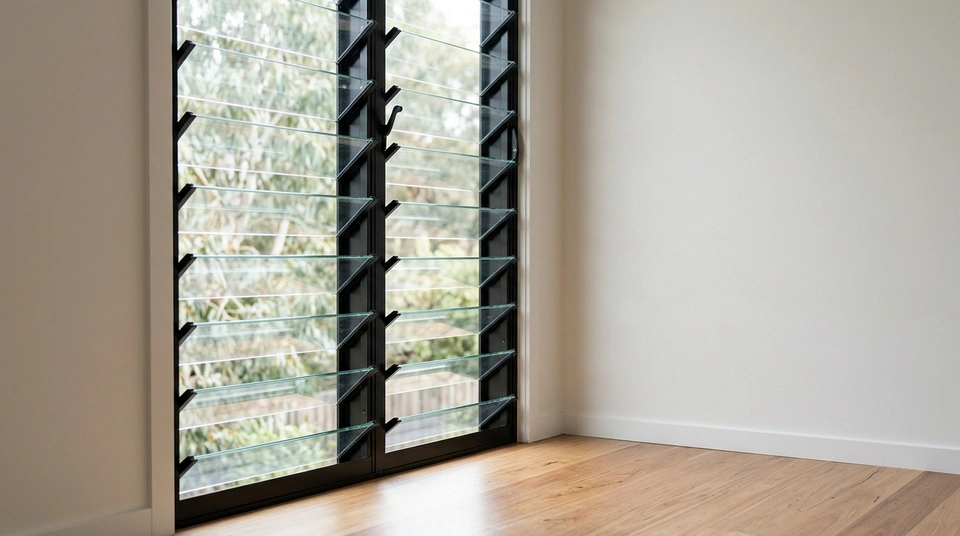
A glass louvre window is a gallery of horizontal blades held in clips that pivot together on a single lever. Each blade is a separate specification decision covering four things: the material it is made from, the glass inside it, its height, and the clip that holds it. Blade material and blade retention are what decide daylight, privacy and security; none of them change how much air the window moves.
Louvre Windows Cost & Sizes
A louvre window has no single price, and the published Australian figures disagree mainly because some are supply-only and some are supplied and installed. Airtasker's 2026 aluminium window guide prices a louvre at $300 to $600 supply-only, while DABSCO's Darwin 2026 guide prices one at $600 to $1,100 supplied and installed. Height is set by blade count multiplied by blade pitch, so sizes are chosen as standard gallery heights rather than a fixed product size.
Louvre Windows for Passive Cooling
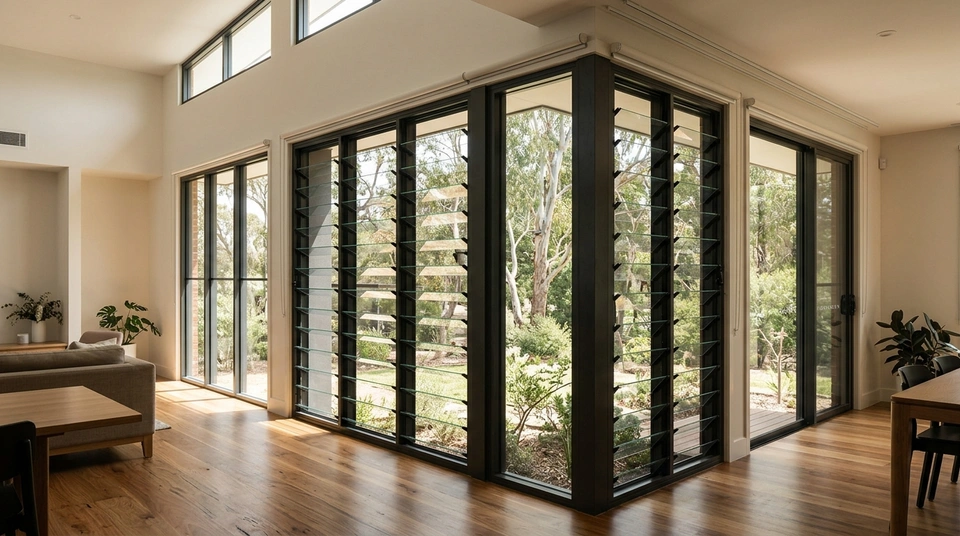
Louvre windows are the highest openable-area window in the residential range, which makes them the strongest ventilation and night-purging tool available for passive cooling. YourHome rates a two-pane louvre at 90 per cent maximum opening against 45 per cent for a sliding window. High level louvres act as the outlet half of a stack, louvres above internal doors keep a breeze path alive, and a louvre paired with a sliding or stacker door creates the inlet and outlet that cross ventilation needs. The trade-off is airtightness: SMIRO's louvre is non-thermal-break with a whole-window U-value of 3.5 to 5.5 W/m2K, so it is a summer asset and a winter liability in mixed and heating-dominated climate zones.
NCC Natural Ventilation: 5% Rule & Louvres
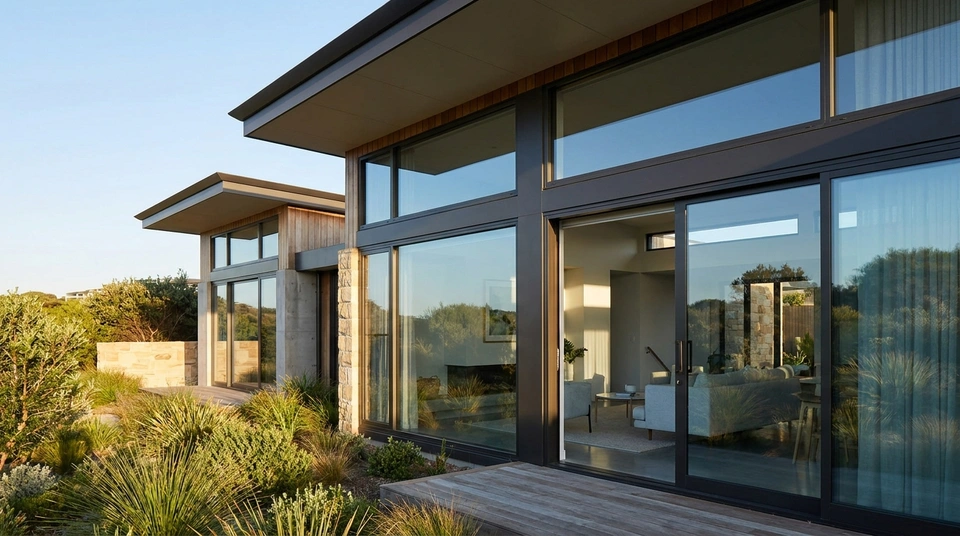
The NCC natural ventilation requirement is an openable area of at least 5 per cent of the floor area of the room being ventilated, set out in ABCB Housing Provisions Part 10.6.2 for houses and Volume One F6D7 for everything else. The Code measures that area as the openable sash, regardless of window type, which is why a louvre clears the test with far less window than an awning or a slider. It is a geometric area test, not an airflow or weathertightness test, and on an exposed or apartment facade the water performance has to be resolved separately.
Does Double Glazing Keep Heat Out in Summer? What You Need to Know
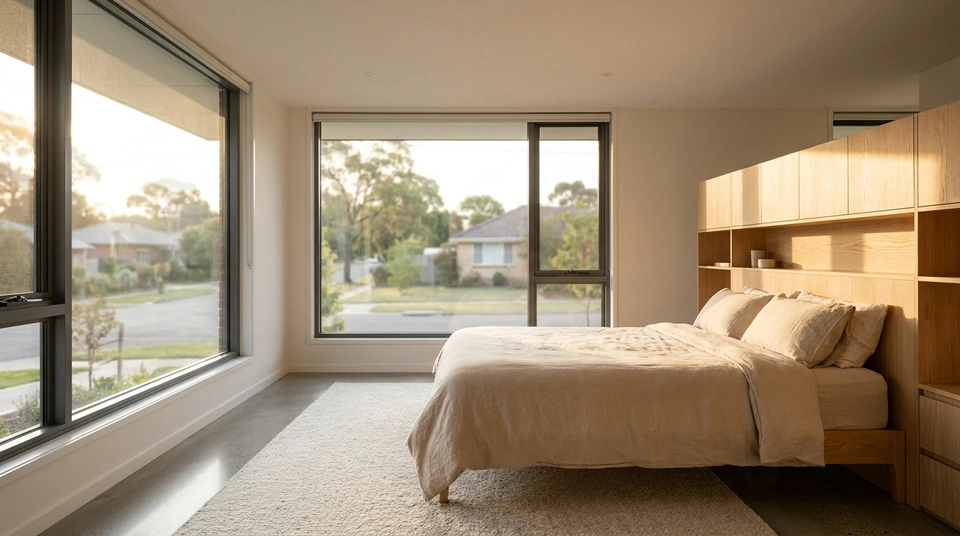
Yes, double glazing keeps conducted ambient heat out during summer, but standard clear double glazing does not stop direct radiant sunlight on its own. While double glazing cuts conductive heat transfer by over 50% (insulating against hot 40°C outside air), clear double glazing allows up to 77% of direct solar radiation (SHGC 0.70–0.77) to pass inside. Once solar heat enters, the insulating glass traps it indoors, creating a greenhouse effect. To effectively block summer heat in Australian homes, double glazing must be paired with a solar-control Low-E coating, tinted glass, or proper external architectural shading.
Does Double Glazing Reduce Noise? Acoustic Ratings Explained
Yes, double glazing reduces noise, but the extent of soundproofing depends heavily on the glass configuration. Standard symmetrical double glazing (e.g. 5/12/5) reduces sound transmission by roughly 25% to 30% (Rw 31–32 dB), muffling speech and suburban ambient sounds. However, to cut perceived traffic and street noise in half (a 10 dB improvement), windows require an acoustic glass make-up—incorporating asymmetric glass thicknesses (e.g. 6mm + 4mm) or an acoustic laminated PVB interlayer (e.g. 6.5mm acoustic laminate), which pushes certified sound reduction to Rw 36–38+ dB.
Double Glazed Stacker Doors Glass Guide
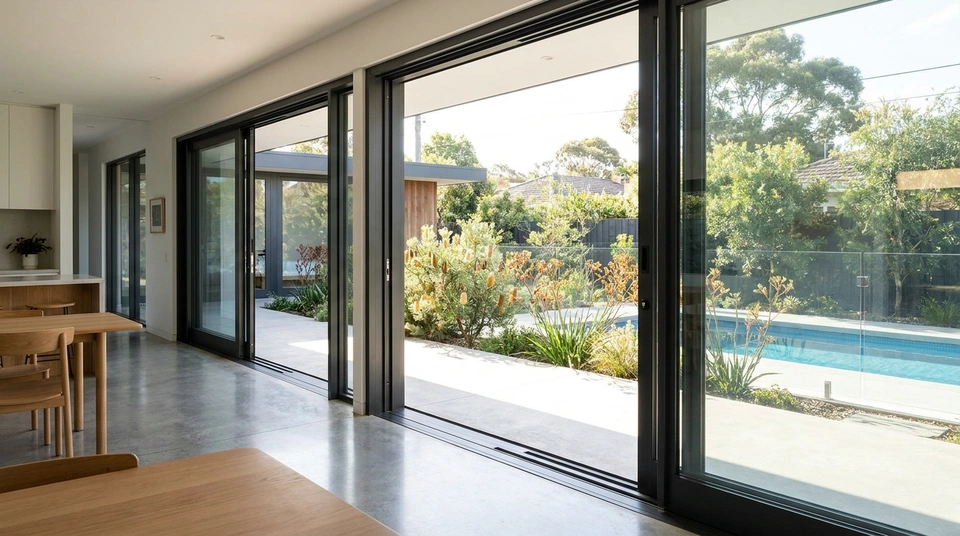
When specifying double glazed aluminium stacker doors under NCC 2022 7-star NatHERS mandates, energy assessors evaluate certified whole-window ratings (Uw 2.5 to 3.5 W/m²K and SHGCw 0.38 to 0.65 for high-performance non-thermally broken systems like SMIRO Vista 187 and Urban Reinforced 240) rather than isolated glass center-of-glass ratings. For acoustic attenuation, standard symmetrical double glazing achieves Rw 31 to 32 dB; blocking traffic noise requires asymmetrical glass thicknesses or acoustic laminated glass to reach Rw 35 to 38 dB. Crucially, higher glass thickness increases areal mass (25 kg/m² for standard 5+5mm up to 42 kg/m² for heavy acoustic laminates), capping maximum permissible panel dimensions on standard 80kg roller carriages.
Double Glazing Condensation: Inside, Outside or Between Panes
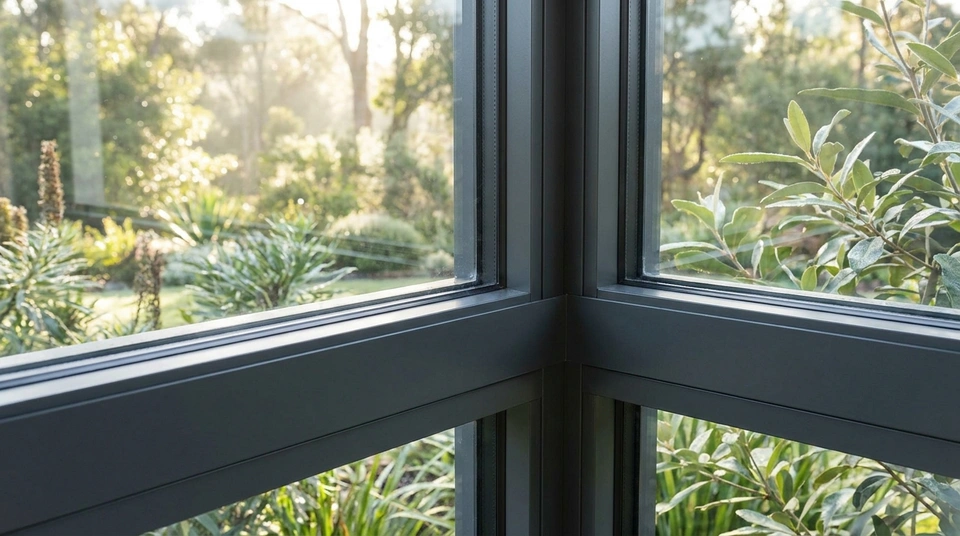
Condensation on double glazed windows occurs in three distinct locations, each with a completely different diagnostic meaning. Exterior condensation (outside face) is proof of superior thermal insulation—indoor heat is being kept inside, leaving the outer pane cold enough for morning dew to form. Interior condensation (room-facing glass) indicates high indoor relative humidity and poor ventilation contacting glass or aluminium below the dew point. Condensation between the panes (misting or fogging in the cavity) confirms hermetic seal failure under AS 4666; the unit is permanently compromised and must be replaced.
Double Glazing vs Single Glazing: Australian Comparison Guide
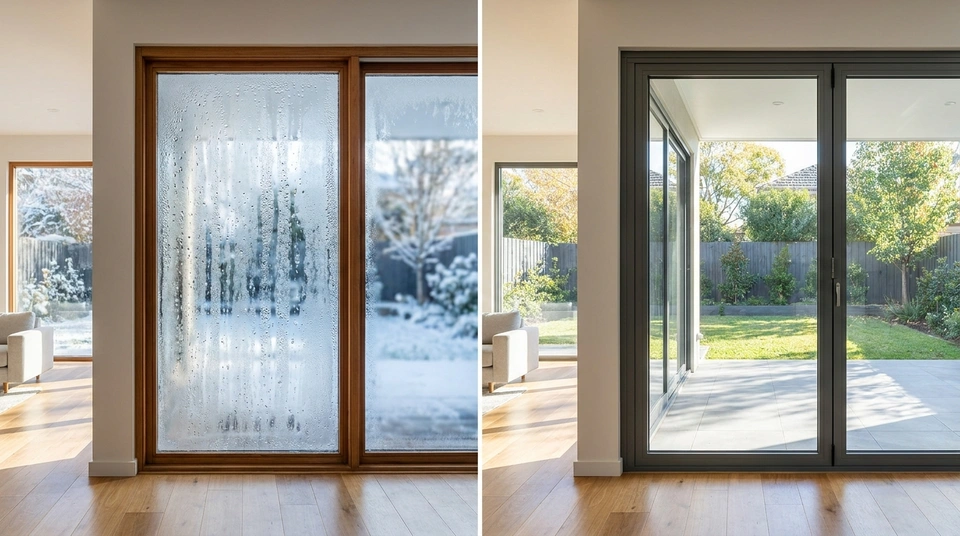
The primary difference between single and double glazed windows lies in their construction and thermal performance. Single glazed windows consist of a single sheet of glass (3mm to 4mm) that allows heat, noise, and condensation to pass through easily. Double glazed windows incorporate an Insulated Glass Unit (IGU) featuring two panes of glass separated by a hermetically sealed argon gas cavity. In Australian homes, upgrading to double glazing cuts conductive window heat loss by 50% to 60% (reducing certified whole-window Uw from ~6.5 down to ~2.8–3.5 W/m²K), raises the interior glass temperature to eliminate winter condensation, and dampens outside noise by 3 to 10+ decibels.
Double vs Triple Glazing in Australia: When the Third Pane Pays Off
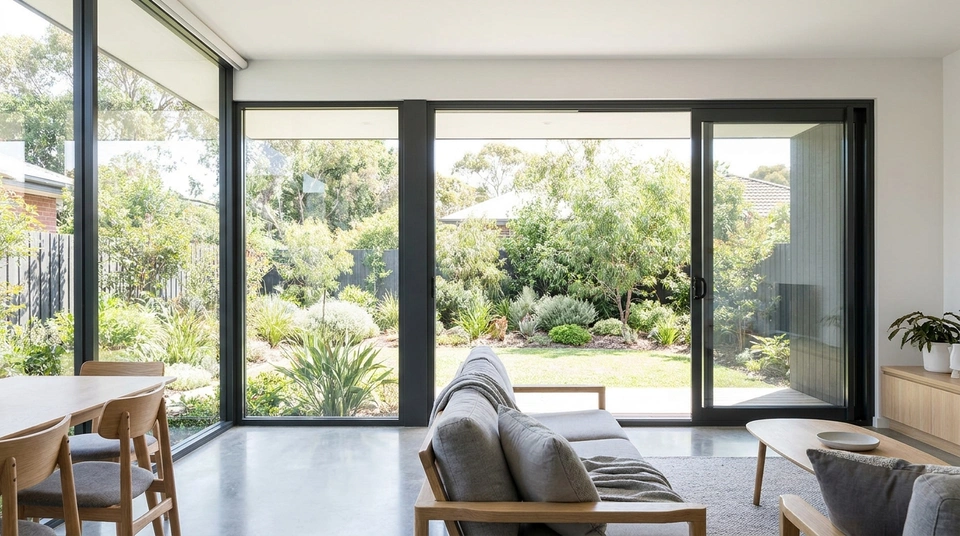
For the vast majority of Australian homes, well-specified double glazing—featuring quality aluminium frames, argon gas fill, and orientation-matched Low-E coatings—is the practical, high-performance sweet spot. Triple glazing adds a third pane of glass and a second sealed cavity, pushing whole-window U-values down to 0.8–1.4 W/m²K. However, due to its 35% to 50% price premium, 50% higher weight (placing strain on operable hardware), and reduced winter solar heat gain on north-facing glass, triple glazing is primarily justified in alpine regions (Climate Zone 8), extreme cold highlands (Canberra/Zone 7), or certified Passive House builds.
How Long Does Double Glazing Last? Lifespan & Seal Care
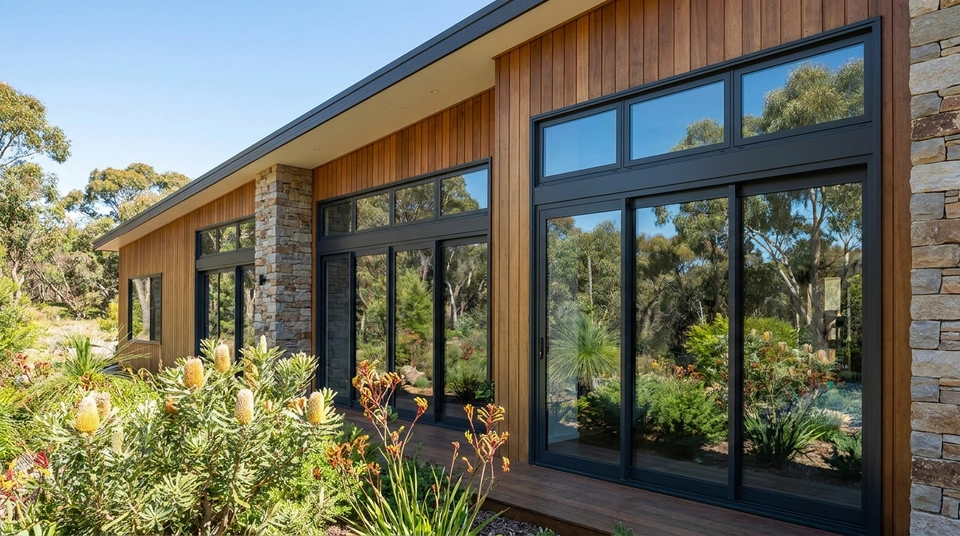
In typical Australian residential conditions, quality double glazed windows last between 20 and 30+ years. A window is an assembly of components with different lifespans: architectural powder-coated aluminium frames last 50 to 60+ years, while the Insulated Glass Unit (IGU) hermetic seal has an expected service life of 20 to 30 years (warranted for 10 to 15 years). When an IGU eventually fails due to seal degradation after decades of service, the window frame does not need to be removed—a glazier simply unclips the glazing beads and replaces the glass unit alone at a fraction of the cost of full window replacement.
How Much Does Double Glazing Cost in Australia? (2026 Price Guide)
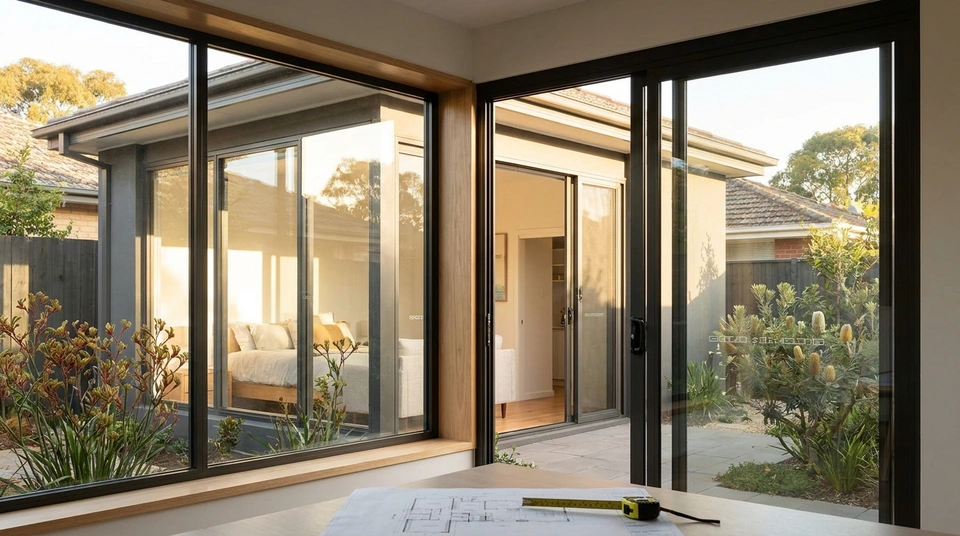
In Australia in 2026, standard aluminium double glazed windows typically cost between $700 and $1,600 per window fully installed ($350 to $800 supply-only). Thermally broken aluminium double glazing ranges from $1,100 to $2,500 per opening installed. For a complete whole-home replacement on a typical 3-to-4 bedroom house (10 to 15 windows), total installed project budgets generally range between $15,000 and $35,000+, depending on window styles, glass make-ups, frame materials, and installation complexity.
Is Double Glazing Worth It in Australia? Pros, Cons & Real ROI
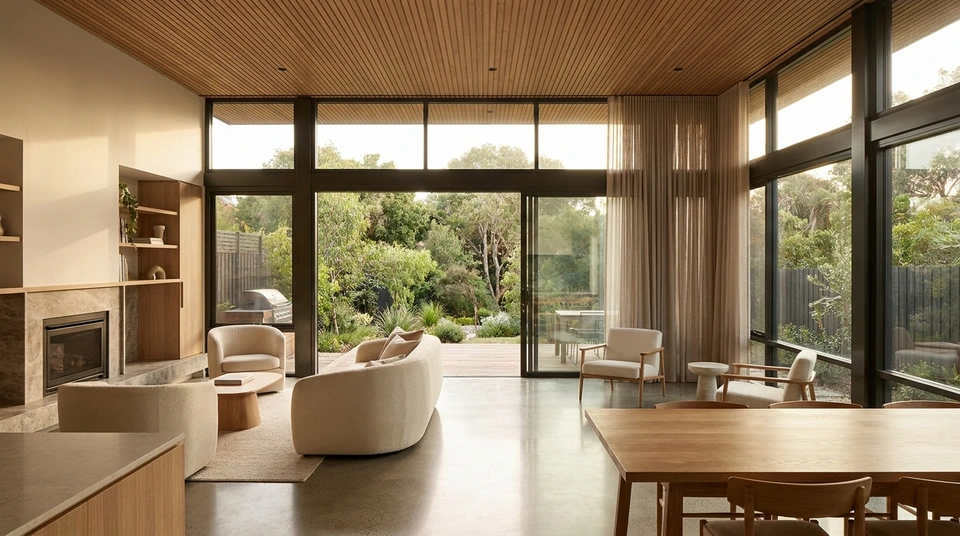
For most Australian homeowners, yes—double glazing is worth the investment, particularly in new builds facing NCC 2022 7-star NatHERS mandates and in temperate or cold climates (Melbourne, Canberra, Hobart, Sydney, Adelaide). However, evaluating double glazing strictly as an electricity-bill investment is misleading: power bill savings alone ($200 to $600 annually) yield a payback period of 10 to 20+ years. The primary, immediate value lies in unmatched daily thermal comfort, complete elimination of winter window condensation and mould, acoustic quiet, and increased property resale value.
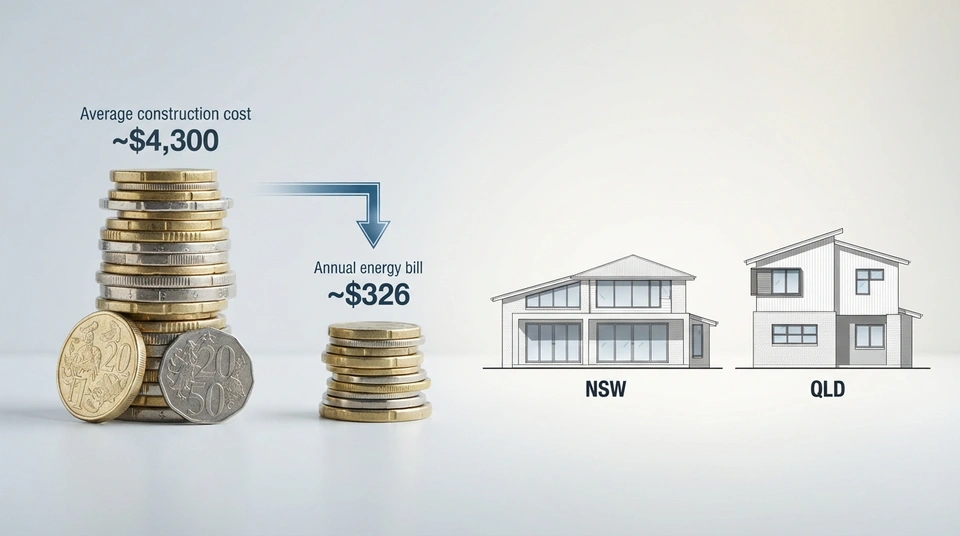
7-Star Homes: Costs, Savings, State Compliance
New homes built to NCC 2022 7-star standards typically incur an average additional cost of $4,300, offset by annual energy bill savings of around $326. States like NSW have seen increased double glazing use, while Queensland achieved compliance with more modest cost increases by optimising window design and maintaining existing home sizes, often without requiring double glazing. These approaches influence window and door specifications for energy performance.
Retrofit Double Glazing vs Replacement: Australian Guide
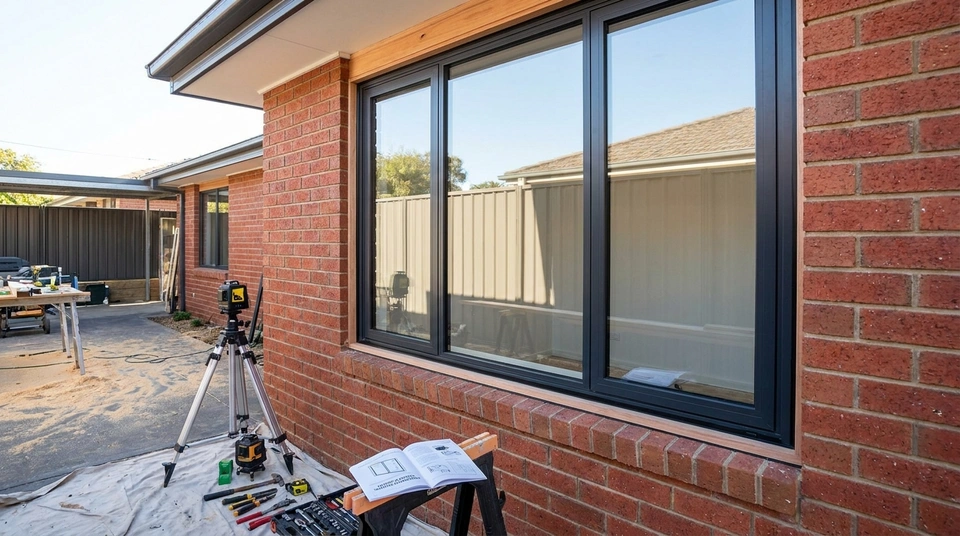
Yes, you can double glaze existing windows in Australia through two methods: retrofit double glazing (inserting a slimline IGU into existing timber or deep aluminium frames for $550 to $1,100 per window) or secondary glazing (adding an independent internal pane for $400 to $850 per window). However, if your existing frames are older single-glazed aluminium (which lack the rebate depth for a full IGU and conduct heat readily) or have worn, drafty seals, full turnkey window replacement ($800 to $2,000+ per window) is the superior long-term investment, delivering brand-new AS 2047 airtight frames, matched thermal performance, and a 30+ year lifespan.
Stacker Door Screens & Security Guide
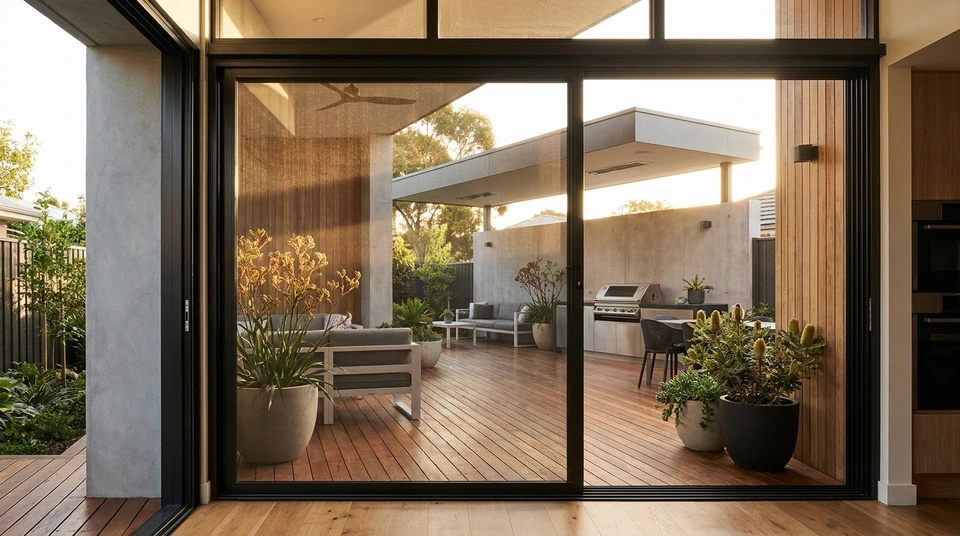
Screening an aluminium stacker door is an architectural rough-in decision, not an afterthought. Homeowners can specify integrated multi-track sliding screens that run on dedicated parallel outer tracks (expanding frame depth from 150mm–187mm up to 200mm–240mm, as in the SMIRO Urban Reinforced 240 series) or retractable cassette screens that pull horizontally across the opening. For rigid sliding screens, panels exceeding 1200mm width require a horizontal spreader bar at 1050mm to maintain mesh tension. Upgrading to 0.8mm 316 marine-grade stainless steel mesh (SMIRO's standard specification) delivers certified AS 5039 security protection with triple-point locks, pet resistance, and AS 3959 bushfire compliance up to BAL-40.
Stacker Door Sizes & Dimensions Guide
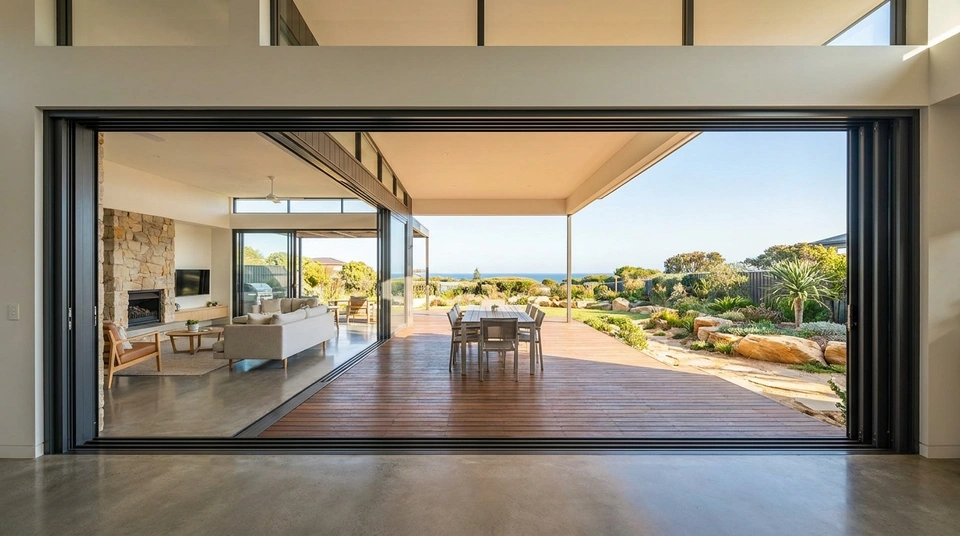
Standard aluminium stacker door sizes in Australia range from 2100mm to 2400mm in height (with architectural systems extending to 2800mm and 3100mm) and 2400mm to 3600mm in width for 3-panel doors, expanding to 4800mm to 7200mm for 6-panel centre-opening systems. Both 3-panel (XXO/OXX) and 6-panel (OXXXXO) configurations deliver a real net clear opening of approximately 63% to 66% of the total frame width once interlocking stiles, frame jambs, and door handle clearances are deducted. A 6-panel system doubles the overall opening span and creates a grand symmetrical walk-through, but does not increase the percentage of openable space compared to a 3-panel door.
Aluminium Stacker Doors Price & Cost Guide
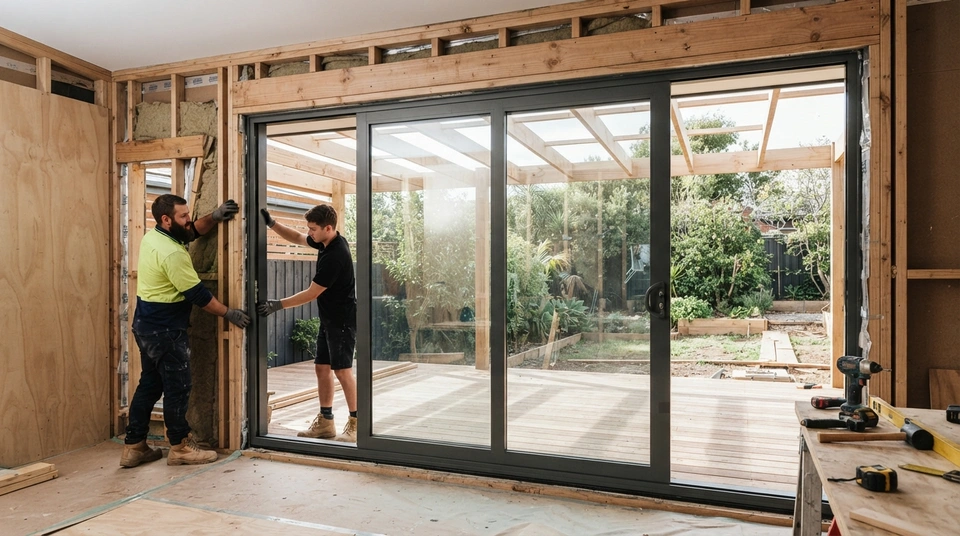
In Australia, supply-only prices for aluminium stacker doors range from $1,565 to $3,500 for standard 3-panel systems (2.4m to 3.6m wide) and from $2,800 to $6,500+ for 6-panel centre-opening systems (4.8m to 7.2m wide). Professional installation adds $800 to $1,800 for direct replacements, or $3,500 to $8,000+ if widening an opening with a new structural steel lintel. Panel count influences price as heavily as width because each extra moving panel adds specialized interlocking extrusions, precision rollers, and certified double glazing. Getting an accurate, binding quote requires supplying 7 essential inputs, including structural opening dimensions, panel handing, frame depth, glazing make-up, and screening specifications.
Stacker Doors vs Sliding vs Bifold Doors
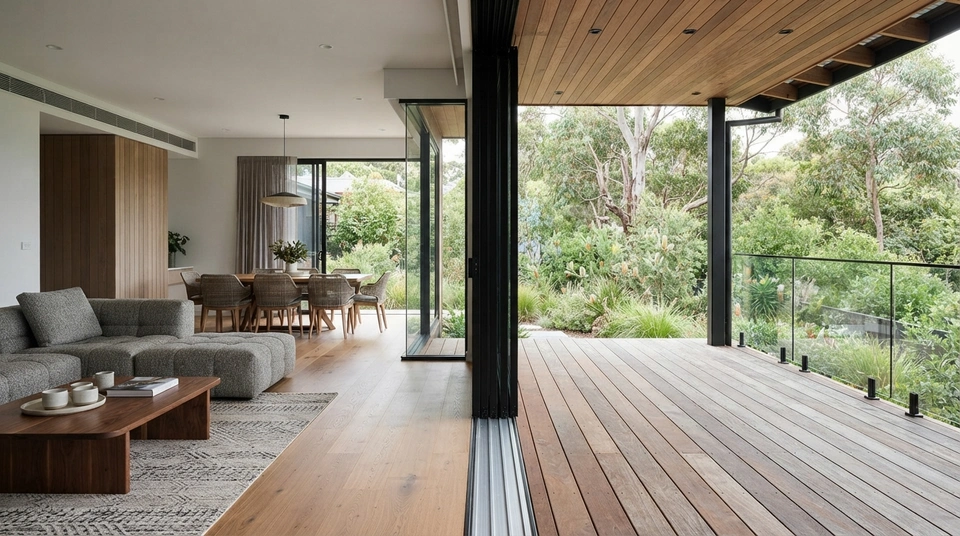
When connecting indoor living areas to outdoor alfresco decks, standard sliding doors provide approximately 45% to 48% clear walk-through opening at the lowest cost with the cleanest closed sightlines. Stacker doors expand clear opening to roughly 63% to 66% on a self-supporting bottom-rolling track that requires zero swing clearance and easily integrates rigid security screens. Bifold doors deliver the largest opening at 90% to 95%, but cost 20% to 40% more, suspend heavy loads from overhead structural lintels, break up views with vertical stiles every 750mm to 900mm when closed, and project a 400mm to 700mm folded stack onto patio space.
Black Slimline Aluminium Windows
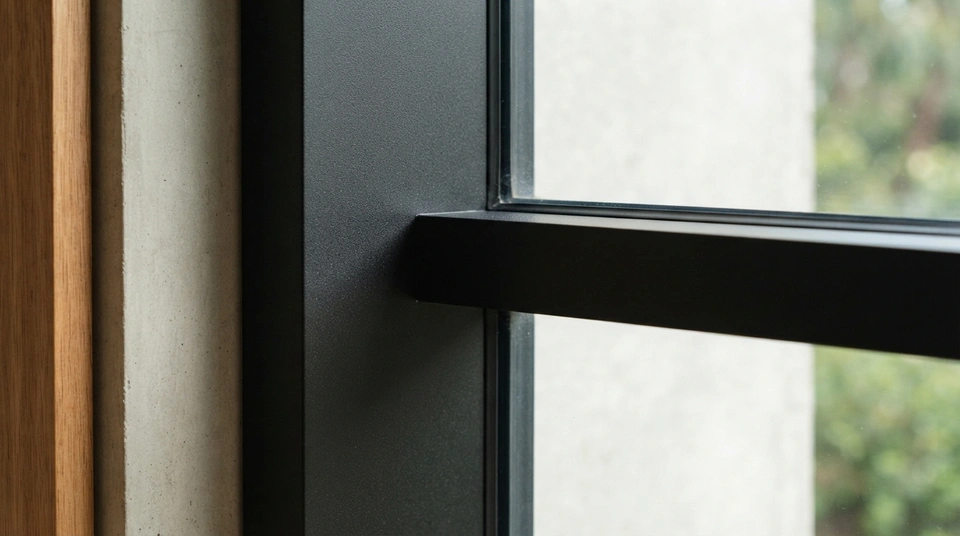
Black slimline aluminium windows are a powder-coat decision more than a style one. In Australia, choose a coating grade that matches the site's corrosivity category under AS 3715:2025, get the chalk and colour fade warranty in writing, and wash the frames at least every 12 months, or every 6 months near the beach or industry. Dark frames run hotter in sun, but a thermal break and correct glazing gaskets matter more than colour.
Slimline Aluminium Windows Cost
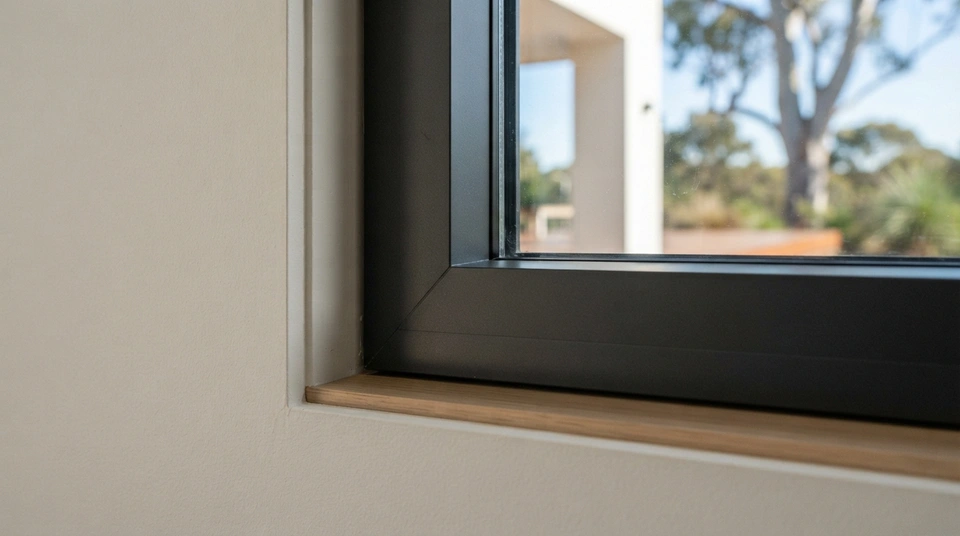
In Australia, slimline aluminium windows typically cost between $600 and $1,200 or more per square metre for supply-only architectural joinery, compared with $450 to $850 per square metre for standard double glazed aluminium. Fully installed retrofit replacements generally range from $900 to $1,800 per square metre. The premium does not stem from less metal, but from the engineering required to stiffen narrow profiles, accommodate heavy double-glazed units, fit thermal breaks, and maintain structural compliance.
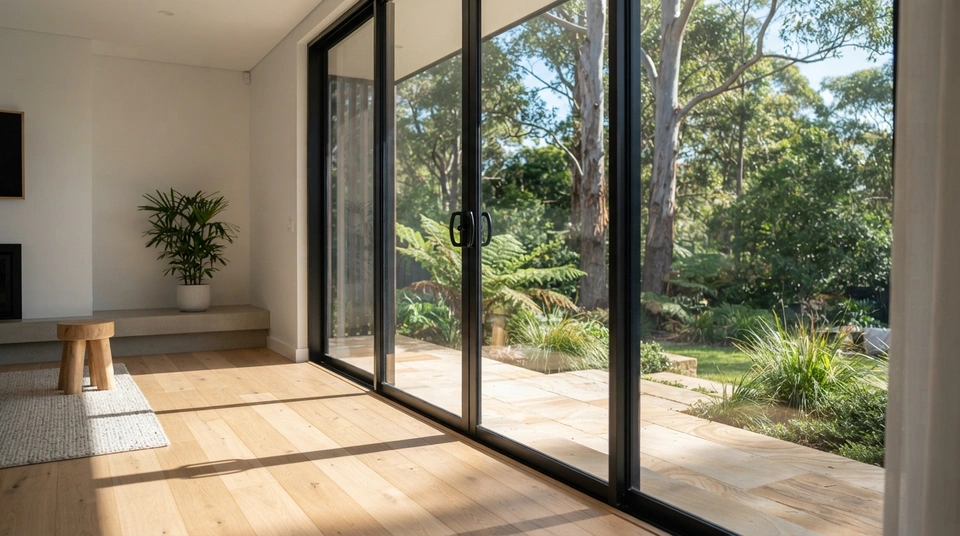
Are Slimline Aluminium Windows Energy Efficient? Thermal Break Limits and 7-Star Strategy
Slimline aluminium windows can be energy efficient, but frame width is not what decides it. Performance depends on the whole-window U-value, the solar heat gain coefficient, the glass specification and whether the narrow frame keeps a well-designed thermal break. Under NCC 2022 7-star, windows are modelled within the whole home, so large two-storey designs with lots of glass are the most likely to need Low-E double glazing and a thermally broken frame.
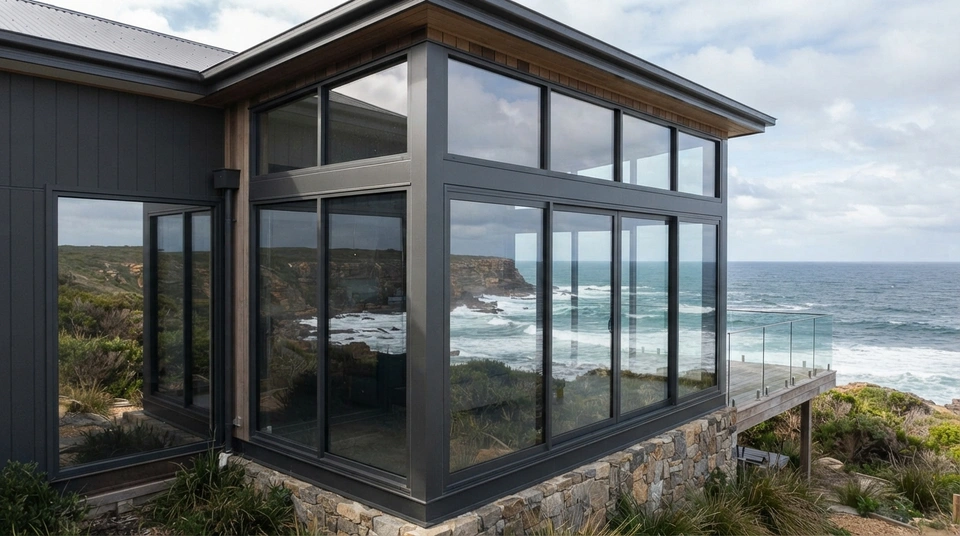
Are Slimline Windows Strong Enough? Wind Ratings, AS 2047 and Large Panel Spans
Slimline aluminium windows can be strong enough, because AS 2047 tests a complete window against the wind pressure set by your site's N or C rating, not the width of its frame. Strength depends on the specific tested system, its size and the glass fitted under AS 1288. Ask for the performance label rating, the tested size range and the glass specification before accepting a quote.
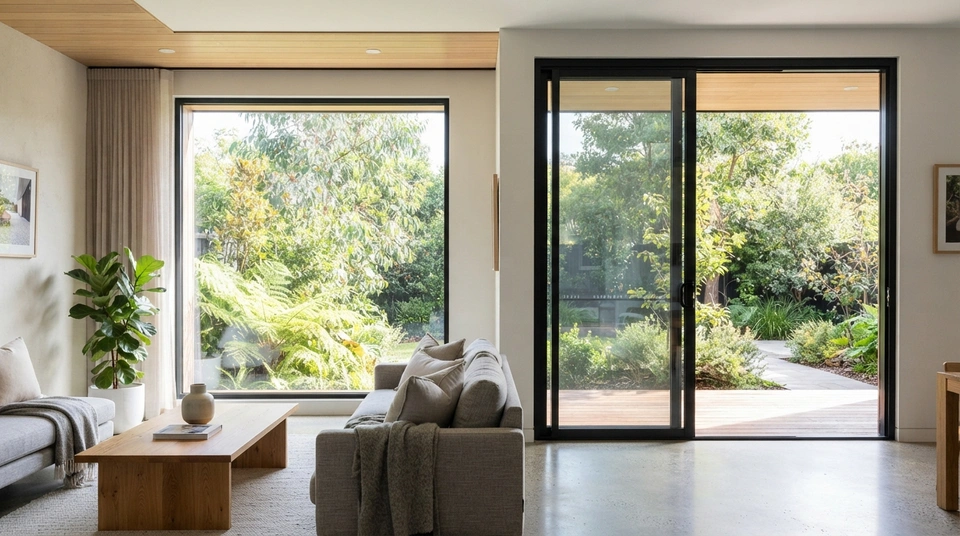
Slimline Sliding, Awning and Fixed Windows
Fixed windows usually show the least aluminium because they have no sash or hardware, with one Australian supplier listing typical sightlines of 45 to 55 mm. Sliding windows add an interlock and awning windows add a sash frame, so both show more, though published figures vary by system and measuring point. The series you choose matters as much as the style, so ask for sightlines at each point on the drawing.
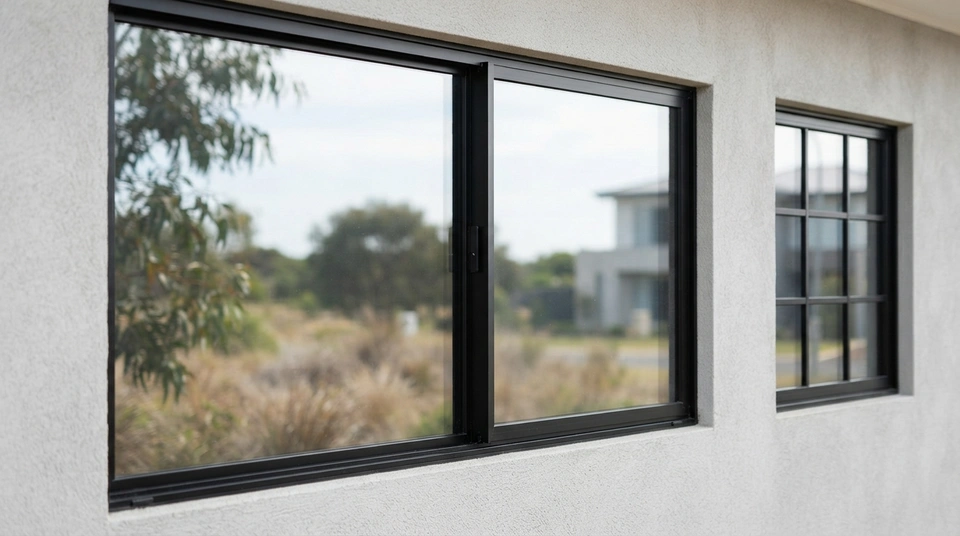
Slimline vs Minimal Frame vs Steel-Look Aluminium Windows
Slimline, minimal frame and steel-look are trade labels, not defined grades. Slimline means a narrower visible frame, minimal frame is the far end where most aluminium is slim or concealed, and steel-look is a style copying the thin bars and profiles of steel windows. None guarantees a sightline width, thermal break or test result, so ask which dimension is quoted and request section drawings and AS 2047 evidence.
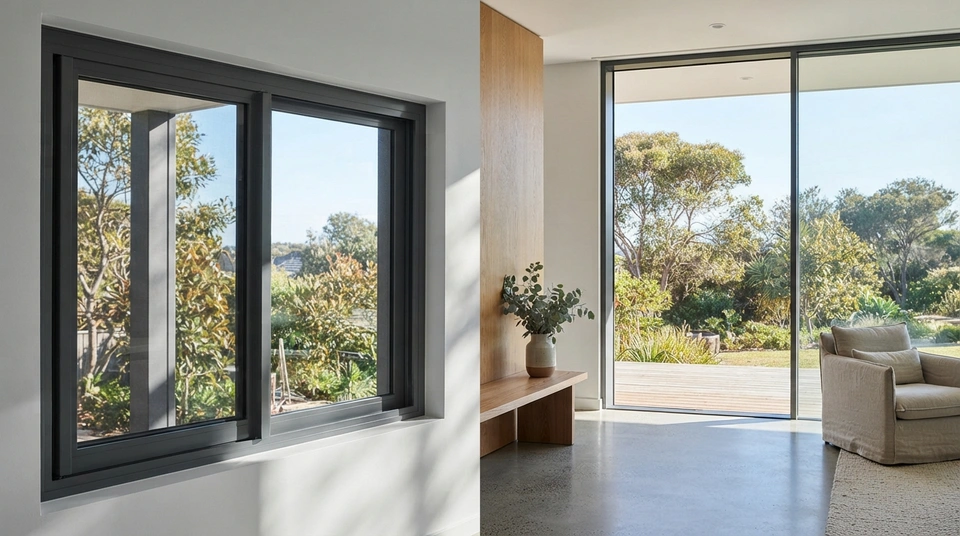
Slimline vs Standard Aluminium Windows
Slimline aluminium windows have a narrower visible frame than standard profiles, but we found no Australian standard that defines the term. Supplier figures range from under 50 mm to 70 mm for slimline and from 65 mm to 120 mm for standard. In an illustrative calculation on a 1200 x 1800 mm fixed window, narrowing the frame from 65 mm to 45 mm adds only about 6% more visible glass.
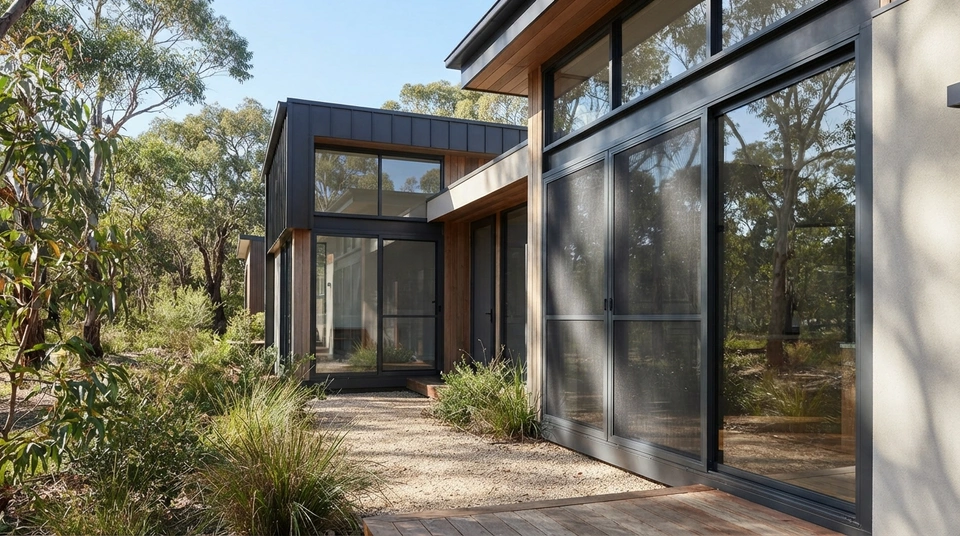
Slimline Windows in Bushfire Zones
Slimline aluminium windows can be used in bushfire prone areas, but frame width is not a BAL criterion. Compliance depends on the whole window system, either the AS 3959:2018 deemed-to-satisfy specification or a system tested to AS 1530.8.1. Under the deemed-to-satisfy summaries, windows need at least 5 mm toughened glass at BAL-29 and 6 mm at BAL-40, plus metal mesh screens on openable sections.
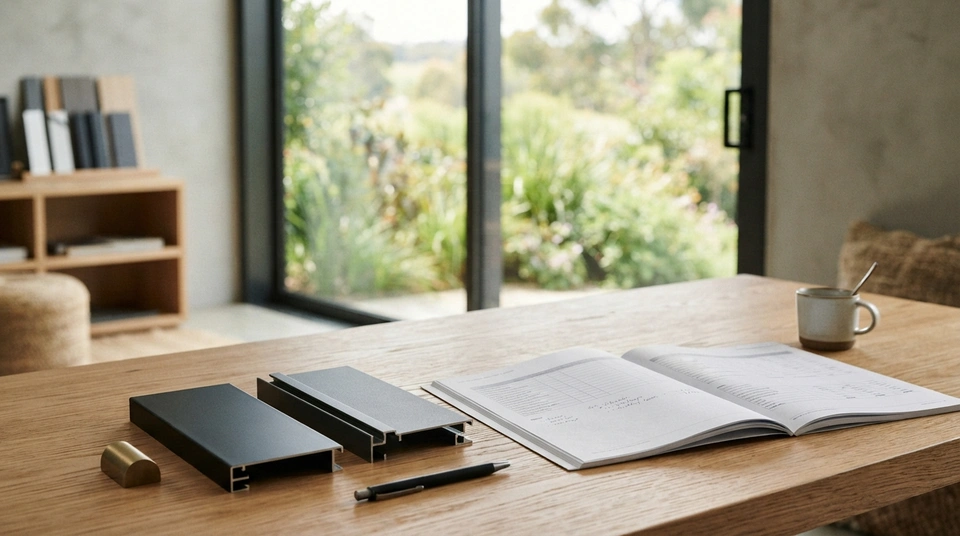
Slimline Window Buyer's Checklist
Before you accept a slimline window quote, ask 12 questions in writing: where the frame width was measured, which glass is fitted, thermal break details, WERS data, the AS 2047 test report, wind rating, BAL evidence, finish warranty, hardware, lead time, installation scope and quote basis. Send every supplier the same window schedule so the answers can be compared line by line.
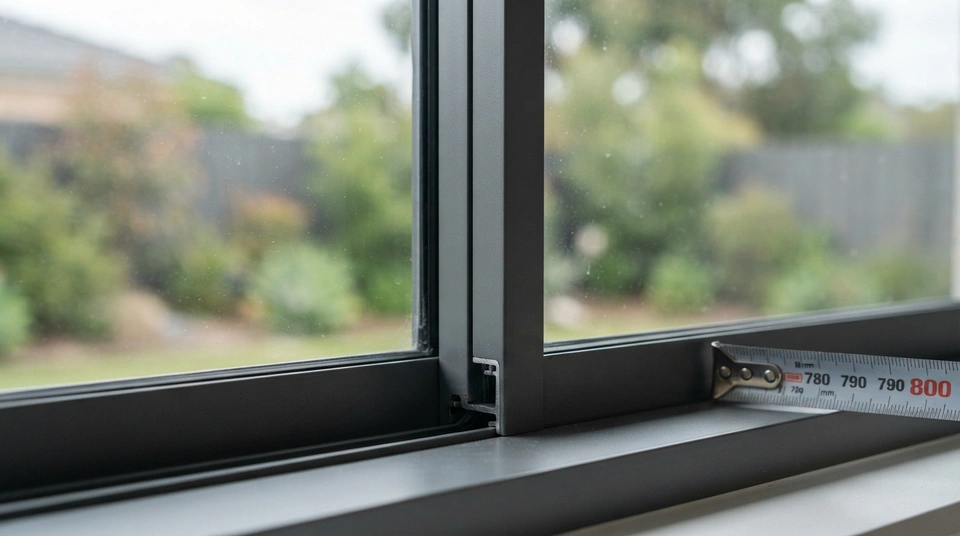
Window Sightline Explained
A window sightline is the width of aluminium visible when you look straight at a closed window, measured in millimetres. It is not one number: the outer frame, sash, interlock or meeting stile, and mullion each have their own sightline. No Australian standard defines slimline, so supplier figures vary. Ask which point a quoted figure refers to, and request section drawings, before comparing quotes.
Do Light Window Frames Show Dirt?
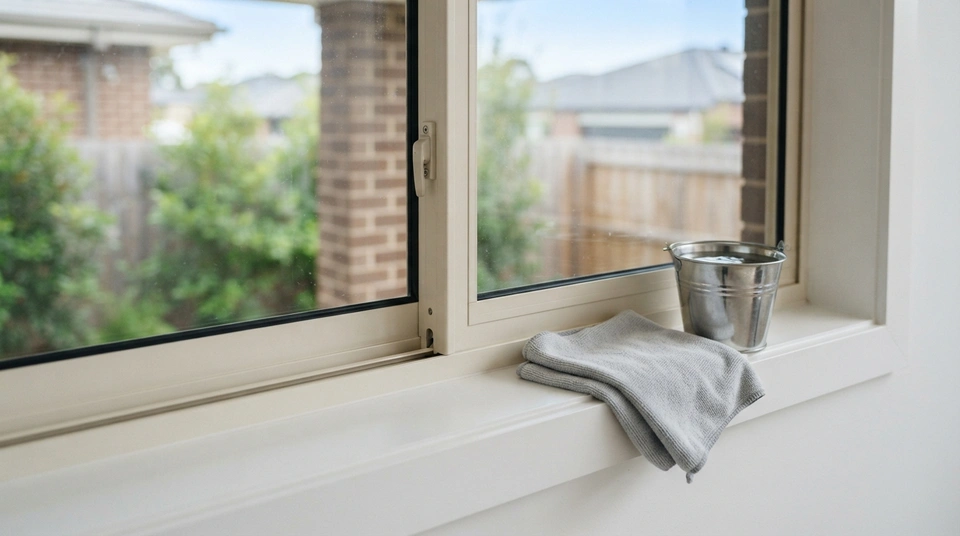
Surfmist and off-white aluminium window frames do not show more general airborne dust than dark frames; in fact, dark charcoal and black profiles reveal pale silica dust, pollen, and dried rainwater spots far more conspicuously. However, light frames make dark organic contaminants like garden soil splashes, spider droppings, and black rubber marks more obvious. Keeping powder-coated Surfmist frames pristine requires gentle washing with a pH-neutral liquid detergent and clean water every three to twelve months, depending on proximity to coastal salt spray.
What Goes With Surfmist Window Frames
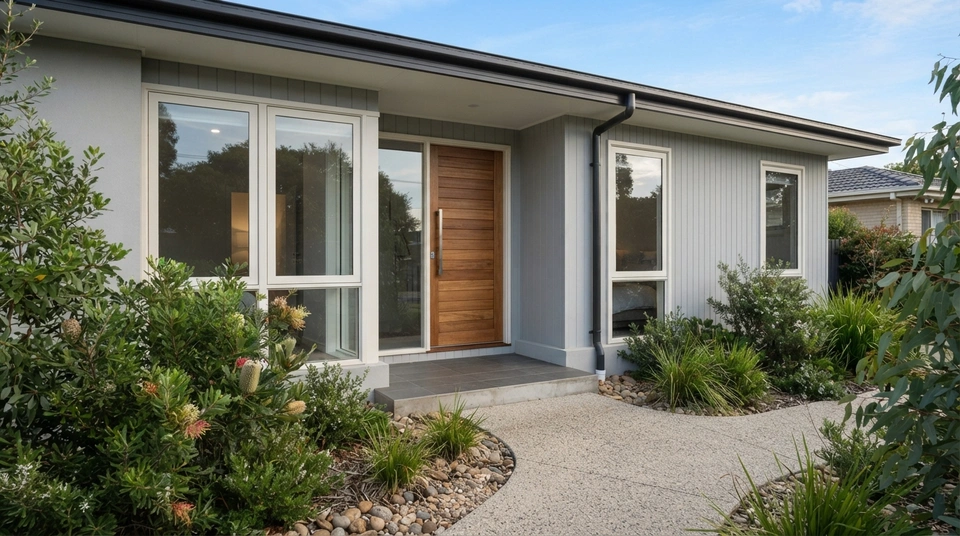
Surfmist window frames pair best with warm greys (like Shale Grey or Dune), soft off-white weatherboards, greige render, earthy red or blonde bricks, and natural stained timber front doors. Because Surfmist is a soft, warm off-white (Colorbond HEX #E4E2D5) rather than a stark commercial white, avoid ultra-cool icy whites on adjacent cladding to prevent the joinery from appearing creamy or dull. Stained hardwood doors and deeper trims provide ideal contrast.
The Hamptons Look With Aluminium Windows
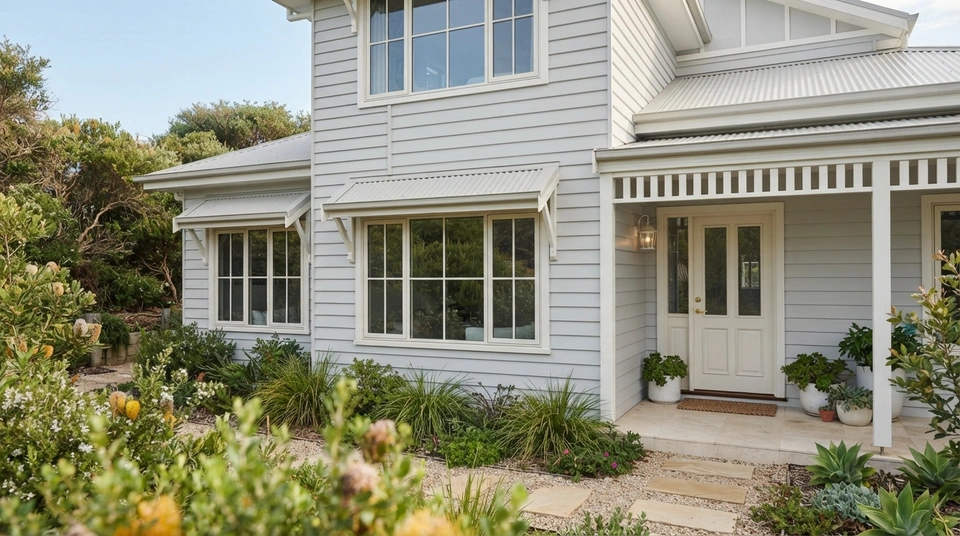
To achieve an authentic Hamptons look with aluminium windows in Australia, select soft off-whites like Colorbond-matched Surfmist to avoid coastal glare, or crisp whites for sharp contrast against grey weatherboards. Choose double-hung or paired awning windows with colonial glazing bars for heritage street appeal, balance them with expansive sliding windows for outdoor living, specify deep timber reveals with external architraves for shadow lines, and mandate super-durable marine powder coatings near salt water.
Matching Window Frames to Roof, Gutters & Garage Door
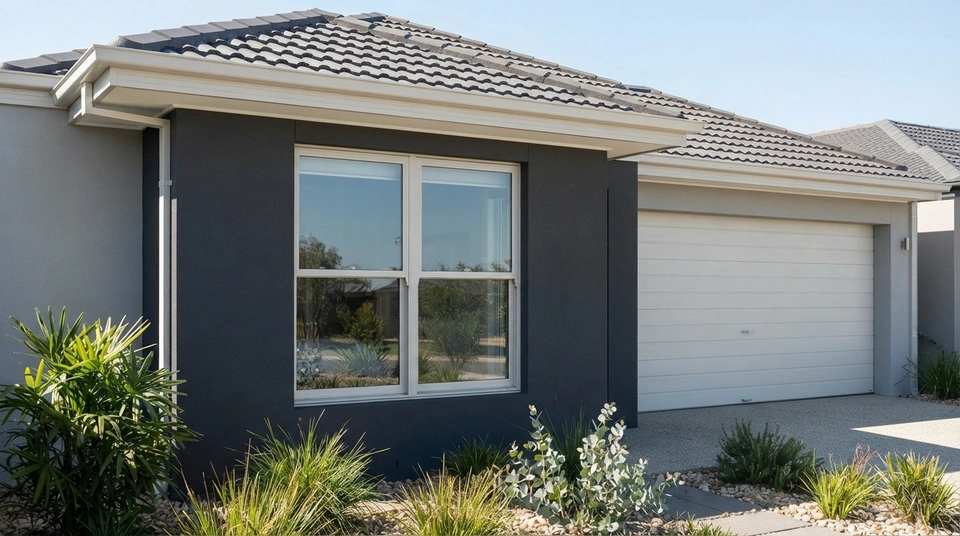
Window frames do not have to match your roof directly, but they must sit within a disciplined three-tone exterior palette. A unified scheme pairs a light Surfmist roof with matching Surfmist gutters, fascia, garage door, and window frames for a seamless, heat-reflective coastal silhouette. An architectural contrast scheme pairs a light Surfmist roof with deep charcoal joinery like Monument, or a dark roof with crisp Surfmist frames to create structural definition. Gutters should match the roof, while downpipes should match the wall substrate so they visually disappear.
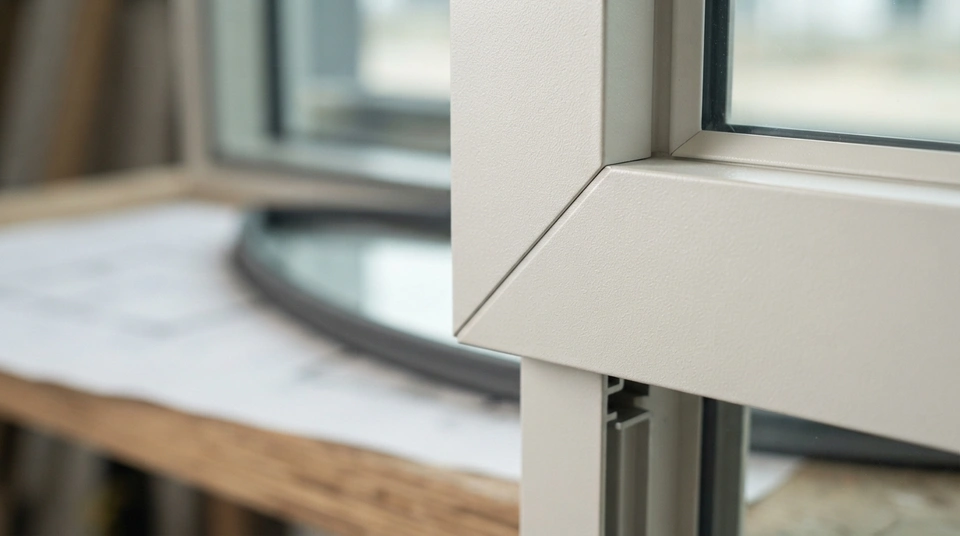
Specifying Surfmist Powder Coat on Aluminium Windows
To specify Surfmist powder coat on aluminium windows in Australia, document the exact coating range and Australian standard on your window schedule rather than just requesting Colorbond Surfmist. For standard inland residential builds, specify an AS 3715 and AAMA 2603 compliant finish such as Dulux Duralloy or Interpon D1000. For coastal homes within one hundred metres of salt water, specify an AAMA 2604 super-durable finish such as Dulux Duratec or Interpon D2525 Futura applied by an accredited applicator to secure valid film integrity and colour retention warranties.
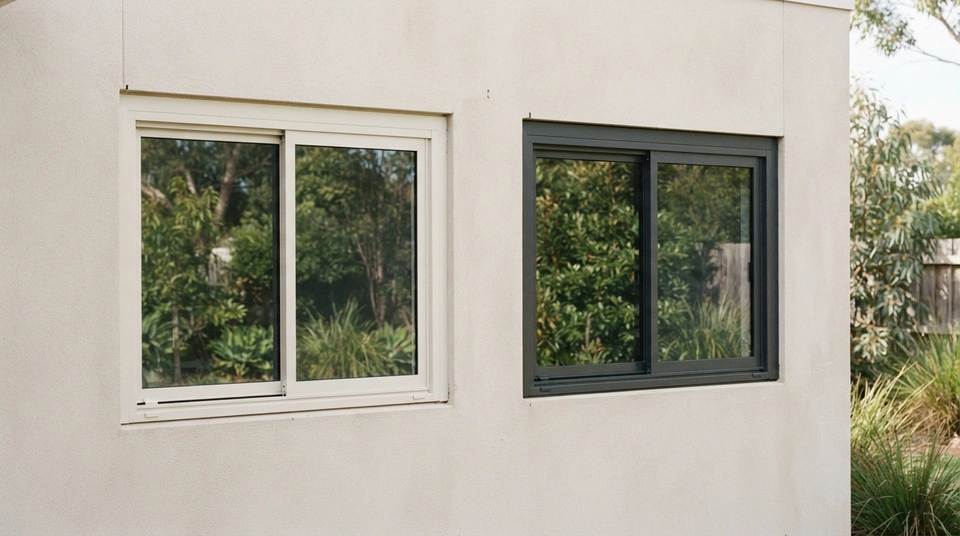
Surfmist vs Monument Window Frames
Choose Surfmist for window frames that blend into a light, soft exterior, and Monument for frames that give a defined charcoal outline. Neither is better in general: the choice depends on your roof, gutters, garage door and brickwork, and on how the frames look from inside. Monument runs hotter than Surfmist, and both are powder-coat matches to Colorbond colour names, so check a physical sample first.
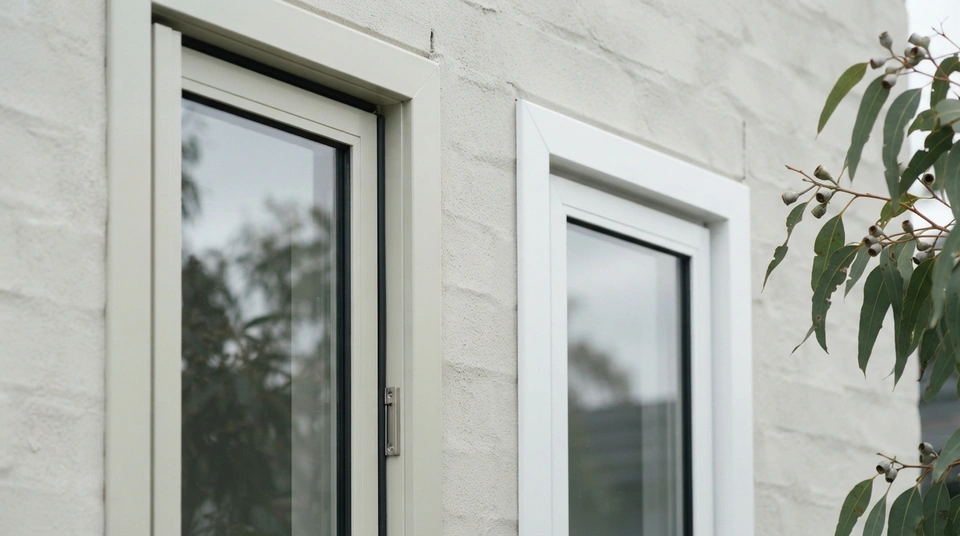
Surfmist vs White Window Frames
Choose Surfmist when your roof, gutters or garage door are already Surfmist, or your walls are darker, because it reads as white from the street and tends to show less dirt than a crisp white. Choose a crisper white such as Dover White or a window-industry Pearl White when you want deliberate contrast on a pale or bright facade. Surfmist is a soft off-white (Colorbond HEX #E4E2D5), so compare physical samples in daylight before you order.
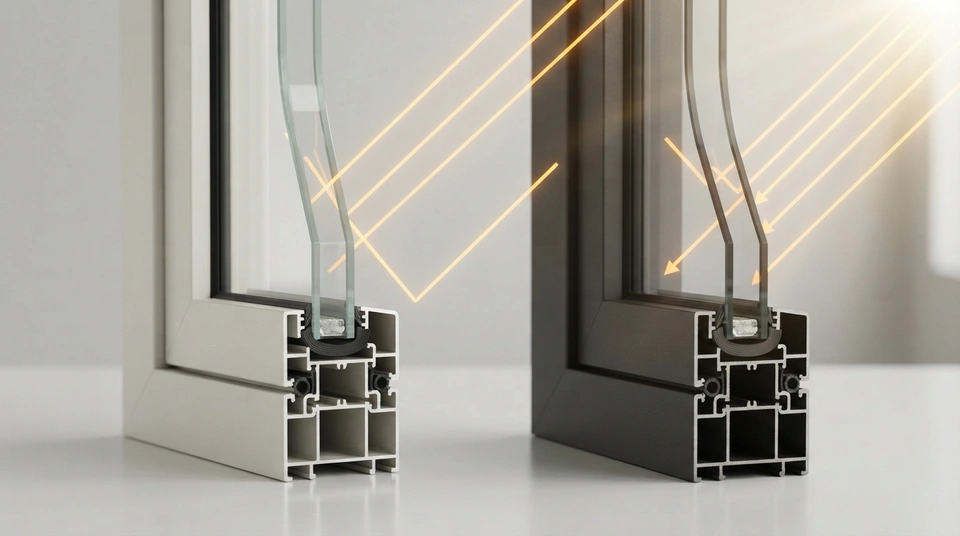
Do Surfmist Window Frames Keep Your Home Cooler?
Surfmist window frames keep Australian homes noticeably cooler than dark frames by reflecting approximately two-thirds of incoming solar radiation. In summer, unshaded aluminium frames in dark colours like Monument or Black reach surface temperatures of 60 to 75 degrees Celsius, conducting heat straight indoors. In contrast, Surfmist frames reflect 67 percent of solar radiation, staying close to ambient outdoor air temperatures. Choosing a light Surfmist finish eliminates a significant perimeter radiant heat source, reducing summer cooling loads across warm Australian climate zones.
What Colour Is Surfmist?
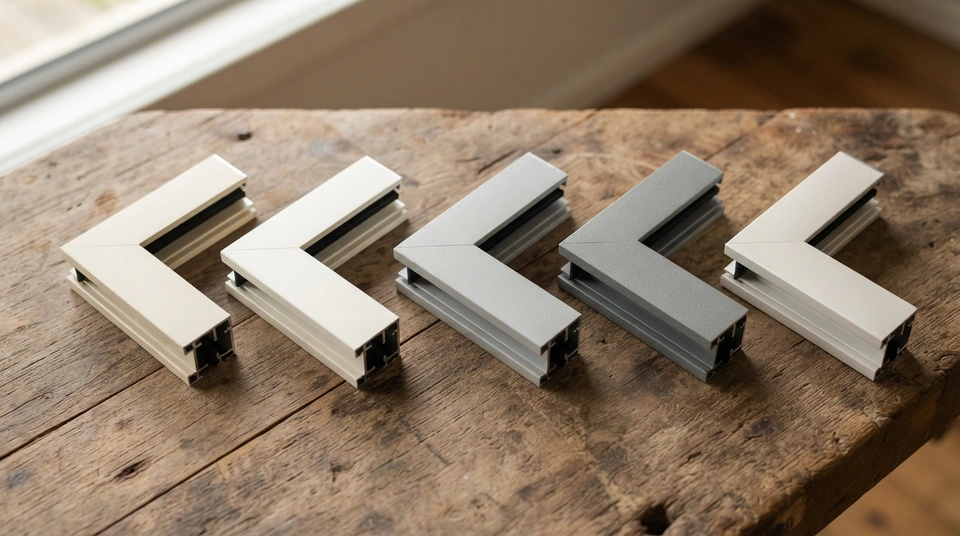
Surfmist is a soft, warm off-white. Colorbond publishes it as HEX #E4E2D5 (RGB 228, 226, 213) and calls it a soft, modern white, while paint brands describe subtle beige or creamish grey undertones. On a window frame it is a powder-coat colour matched to Colorbond Surfmist, so the exact look varies with light, finish and neighbouring colours. Judge it from a physical frame sample.
Acoustic Aluminium Sliding Windows
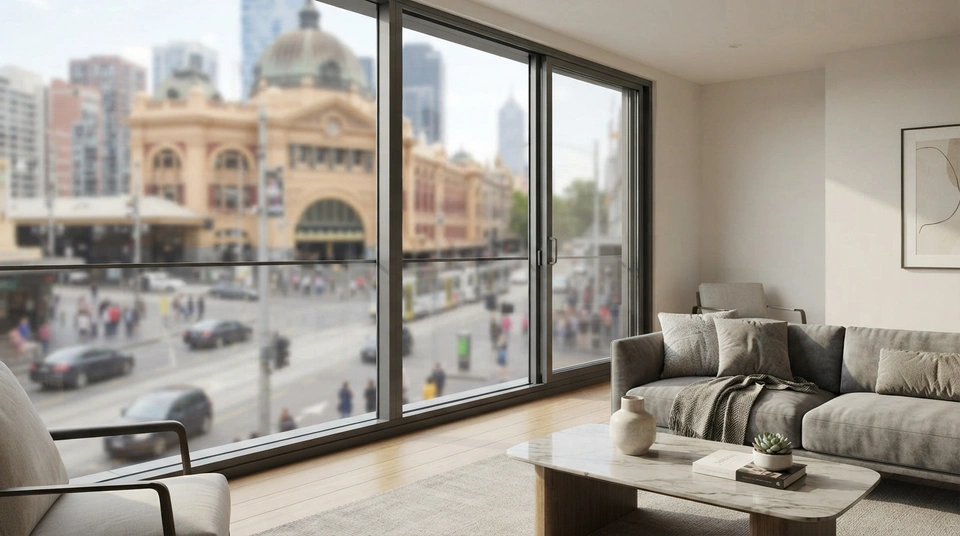
While upgrading to thick acoustic laminated glass or asymmetric double glazing significantly enhances sound reduction, the primary acoustic bottleneck in aluminium sliding windows is weathersealing rather than glass mass. Sound travels through microscopic air gaps in standard brush-pile weatherstripping, causing acoustic flanking that can downgrade high-performance Rw 40 glass down to an installed whole-window rating of Rw 28 to 32. Understanding the weighted sound reduction index (Rw) and low-frequency traffic spectrum adaptation term (Rw + Ctr) is essential for targeting urban road traffic and aircraft noise.
Aluminium Sliding Window Configurations
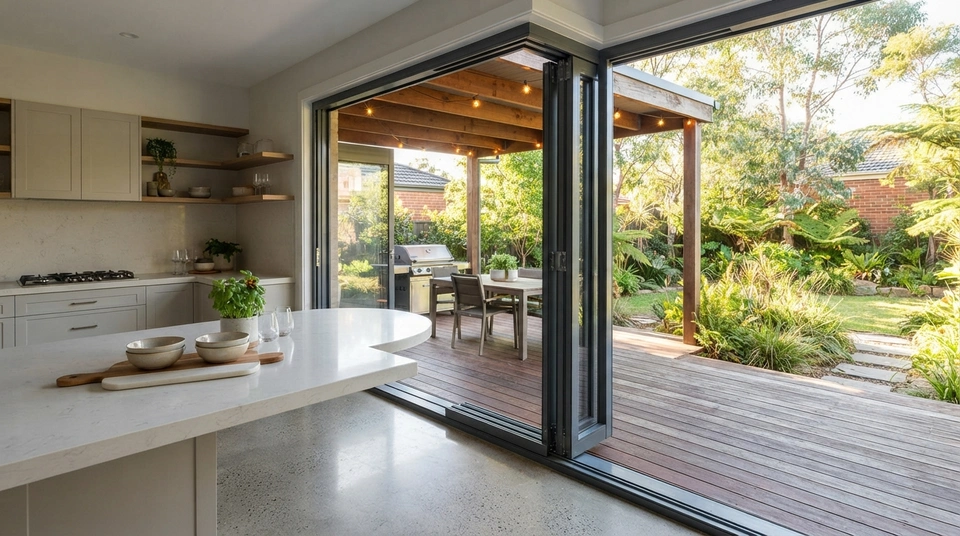
Aluminium sliding window configurations use architectural shorthand read strictly from the exterior, where 'X' (or 'S') designates an operable sliding sash and 'O' (or 'F') designates a fixed panel. A two-panel XO or OX window provides approximately 43% to 47% clear ventilation opening, a standard three-panel XOX delivers 30% to 33%, a three-panel multi-track stacker (XXO/OXX) unlocks up to 66% clear opening, and a four-panel bi-parting system (OXXO/FSSF) opens from the centre to provide 45% to 48% clear opening.
Aluminium Sliding Window Maintenance
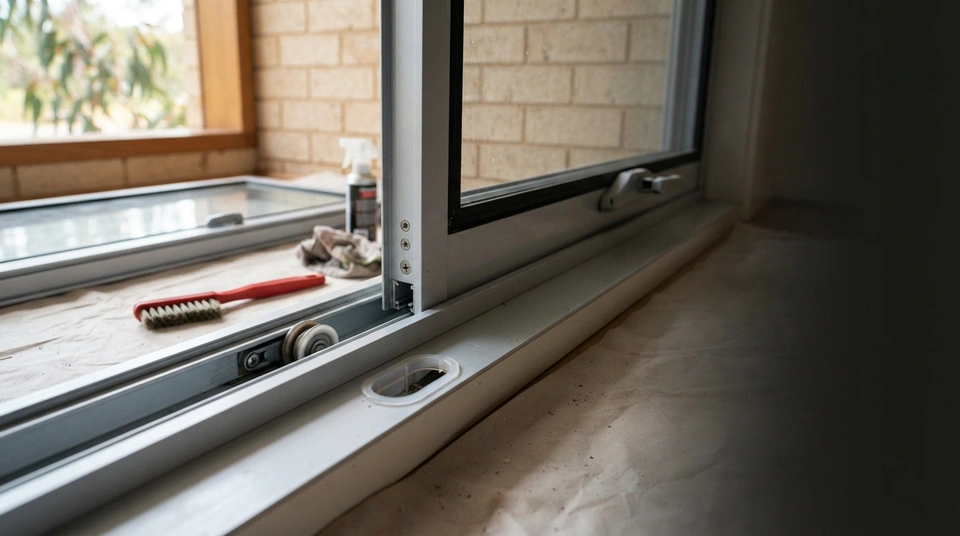
Routine maintenance for aluminium sliding windows prevents track grinding, water leaks, and roller failure through three actionable homeowner procedures: vacuuming and silicone-lubricating bottom tracks, clearing clogged exterior sill weep holes with a nylon probe, and adjusting or replacing worn carriage rollers ($15–$35 DIY). However, structural issues—including failed double-glazed IGU seals (internal condensation fogging), warped sub-sills, cracked laminated safety glass, and severe frame racking from foundation settlement—require professional licensed glazing intervention.
Aluminium Sliding Window Security Guide
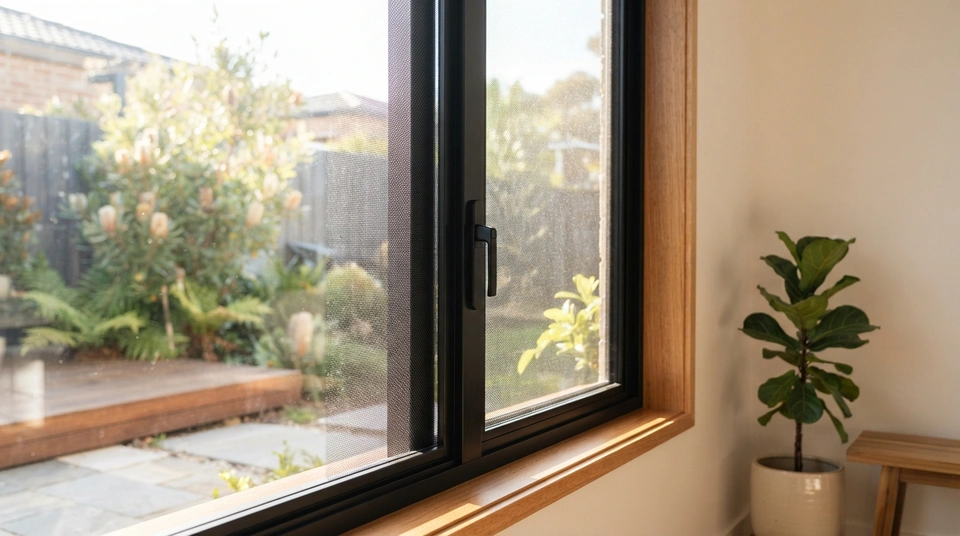
Comprehensive home security for aluminium sliding windows requires a layered hardware ecosystem: twin-point mortise locksets with hooked deadbolts, internal anti-lift blocks to prevent external sash prying, key-lockable ventilation restrictors compliant with NCC D3D29 and AS 5203 fall prevention standards (125mm sphere rule and 250N force resistance), and seamless integration with AS 5039 certified 316 marine-grade stainless steel security screens.
Aluminium Sliding Windows Cost Guide
In Australia, the cost of aluminium sliding windows in 2026 ranges from $300 to $700 per square metre for standard supply-only residential units, expanding to $700 to $1,400 per square metre fully installed with high-performance double glazing or thermal breaks. Individual supply prices for standard modular sizes (such as 0606 to 1218) typically sit between $280 and $650 ex GST, with installation labour adding $150 to $350 per window for new openings or $300 to $600 for retrofit replacements involving architrave removal and disposal.
Sliding vs Awning Windows Compared
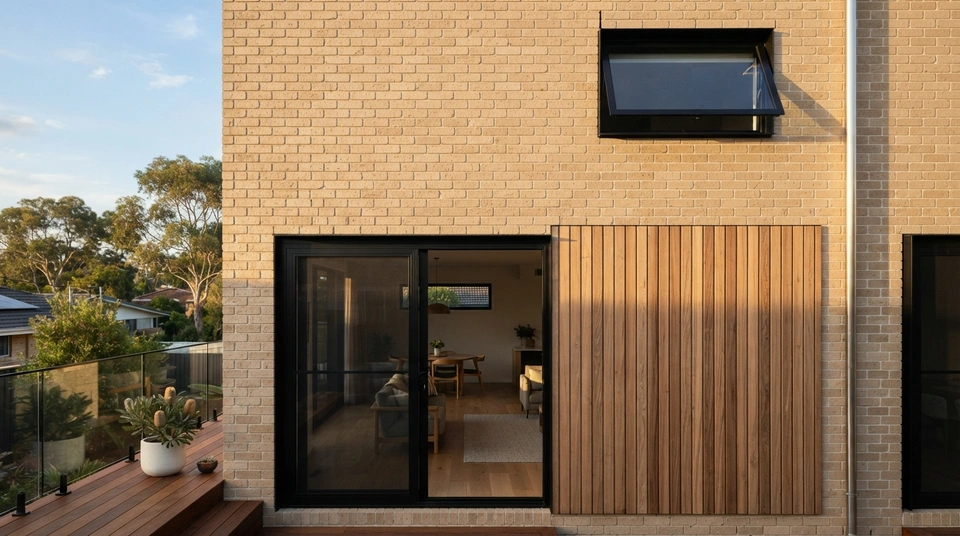
Choosing between aluminium sliding windows and awning windows represents a direct trade-off between ventilation volume and weather-sealed security. Sliding windows provide substantially superior clear airflow (45% to 50% open aperture) and zero external projection over walkways, making them the cost-effective champion for bedrooms and living spaces. Awning windows use perimeter rubber compression seals that excel in rain-proof ventilation and weather resistance (Capral publishes water-penetration ratings of 600 to 1,200 Pa for its awning windows against 450 Pa for its sliding windows), making them the preferred choice for bathrooms, kitchens, and exposed elevations.
Aluminium vs uPVC Sliding Windows
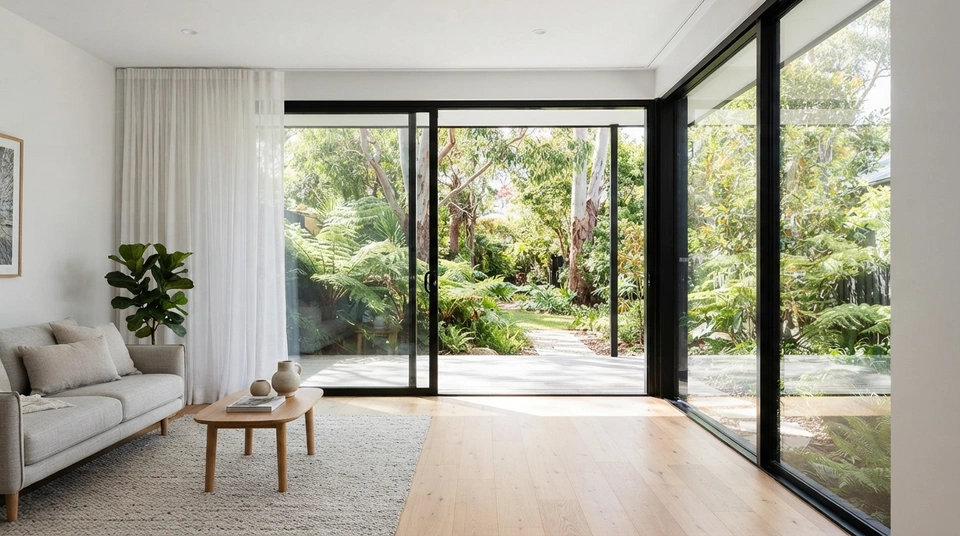
Comparing aluminium and uPVC specifically in sliding window applications reveals distinct engineering trade-offs: aluminium's superior structural rigidity allows for slimline sightlines, massive panel spans (up to 2.4m+ wide), and decades of dimensional stability under intense Australian UV radiation without thermal warping or roller track sag. While uPVC delivers inherent frame insulation at a lower price point, its bulkier multi-chambered profiles, susceptibility to UV discoloration, and lower structural modulus restrict sliding sash dimensions and require heavy steel internal reinforcement to prevent sash flex.
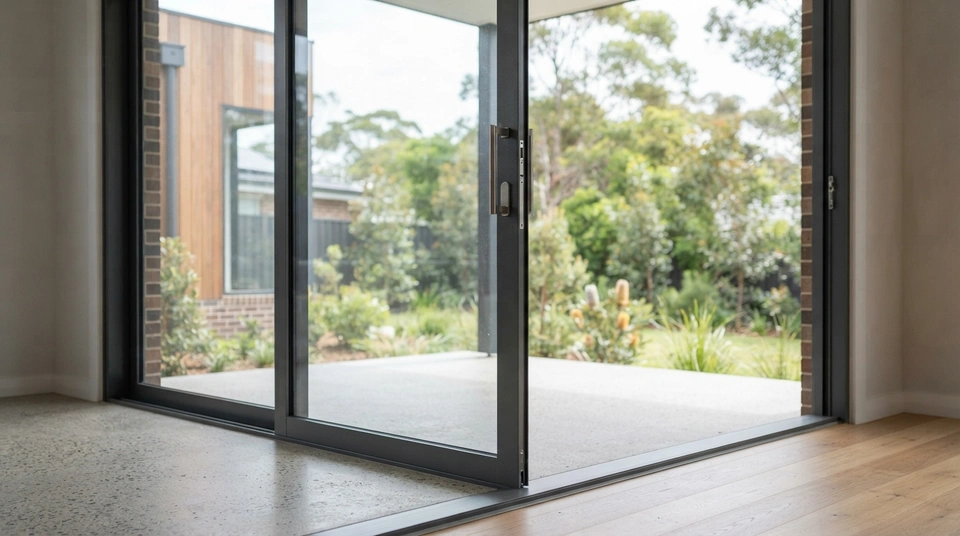
Best Aluminium Sliding Windows Guide
Identifying the best aluminium sliding windows in 2026 requires evaluating objective engineering specifications rather than brand names. The highest-performing residential systems are distinguished by structural thermal breaks (PA66 polyamide struts), multi-point or mortise locking with anti-lift blocks, commercial sub-sill water drainage, stainless steel ball-bearing rollers, architectural-grade powder coating (AS 3715 / Qualicoat Class 1.5 or 2), and verified AS 2047 test certificates.
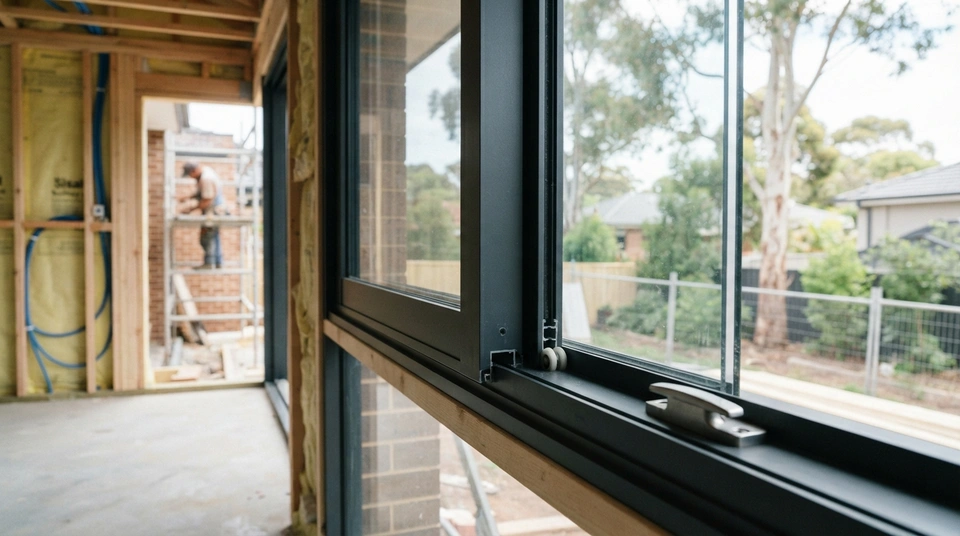
Double Glazed Sliding Windows Energy Ratings
When assessing double glazed aluminium sliding windows under NCC 2022 7-star NatHERS mandates, energy assessors evaluate total whole-window performance (total Uw and total SHGCw) rather than center-of-glass ratings (Ug/SHGCg). In sliding windows, the substantial aluminium perimeter frame, overlapping interlock stiles, and air infiltration through brush-pile weatherstripping significantly increase whole-window heat loss and air leakage compared to laboratory glass values, requiring certified WERS ratings and optimized solar control to pass modern heating and cooling load caps.
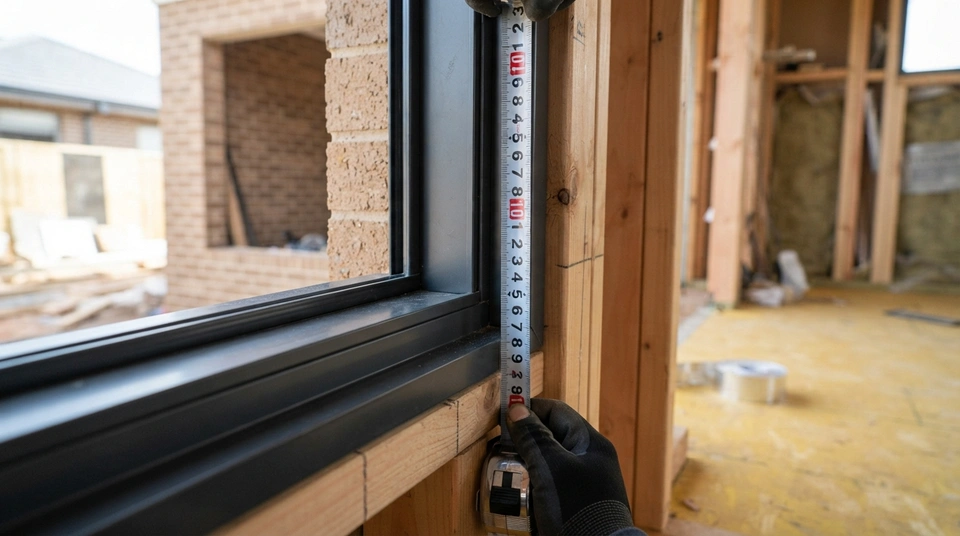
How to Measure Aluminium Sliding Windows
Accurately measuring for aluminium sliding windows requires following two distinct technical pathways: for new builds, measure the structural stud rough opening across three points (top, middle, bottom for width; left, centre, right for height), deduct 60mm in both dimensions to determine the bare frame size with pre-fitted reveals, and verify diagonal squareness within 3-5mm. For replacements, measure the internal clear reveal-to-reveal opening or existing bare frame, deducting 10mm to 15mm clearance to ensure the new frame slides into the existing perimeter without breaching flashings or disturbing external brickwork.
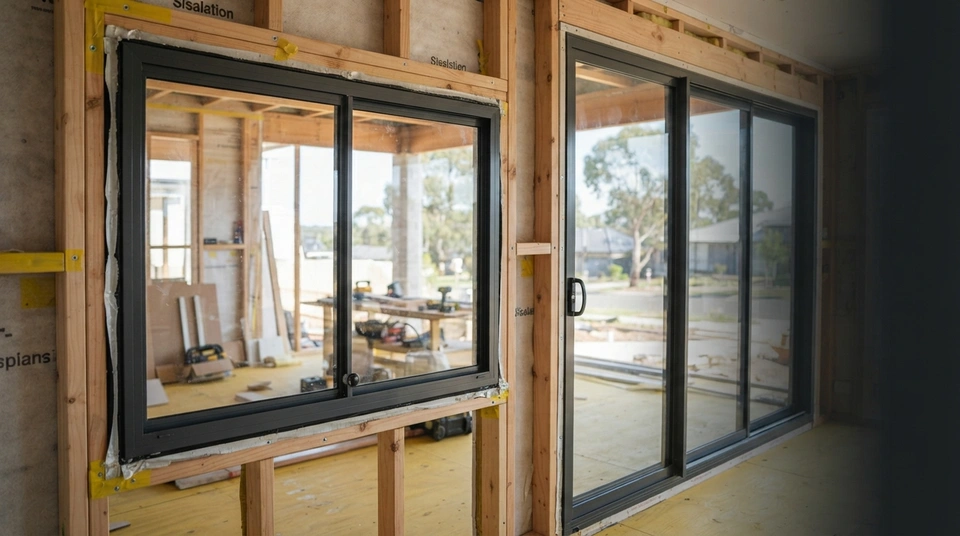
Standard Aluminium Sliding Window Sizes
Standard Australian aluminium sliding window sizes follow a four-digit modular coding system (such as 0609, 1212, or 1218) where the first two digits designate nominal height and the second two designate nominal width in decimetres. Actual manufactured aluminium frame dimensions, overall reveal dimensions, and stud rough openings differ systematically: stud rough openings require bare frame dimensions plus 60mm in height and width to accommodate factory-fitted timber reveals and leveling clearances, while window heights align with standard 86mm vertical brick coursing.
Thermally Broken Aluminium Sliding Windows
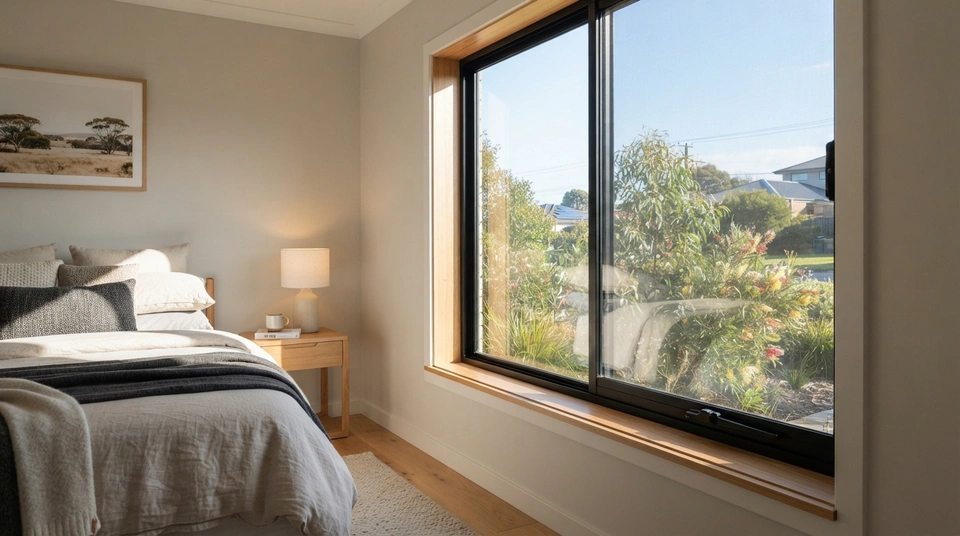
While general thermal break engineering isolates interior and exterior aluminium extrusions, thermally broken sliding windows face unique thermodynamic challenges: sliding tracks, overlapping meeting stiles, and brush-pile seals create localized thermal bridges where condensation commonly forms. High-performance thermally broken sliding systems resolve these vulnerabilities through continuous polyamide structural struts in both the sash and outer frame, co-extruded finned mohair brush seals, interlocking labyrinth seals, and insulated sub-sill drainage cavities.
NCC 2022 Window & Door Installation
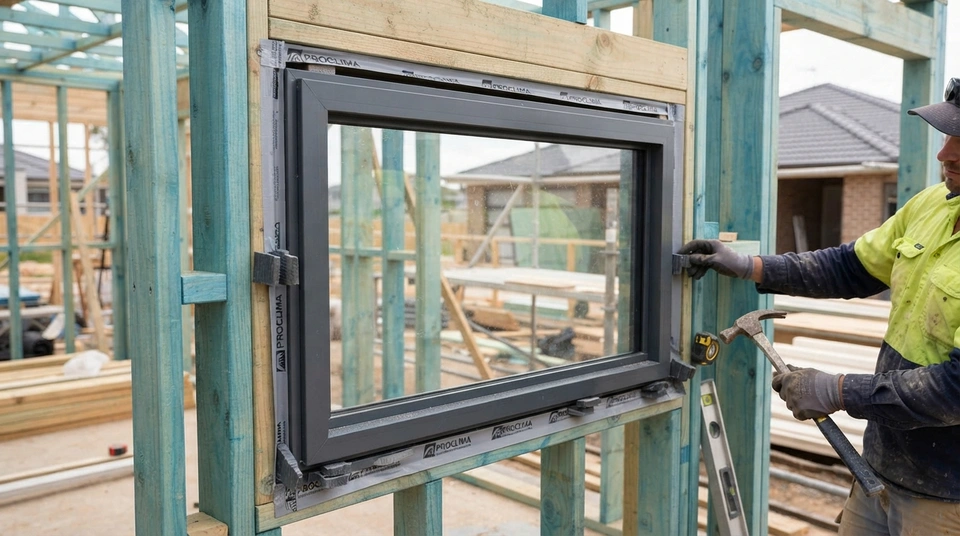
NCC 2022 Part 8.2.2 mandates specific installation practices for windows and external glazed doors to ensure 7-star energy efficiency and structural integrity. Key requirements include preventing structural loads on the window assembly, maintaining a minimum 10mm gap above, and correct packing to prevent distortion and ensure weathertightness. Adhering to AS 2047:2014 and AS 1288:2021 is crucial for compliance and long-term performance.
Airflow and Natural Light: Security Screen Optical Physics
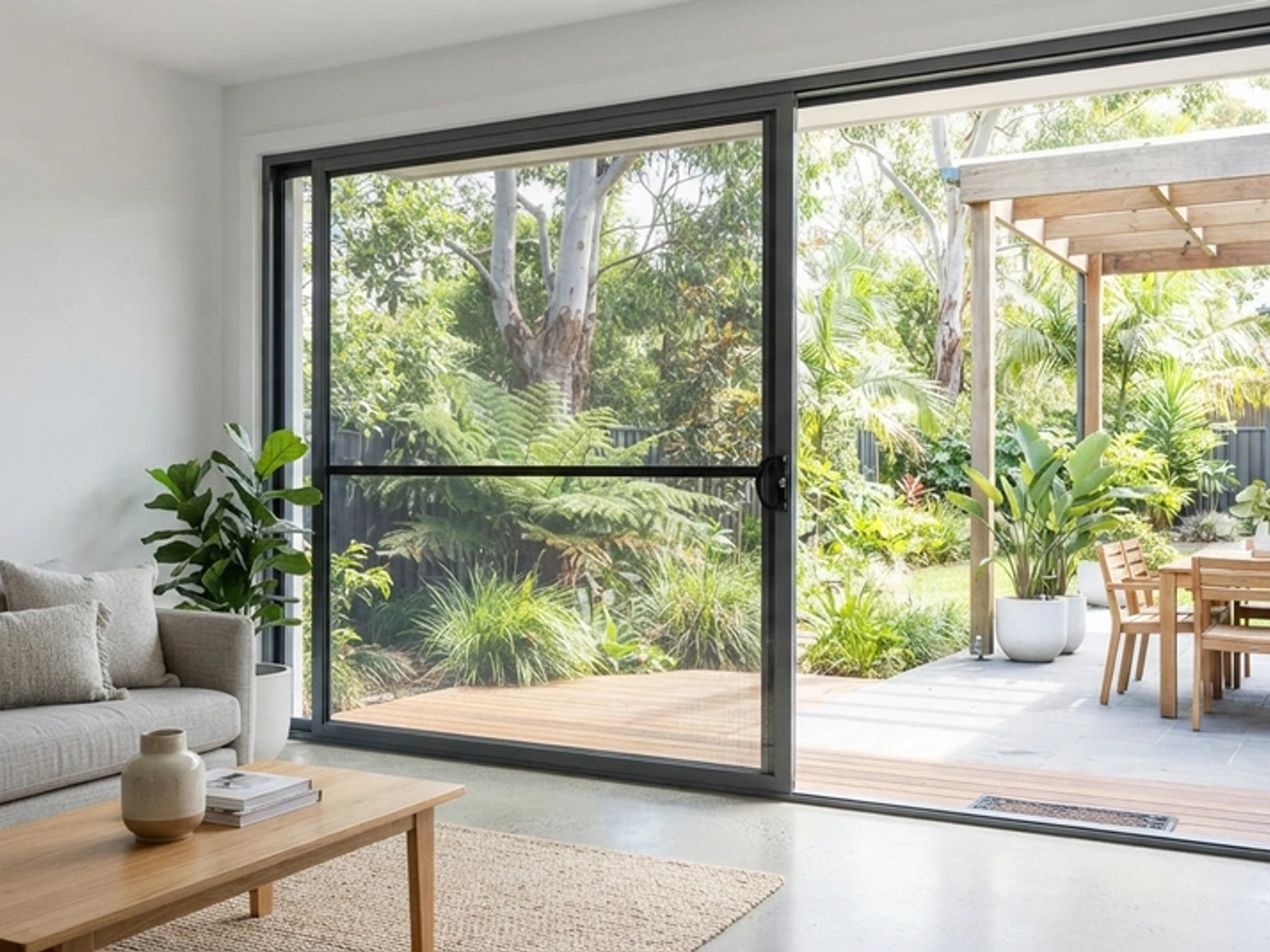
No, it does not make rooms dark or stifle ventilation. High-tensile 316 woven stainless steel security mesh features an open area ratio of approximately 41% to 44%, preserving 65% to 75% of natural cross-ventilation in residential rooms. Optically, while light-coloured flyscreens scatter glare and create a cloudy 'veiling effect', ultra-matte black security mesh absorbs light reflections, allowing the human eye to focus past the thin 0.8mm wires onto the sunlit landscape beyond, creating an almost invisible barrier from indoors.
Pet Doors in Security Screens: AS 5039 Compliance Reality
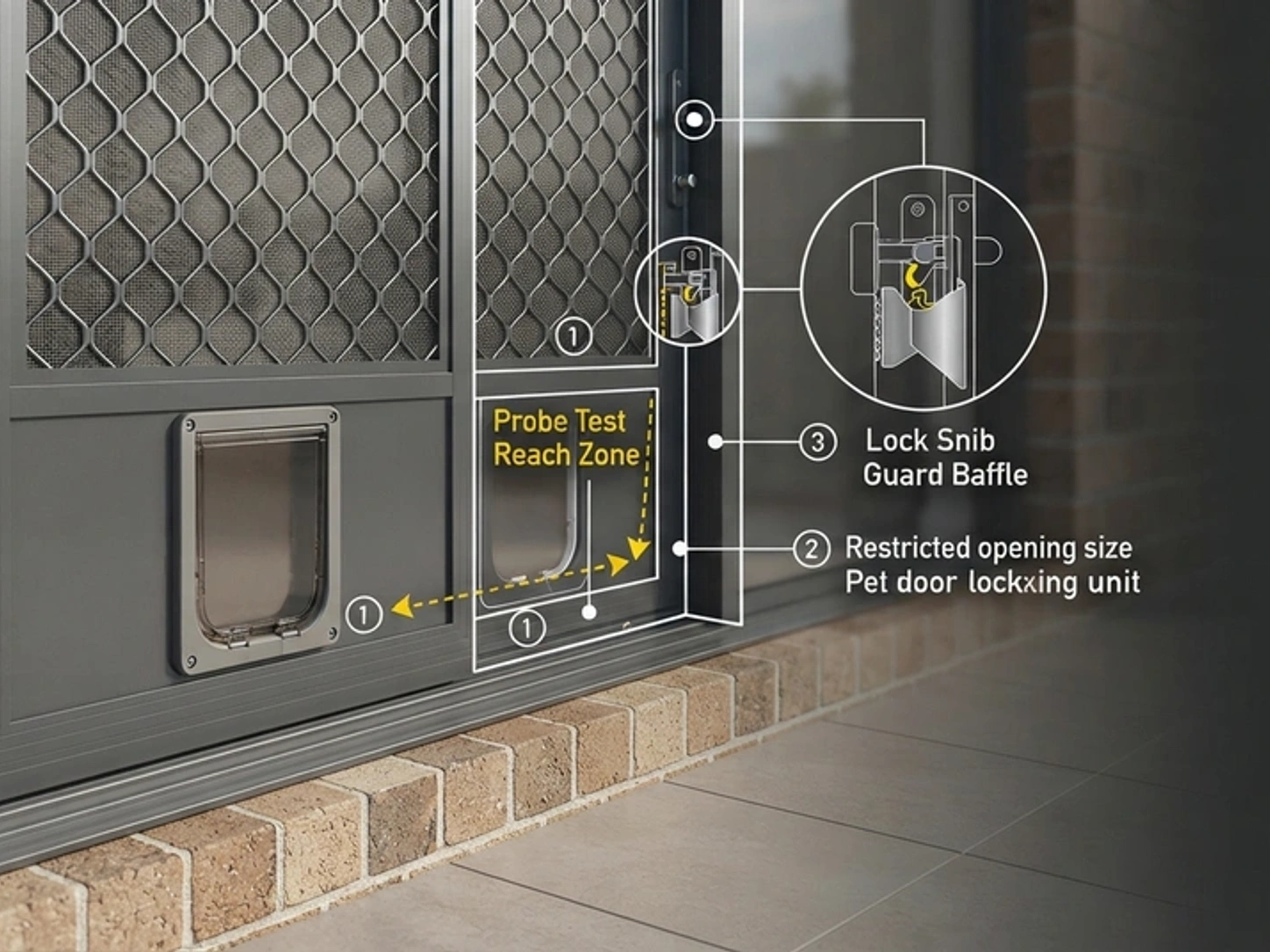
No. Under Australian Standard AS 5039.1:2023 and National Security Screen Association (NSSA) regulations, cutting an opening into the mesh to install a pet door automatically voids the door's formal security certification. The aperture breaches the mandatory AS 5039.3 Probe Test and creates an access point for lock manipulation, reclassifying the product from a certified 'Security Door' to a 'Barrier Door'. However, engineering a pet door within a 316 stainless steel mesh frame with lock shields still provides formidable physical protection compared to standard screens.
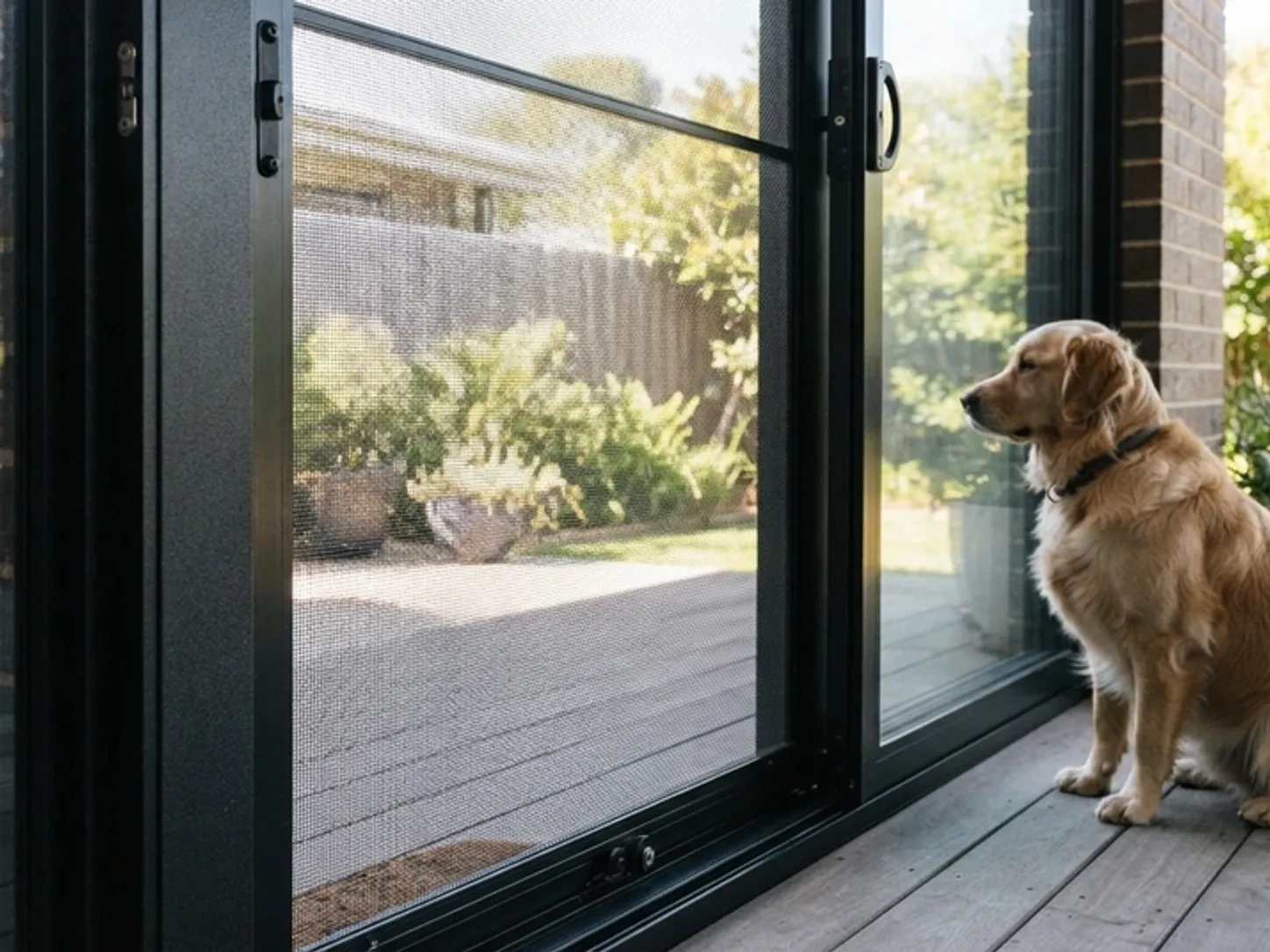
Pet-Resistant Security Screen Mesh: Claws, Pets & Strength
Standard vinyl and fibreglass pet mesh can resist incidental cat scratches, but only high-tensile 316 marine-grade woven stainless steel wire (0.8mm–0.9mm) and structural perforated aluminium sheet provide complete claw-proof, tear-proof, and impact-resistant protection. Unlike conventional screens held by rubber beading that pop under the weight of a running dog, certified security screen mesh is mechanically clamped into heavy-duty architectural aluminium frames, easily withstanding clawing, chewing, and high-energy body impacts.
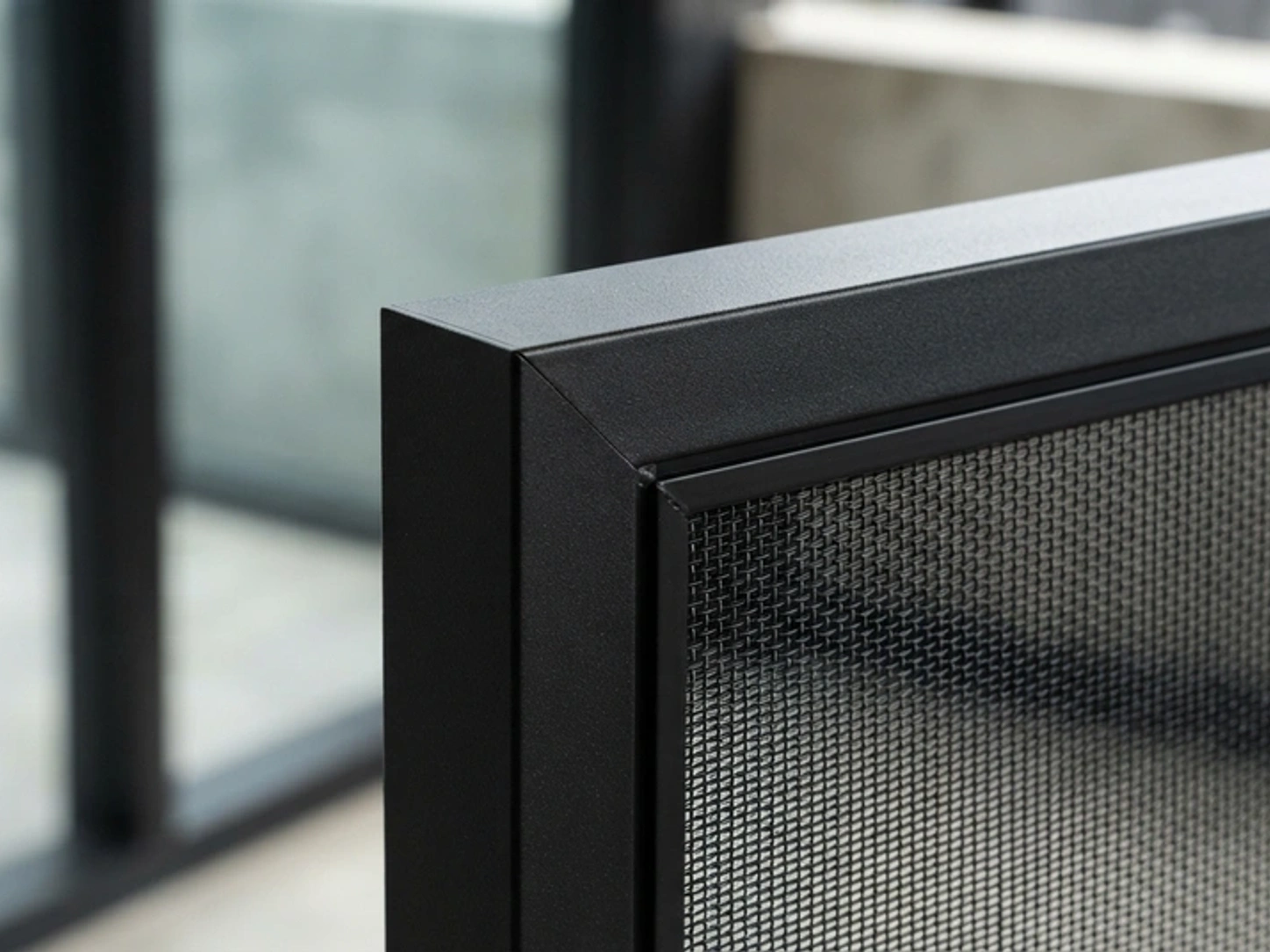
Security Mesh Attachment: Clamp vs Wedge vs Beading
A security screen's strength depends entirely on its mesh retention system. While standard flyscreens rely on flexible rubber spline beading that easily pops under 15 joules of force, certified AS 5039 security screens use heavy-duty mechanical clamping: either patented screw-clamp systems (which mechanically sandwich the mesh with tamper-resistant screws) or high-pressure polymer wedge systems (which lock the folded mesh into a reverse hook channel without screws or rivets). High-performance wedge systems also provide 100% dielectric isolation, eliminating galvanic corrosion between stainless steel mesh and aluminium frames.
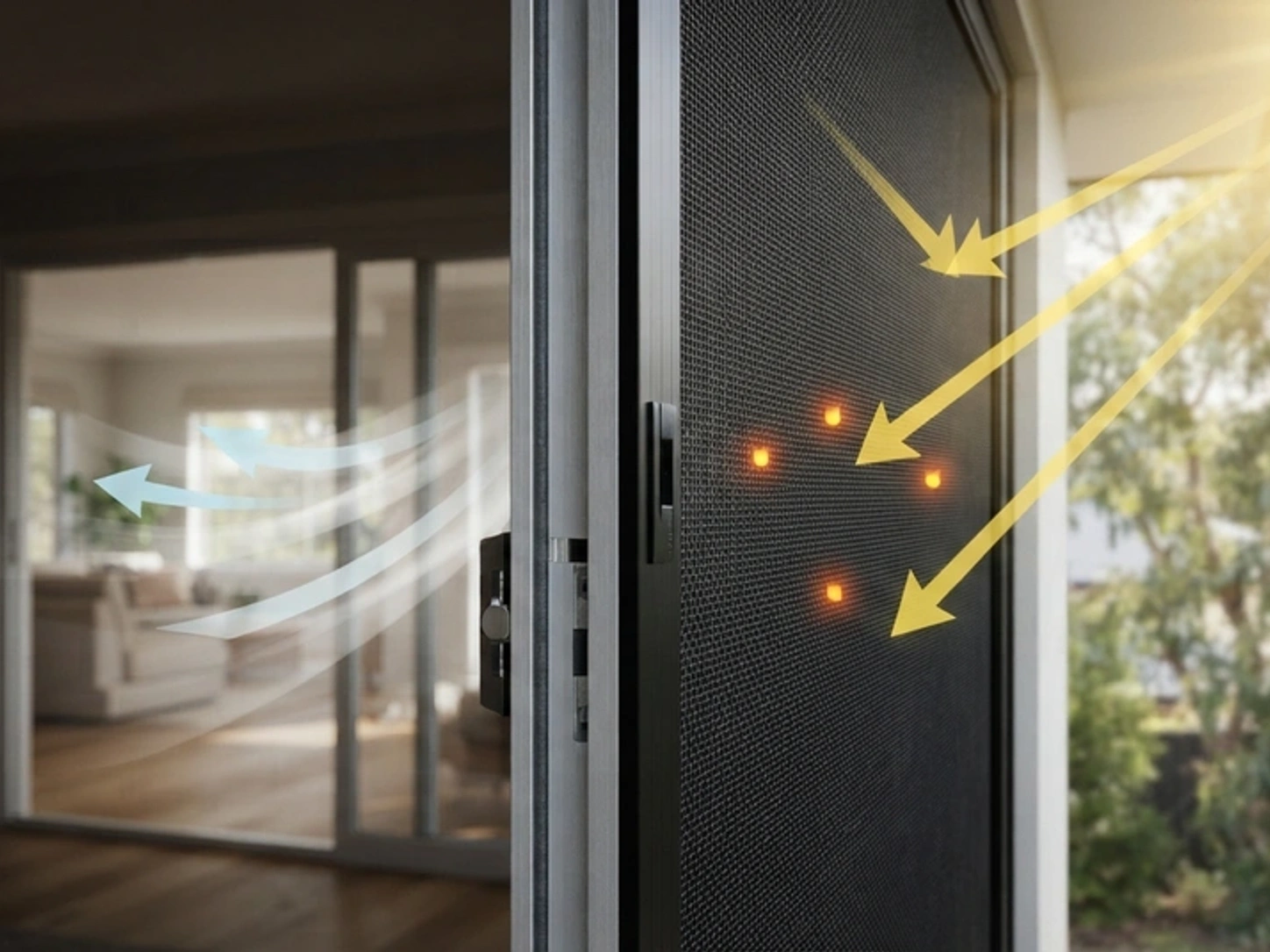
Security Screen Mesh as Solar Shading: Heat & UV Protection
Installed on the exterior of windows and doors, high-tensile 316 stainless steel security mesh intercepts intense solar radiation before it strikes the glass, decreasing total solar heat gain by up to 52% to 53% and reducing radiant heat flux by up to 59% (tested under AS 1530.4). By filtering out up to 60% of damaging UV radiation, external security screens function as permanent, windproof passive shading appliances that achieve up to 4.5 WERS cooling stars and assist homes in meeting NCC 2022 energy caps.
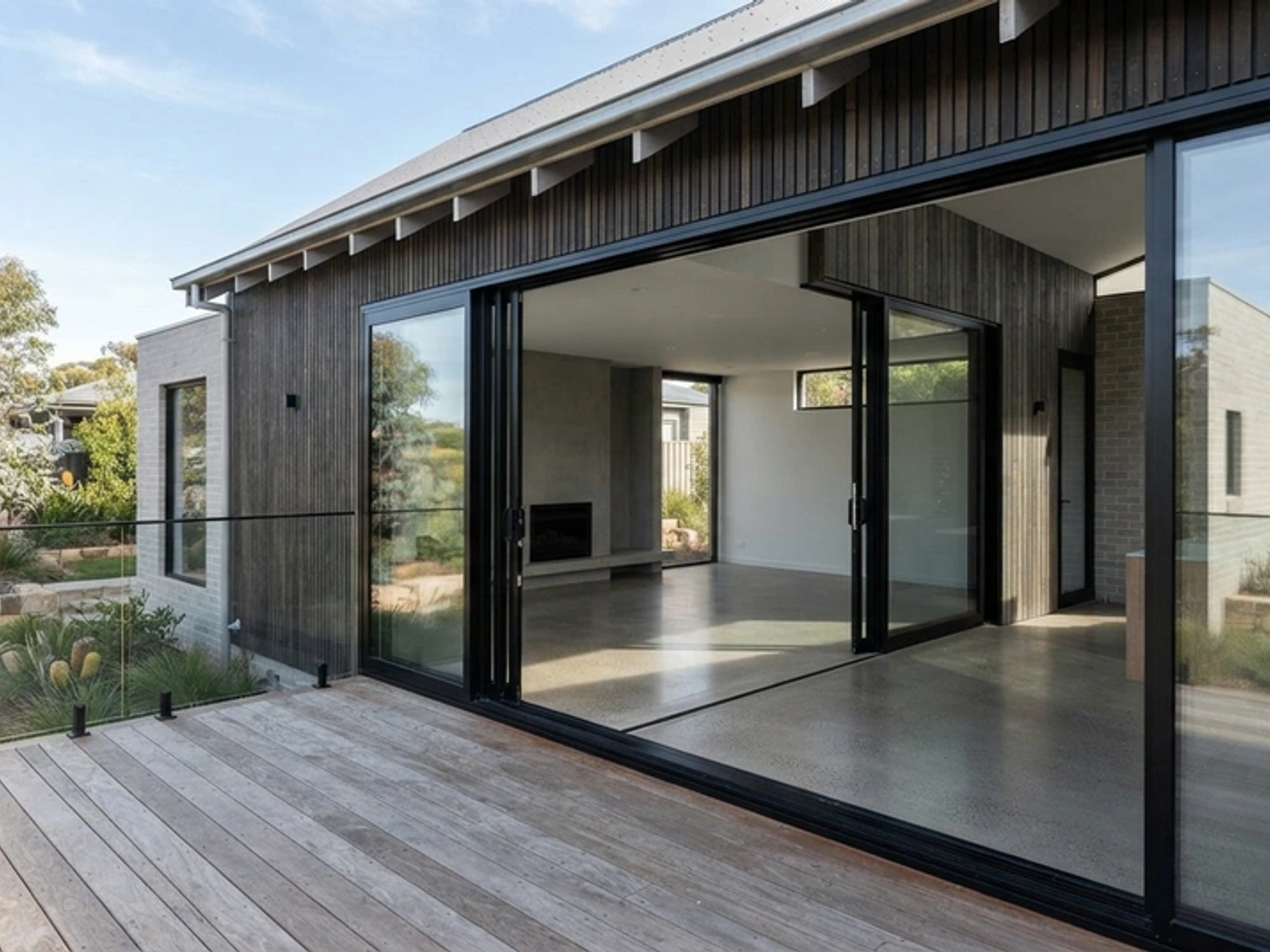
Smiro vs. SEM Windows: Buyer’s Guide
Choosing between Smiro and SEM Windows comes down to supply chain and service models. Both deliver AS 2047 and NCC 2022 7-star compliant aluminium systems. Smiro offers factory-direct pricing with dedicated in-house Australian installation teams—ideal for custom residential and builder projects. SEM Windows pairs an overseas-local hybrid supply model with multi-state showrooms, excelling in large-scale commercial developments.
Retrofitting High-Performance Glazing for Existing Homes
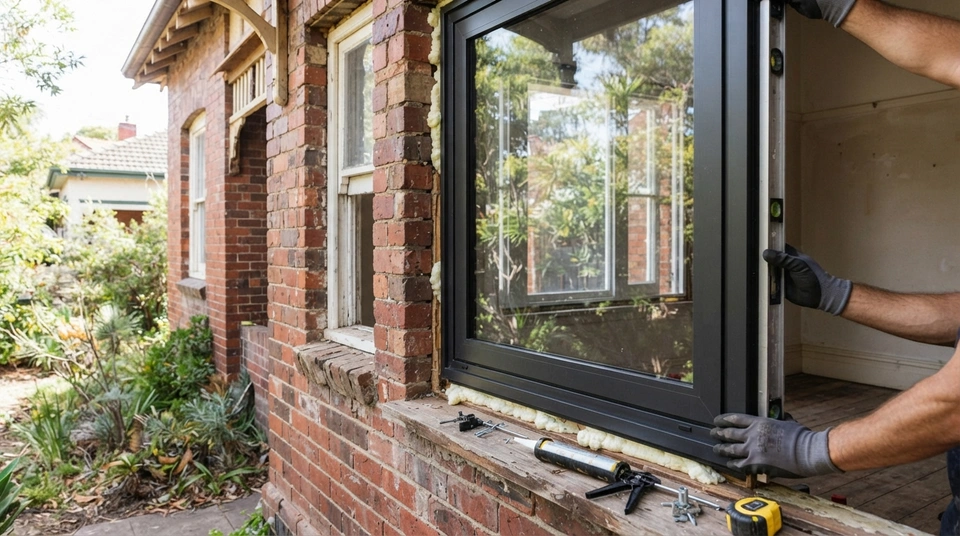
Retrofitting high-performance glazing in existing Australian homes significantly improves thermal comfort and reduces energy bills. Options range from installing double or triple glazed units to more cost-effective secondary glazing. Considering Australia's diverse climate zones is crucial, as up to 35% of energy can escape through single-glazed windows in older homes, contributing to emissions.
Can a 7-Star Home Still Fail NCC 2022? Load Limits
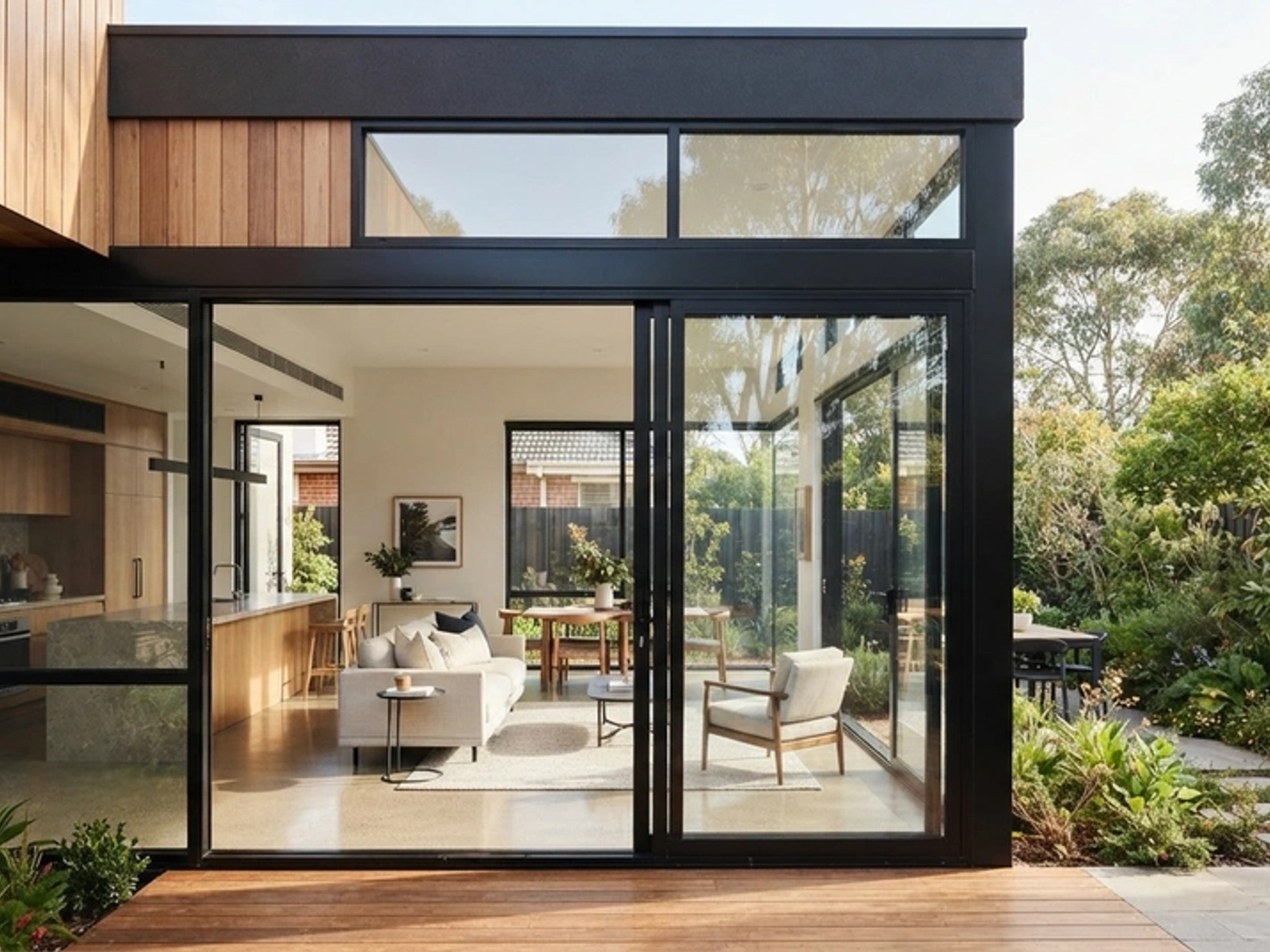
Yes. Under NCC 2022 Volume Two Specification 42, achieving a 7-star NatHERS rating is not enough on its own. A home must pass a dual-gate compliance test: meeting the overall 7-star energy rating while ensuring that separate heating and cooling loads (in MJ/m²·annum) do not exceed the strict caps set out in the ABCB Standard for NatHERS Heating and Cooling Load Limits. If an unshaded window layout breaches the cooling limit, the project fails building approval regardless of its star rating.
Does Window Frame Colour Affect NatHERS Ratings?
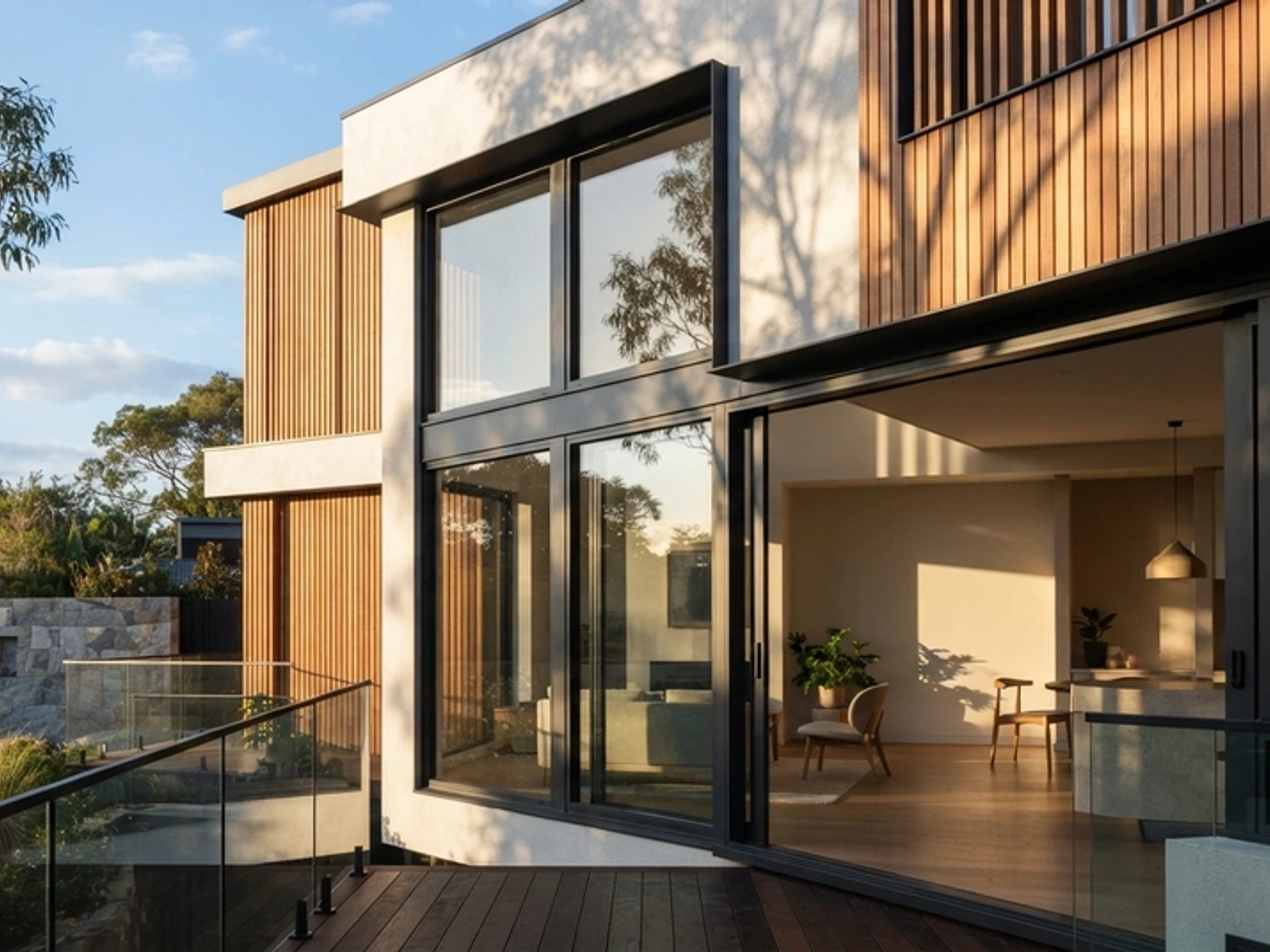
Yes. In NatHERS energy software, window frame colour is modeled as a thermal parameter called solar absorptance across three categories: Light (≤0.40), Medium (0.41–0.60), and Dark (>0.60). Changing frame colours typically shifts a home's overall rating by 0.1 to 0.3 stars. Dark frames (like Monument or Black) absorb solar heat, which can marginally benefit heating-dominated southern climates like Melbourne, but penalizes cooling-dominated climates like Brisbane by increasing summer cooling loads.
NCC 2022 vs NCC 2025: Which Code Applies in 2026?
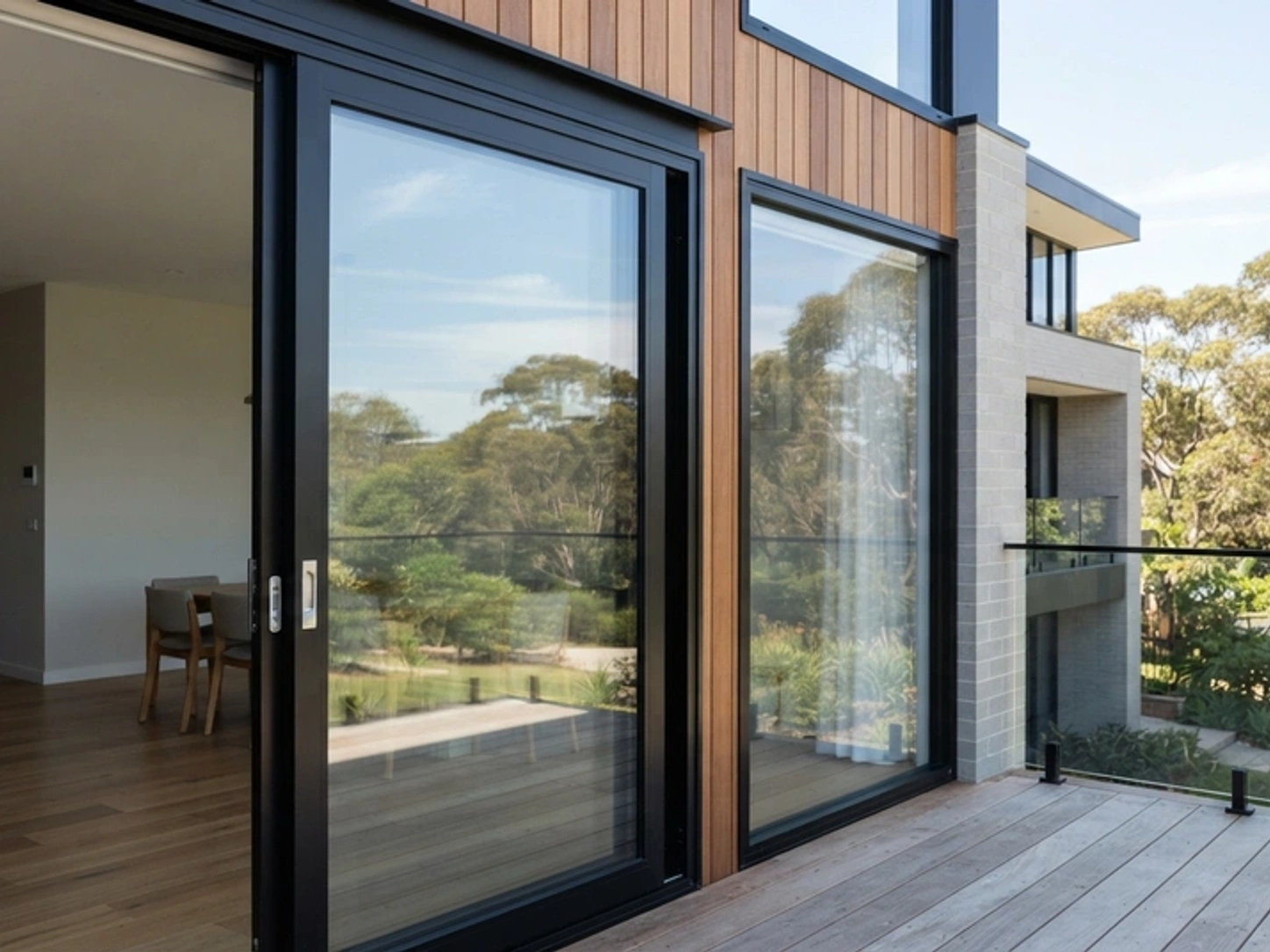
In 2026, the applicable building code depends on your state and permit lodgement date. While Victoria, the ACT, and Western Australia adopted NCC 2025 on 1 May 2026, New South Wales, Queensland, and South Australia (for building work) deferred adoption to 1 May 2027, meaning NCC 2022 remains legally operative. For detached residential homes, building ministers confirmed a freeze on new energy stringency until mid-2029, so the 7-star NatHERS and 60-point Whole of Home standards from NCC 2022 carry forward unchanged into NCC 2025.
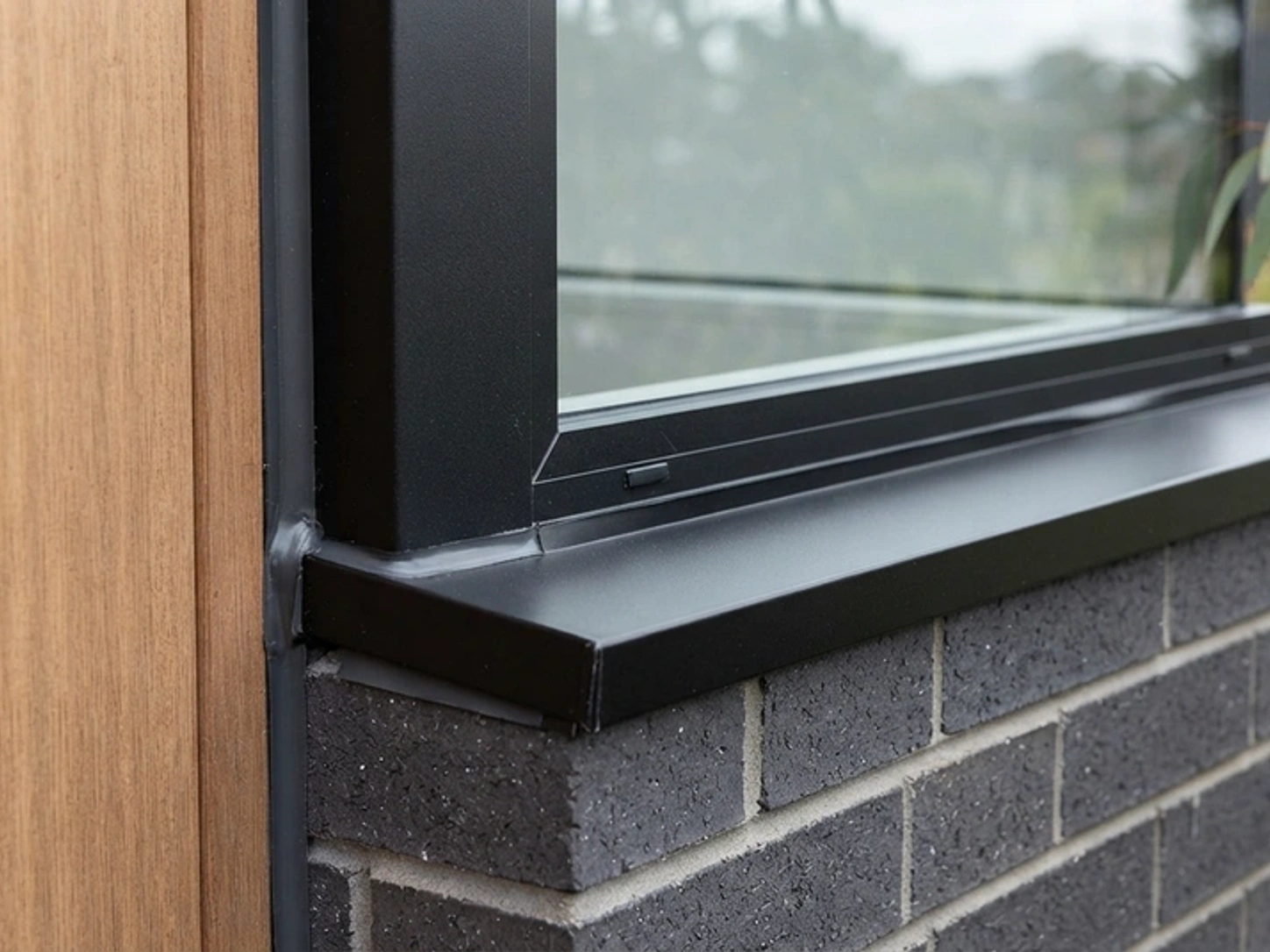
NCC 2022 Window Installation Rules: Head Gaps & Flashings
Under NCC 2022 Housing Provisions Part 8.2, windows and external glazed doors must be installed so structural building loads are never transferred to the frame. The code mandates a minimum 10mm clearance gap between the top of the window and loadbearing framing or lintels (increasing over wide spans), limits packing strictly to the jambs and sill, requires packers to remain clear of flashings, and enforces integrated weatherproofing.
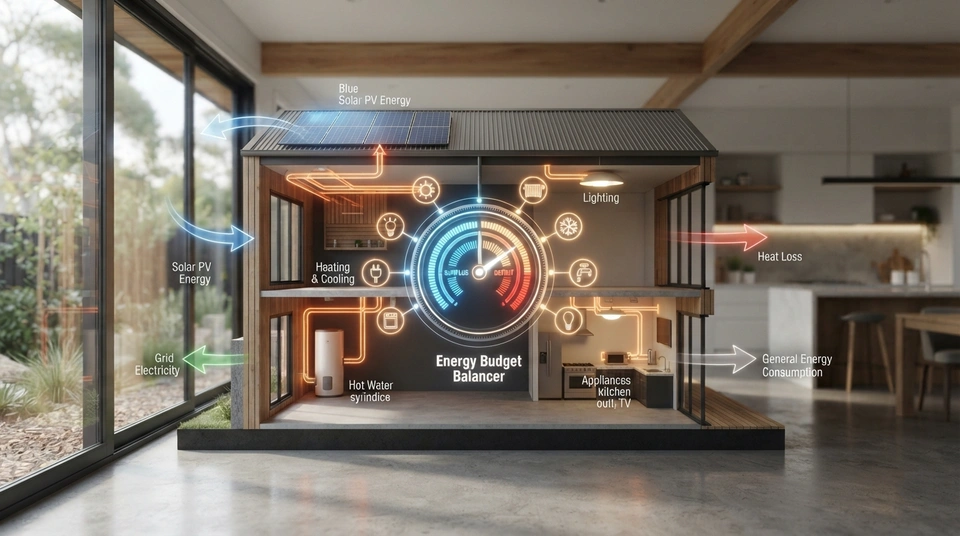
Windows, Doors & NCC 2022 'Whole of Home' Energy
NCC 2022 mandates a 7-star NatHERS thermal shell rating and introduces a new 'Whole of Home' annual energy budget for fixed appliances. High-performance windows and doors, with optimised U-value, SHGC, and airtightness, significantly reduce heating and cooling loads. This offers crucial design flexibility, allowing builders and homeowners to balance window performance with other energy-consuming elements to meet overall home energy targets.
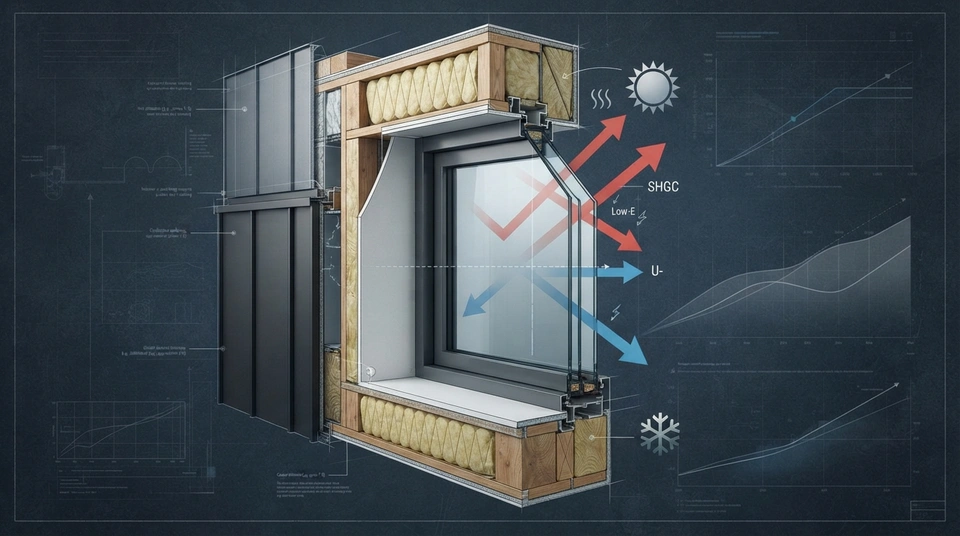
7-Star NatHERS: Window & Door Selection
NCC 2022 mandates a 7-star NatHERS rating for new homes, requiring high-performance glazing and thermally broken frames to manage heat transfer. While double glazing isn't always mandatory, optimising window properties like U-value and SHGC, alongside design choices such as orientation and size, is crucial. This approach helps reduce energy bills and improve comfort across Australia's diverse climate zones.
NSW Rental Standards: Energy Efficiency & Window Fall Safety
NSW is actively considering two major regulatory shifts for residential windows and doors. Under the 2026 Minimum Energy Efficiency Rental Standards (MEERS) consultation, potential draught-sealing rules are being weighed against condensation and mould risks, favouring balanced airtightness and ventilation. Concurrently, NSW is reviewing a proposed expansion of child window fall-prevention rules to older non-strata houses and townhouses, requiring certified 125mm restrictors (250N force resistance) on high-risk upper-floor windows.
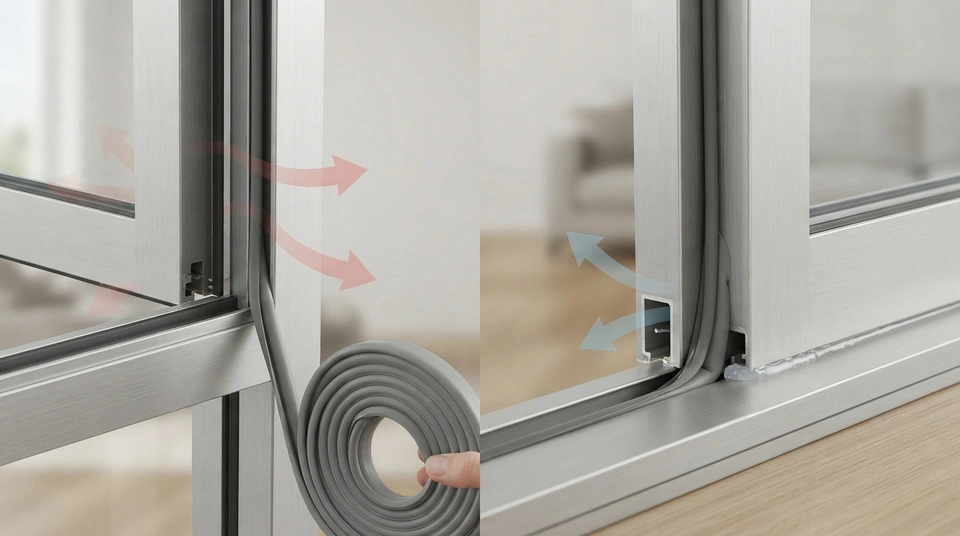
Victoria's New Rental Draughtproofing Standards
New minimum energy efficiency standards for Victorian rental properties commence in phases from 1 March 2027. Specifically, from 1 July 2027, rental providers must draughtproof all external doors, windows, and unsealed wall vents using draught-sealing or weather-stripping products. This aims to reduce energy costs and improve comfort for renters, with landlords able to access Victorian Energy Upgrades (VEU) program discounts for compliance.
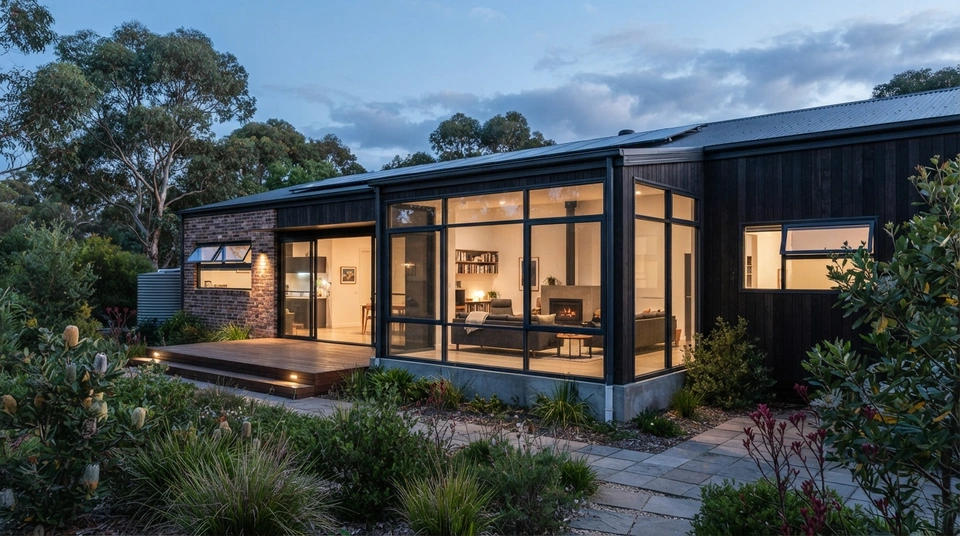
Future Windows & Doors: Zero-Carbon-Ready Code
Australia's move towards a 'zero-carbon-ready' building code by 2030 will significantly elevate performance standards for windows and doors. Expect stricter energy efficiency requirements, including improved U-values and solar admittance, and a greater emphasis on airtightness to minimise heat loss and prevent condensation. This shift will drive demand for advanced glazing, better frames, and precise installation to meet whole-of-home energy targets.
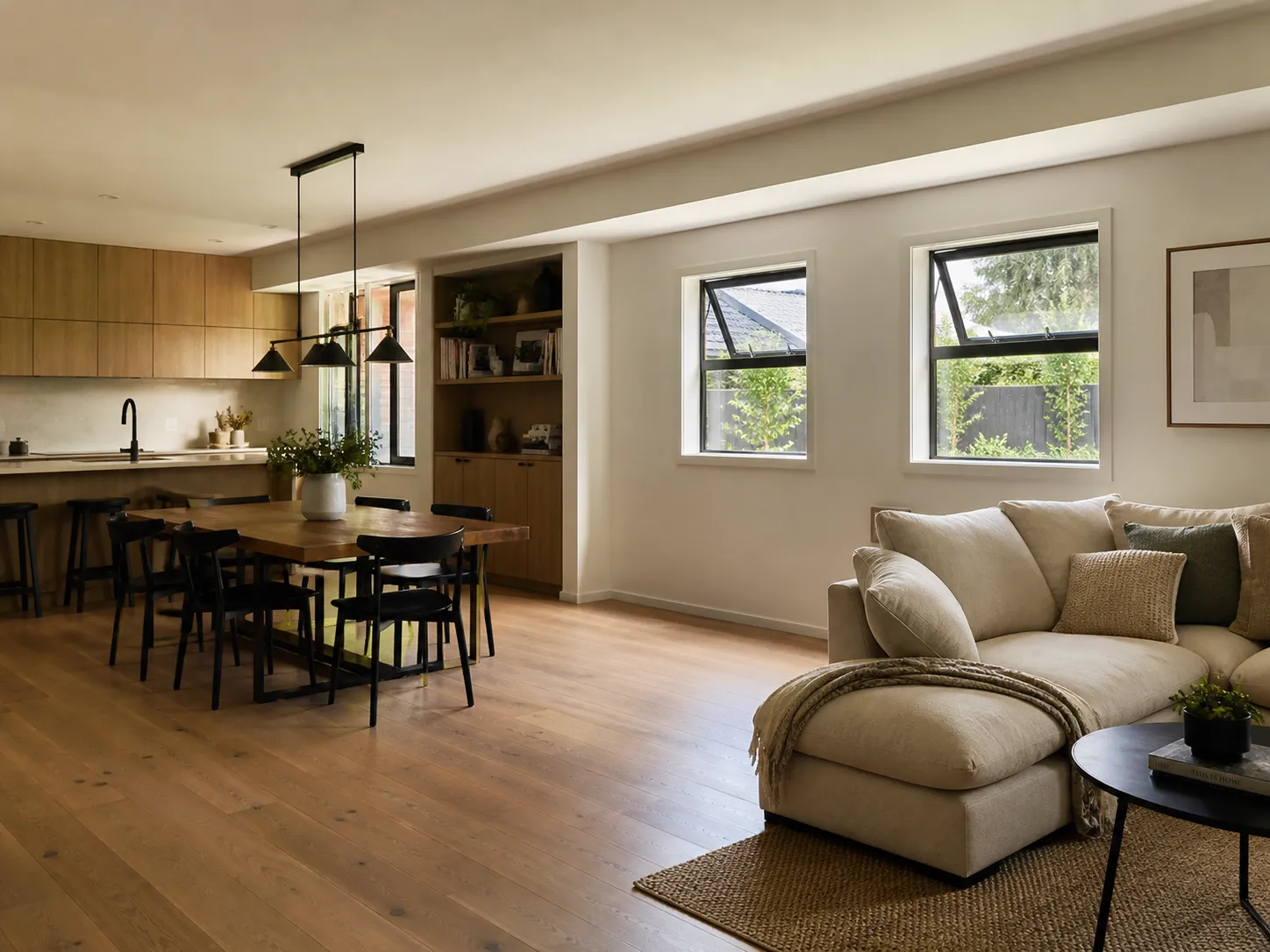
Are Aluminium Awning Windows Worth It?
Aluminium awning windows are top-hinged sashes that open outward from the bottom on a chain winder, and the open sash deflects rain away from the opening. That makes them the one window you can leave open through a shower - the standard pick for bathrooms, kitchens and high walls - in exchange for airflow: the sash opens only to around 45 degrees and blocks much of its own opening.
Are Aluminium Hinged Doors Worth It?
Aluminium hinged doors are built from one or two sashes that swing on side-mounted hinges and compress into a continuous perimeter seal when they close. That compression makes them the tightest-sealing aluminium door type in Australia - better than sliding on energy, sound and weather, with multi-point locks as standard security. They trade that seal for swing space: every hinged door needs clear floor in front of it.
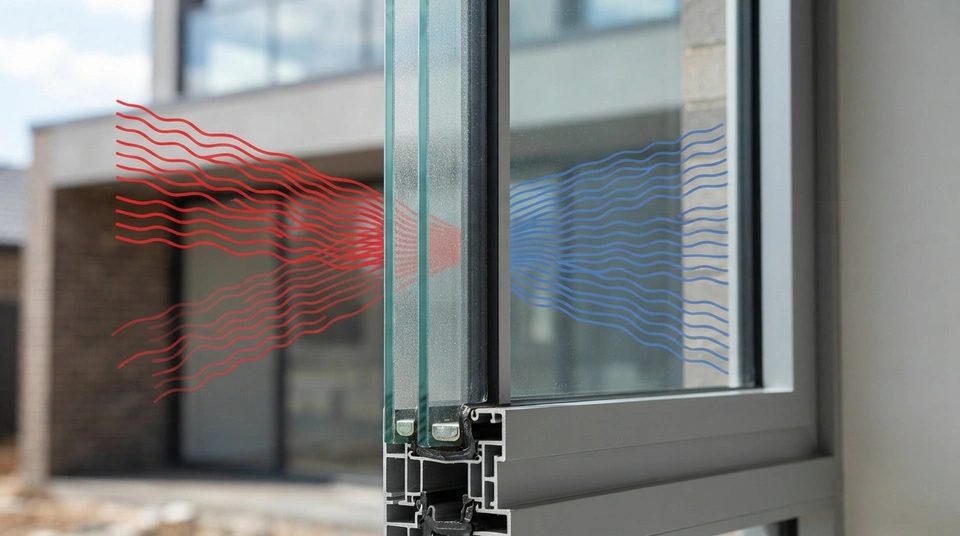
Low-E Glass Energy Savings in Australia: Costs & Payback
Low-E (low-emissivity) glass has a microscopically thin, virtually clear coating that reflects infrared heat back into a room in winter and blocks solar heat in summer. It is the most cost-effective single upgrade to a window's thermal performance, and paired with double glazing it can cut heating and cooling bills by hundreds of dollars a year in cool Australian climates.
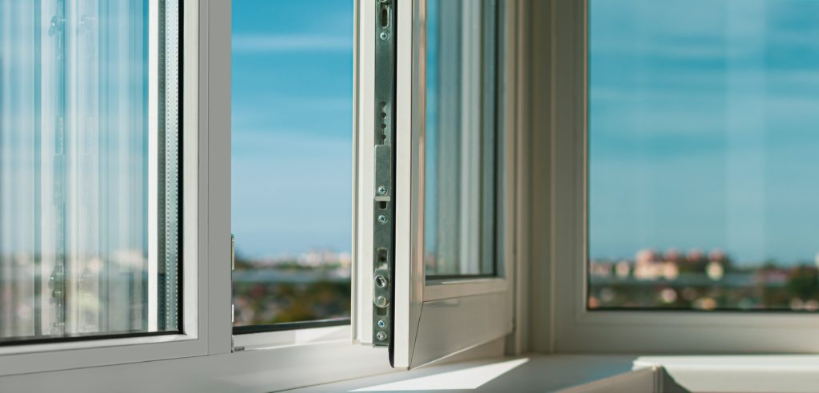
What Is Double Glazing? How Double Glazed Windows Work in Australia
A double glazed window is an assembly built around an Insulated Glass Unit (IGU)—two panes of glass separated by a hermetically sealed cavity filled with dry air or inert argon gas. The trapped cavity acts as an insulating barrier that dramatically slows conductive heat transfer, cutting winter heat loss by up to 30% to 50% compared to single glazing, raising interior glass surface temperatures to prevent condensation, and muffling outdoor noise.
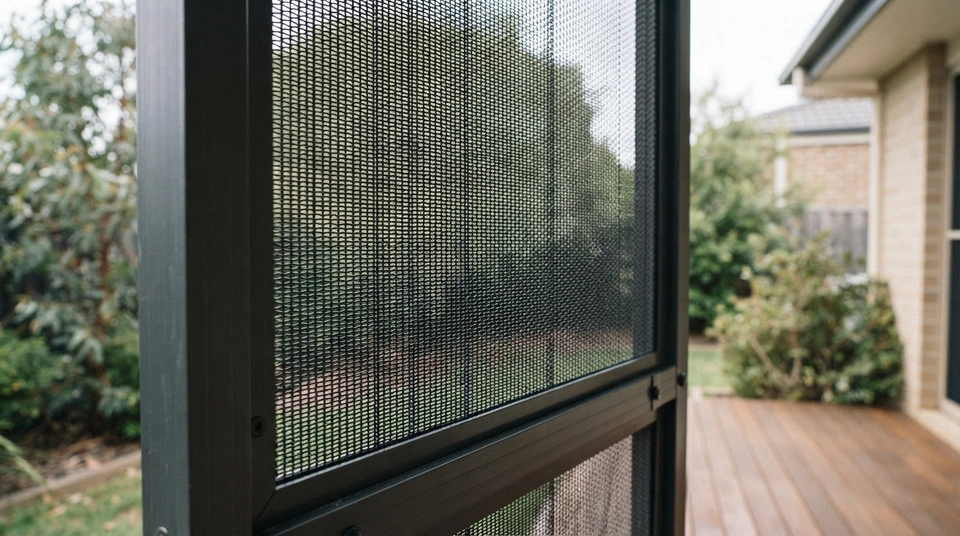
Understanding Security Mesh for Windows and Doors
Security mesh for windows and doors is a woven steel fabric fitted inside an aluminium frame. It is designed to enhance home security and resist bushfire embers, and it forms a far stronger barrier than a standard fibreglass insect screen. It matters most in bushfire-prone areas and wherever a home's openings face a real break-in risk.
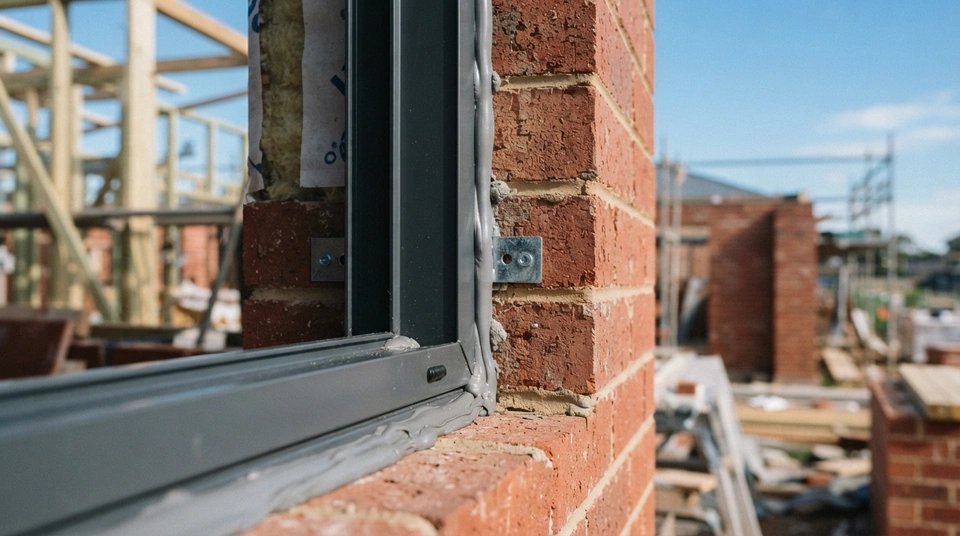
AS 2047: Australian Window & Door Standard
AS 2047 is the Australian Standard for “Windows and external glazed doors in buildings”, currently AS 2047:2014. It sets the mandatory minimum specification for products used in Australia, and the National Construction Code references it, making compliance a condition of building approval.
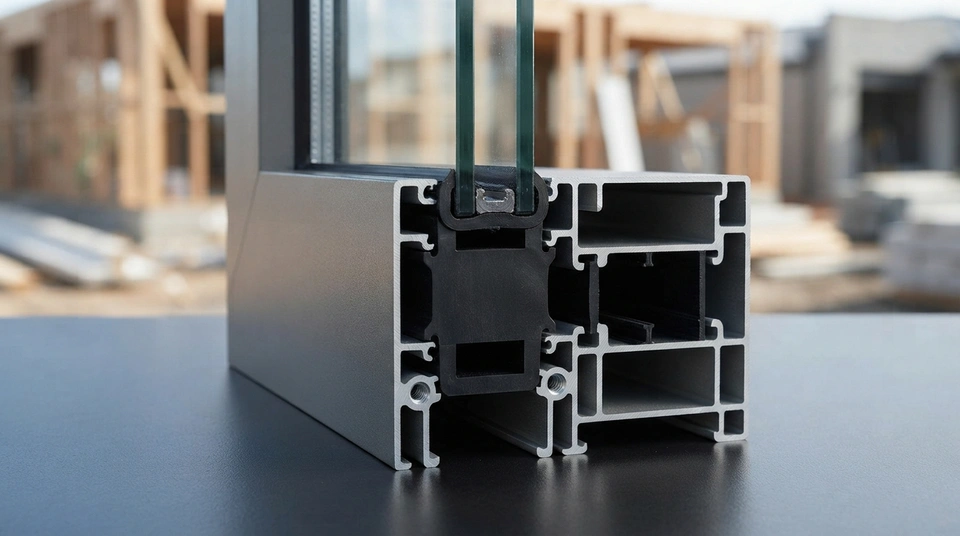
Thermal Breaks: Improving Aluminium Window Performance
A thermal break is an insulating material, typically a low-conductivity polymer, strategically placed between the interior and exterior sections of an aluminium window frame. Its primary function is to minimise heat and cold transfer through the frame, as aluminium is a strong thermal conductor. This significantly enhances the window's overall thermal performance, crucial for improving energy efficiency and comfort in Australian buildings.
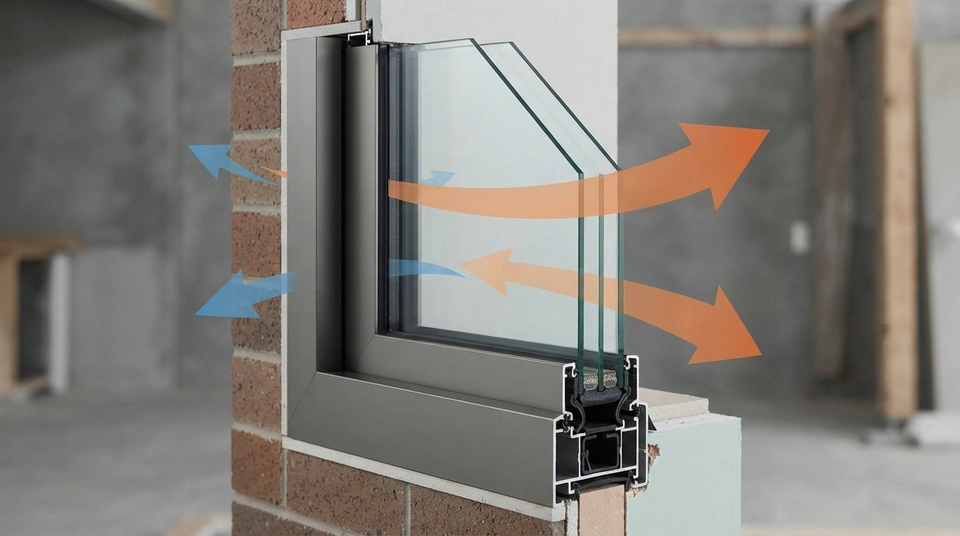
Understanding Window U-value
U-value measures how quickly heat conducts through a window — the whole assembly, including the glass, frame, seals and spacers, not the glass alone. It is expressed in watts per square metre per kelvin (W/m²K), and a lower number means better insulation. In Australia it is the one figure on your energy report that you cannot exceed.
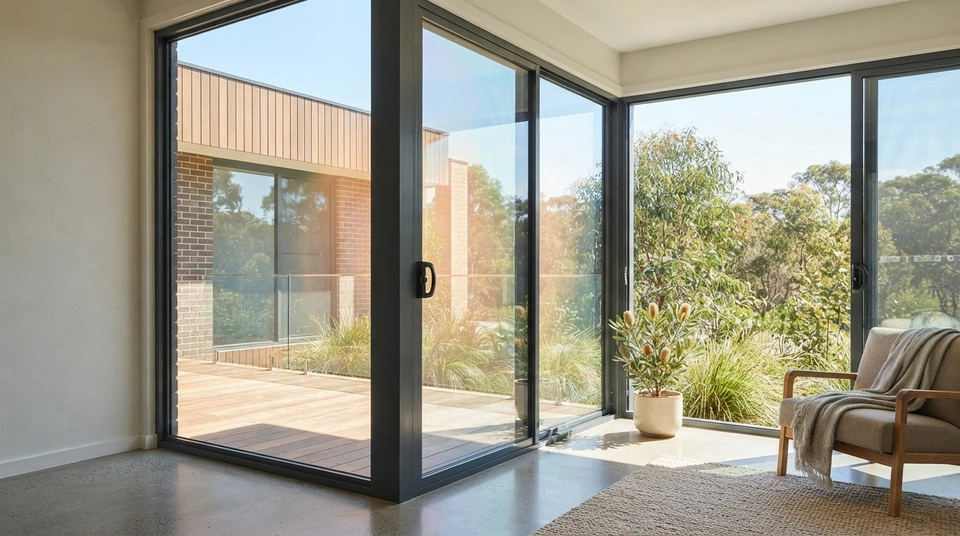
Understanding Solar Heat Gain Coefficient (SHGC)
The Solar Heat Gain Coefficient (SHGC) measures how readily solar heat passes through an entire window or door system, including both the glass and the frame. Expressed as a decimal between 0 and 1, a lower SHGC means less solar heat is transmitted. It is a 'whole window value' that is central to NCC compliance and WERS ratings across Australia's varied climates.
Need a project-specific answer?