
Window Comparisons & Selection
Slimline vs Standard Aluminium Windows: Frame Width, Glass Area and Daylight Compared
By Sheng Xu · 2 October 2026
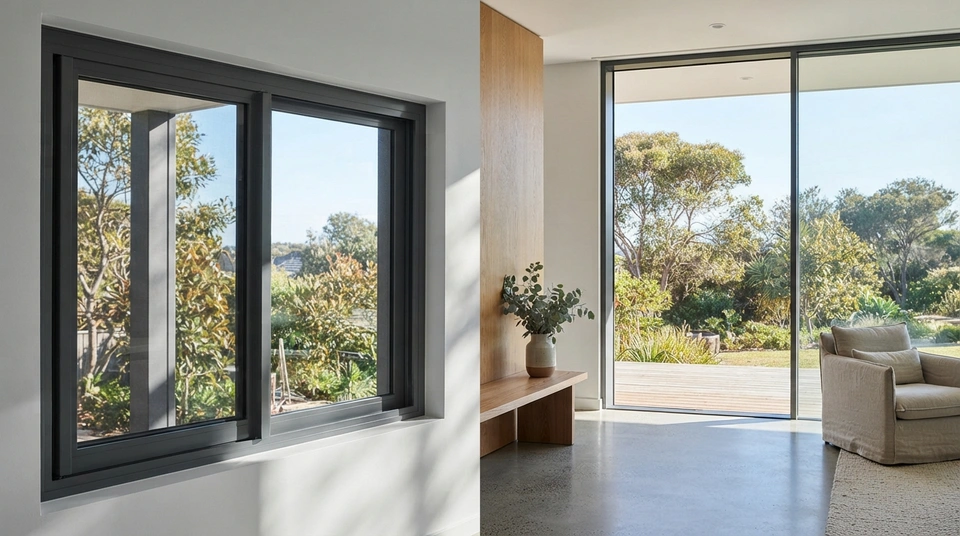
AI-generated illustrative image. Not a product test, certification record or project evidence.
Slimline aluminium windows have a narrower visible frame than standard profiles, but we found no Australian standard that defines the term. Supplier figures range from under 50 mm to 70 mm for slimline and from 65 mm to 120 mm for standard. In an illustrative calculation on a 1200 x 1800 mm fixed window, narrowing the frame from 65 mm to 45 mm adds only about 6% more visible glass.
Slimline aluminium windows have a narrower visible frame than standard profiles, so a larger share of the opening is glass. The catch is that we found no Australian standard that defines "slimline", and suppliers measure and label frame width in different ways. That makes comparing a slimline quote with a standard one harder than it looks.
This guide compares the two on frame width, glass area and daylight, shows an illustrative calculation you can repeat for your own openings, and lists what you give up in return for a slimmer frame. For the broader picture on fixed glazing, where slim frames show most, see the fixed aluminium windows guide.
What does slimline actually mean?
There is no agreed threshold. One supplier site aimed at Australian buyers describes slimline as a visible face width below 50 mm, against 65 to 75 mm for standard aluminium profiles. Another supplier page puts slimline at roughly 40 to 70 mm and standard at 80 to 120 mm. The two ranges overlap, so a 65 mm frame can be "slimline" in one brochure and "standard" in another.
These figures come from supplier marketing, not from a standard or an independent test. Treat any millimetre threshold as that supplier's definition, and compare quotes on measured widths instead of labels.
Where is frame width measured?
Sightline means the width of aluminium you can see from straight on when the window is closed. It is not the depth of the profile and not the wall thickness of the extrusion. Frame depth is a separate measurement, and a deep profile can still have a narrow face.
Window sightline guides recommend asking which part of the window a number refers to: the outer frame, the combined frame and sash, or the centre division where two sections meet. The guidance is to compare the combined visible width rather than one component in isolation. One supplier guide suggests asking for the face width at the meeting stile, because that is the figure you look at every day and the one that varies most between systems. Our window sightline explainer goes through each measurement point.
Window type matters too. The same supplier says fixed panels often run 10 to 20 mm narrower per edge than operable sashes, because opening windows need room for hardware. Minimal-frame systems, which one supplier describes as having interlocks of around 20 to 30 mm, are a different category again, and our guide to slimline, minimal frame and steel-look labels explains how they differ.
How much more glass does a narrower frame give?
On a 1200 mm by 1800 mm opening, narrowing the frame from 65 mm to 45 mm adds about 6% more visible glass, even though it removes about 30% of the visible frame area. That gap surprises people, because the frame is only a fraction of the opening to begin with.
Here is the illustrative calculation. It is simple geometry, not a measurement of any product. It assumes a single fixed pane, the same face width on all four sides, and visible glass equal to (width minus twice the frame width) multiplied by (height minus twice the frame width).
The opening is 2.16 square metres. With a 100 mm frame, visible glass is 1.600 square metres, or 74.1% of the opening. With a 65 mm frame it is 1.787 square metres (82.7%). With a 50 mm frame it is 1.870 square metres (86.6%). With a 45 mm frame it is 1.898 square metres (87.9%).
Moving from 65 mm to 45 mm therefore adds about 6.2% more glass. Moving from a 100 mm frame to a 50 mm frame adds about 16.9%. The benefit is biggest when the starting frame is very wide, and it shrinks as frames get slimmer.
Opening size changes the result as well. On a large 2400 mm by 2100 mm opening, the same 65 mm to 45 mm change adds only about 3.8%, because the frame is a smaller share of a bigger opening. On a smaller 1200 mm by 1500 mm window the same model gives about 6.8%.
Supplier figures vary for the same reasons. The supplier cited above says moving from a 65 mm to a 45 mm profile on a 1200 mm by 1500 mm window adds roughly 8 to 10% more visible glass, which is higher than the simple model's 6.8%. A supplier calculation may count extra members or different widths. A UAE supplier reports about 20% more glass on a 3000 mm by 2400 mm opening, but that compares a 20 mm minimal system with a 100 mm standard one, which is an extreme pairing.
To check a claim, ask for the opening size, the frame widths on each side and the members counted. If the supplier cannot provide them, the percentage is marketing rather than measurement.
Does more glass mean more daylight?
More visible glass lets in more light in principle, but a few percentage points of glass rarely outweighs orientation, glass type, shading and room depth. Treat the daylight benefit as real but modest, and keep any claim about it qualitative.
The glass itself sets how much visible light gets through. Visible transmittance measures that, and tinted or reflective-coated glass can reduce it compared with clear glass. A slimline frame with heavily tinted glass can admit less light than a wider frame with clear glass.
Homeowners sometimes worry that bulkier thermally broken frames will cut light. The geometry above is worth running for your own opening before you decide, because the frame is only a fraction of the opening and the glass specification often matters more.
More glass also means more solar heat gain on hot elevations. If you are chasing a brighter room on a west-facing wall, the glass specification matters more than frame width. Our SHGC explainer covers that trade-off.
What do you trade for a slimmer frame?
A slimmer frame is mainly a visual benefit. It can limit glass thickness, panel span and hardware choices, so ask what the slim system was designed and tested to carry.
Structure and wind
The supplier above notes that slimmer profiles carry less material cross-section, which affects how they handle wind pressure, self-weight over wide spans and the loads from opening hardware. That does not make slim frames weak. It means performance depends on the specific system, the glass size and the testing. AS 2047 deals with complete windows and external glazed doors, so ask for the test report for the exact configuration you are buying. Our AS 2047 explainer covers what the standard tests.
Glazing thickness
The same supplier says a standard double glazed unit in Australia typically measures 20 to 28 mm in total thickness. Most slimline profiles with 40 to 50 mm sightlines take a 24 to 28 mm unit, but triple glazing, typically 36 to 44 mm thick, usually needs a profile with a wider sightline. Ultra-slim profiles below about 38 mm generally top out at the 24 to 28 mm double glazed units.
Thermal performance
Frames affect the thermal performance of the whole window, according to the YourHome guide to glazing, because heat moves through the frame as well as the glass. Slim does not mean thermally poor, and it does not mean thermally better. It depends on whether the frame has a thermal break and how it is built. Our articles on thermal breaks and on slimline energy efficiency cover this, so this guide does not repeat it.
Operating type
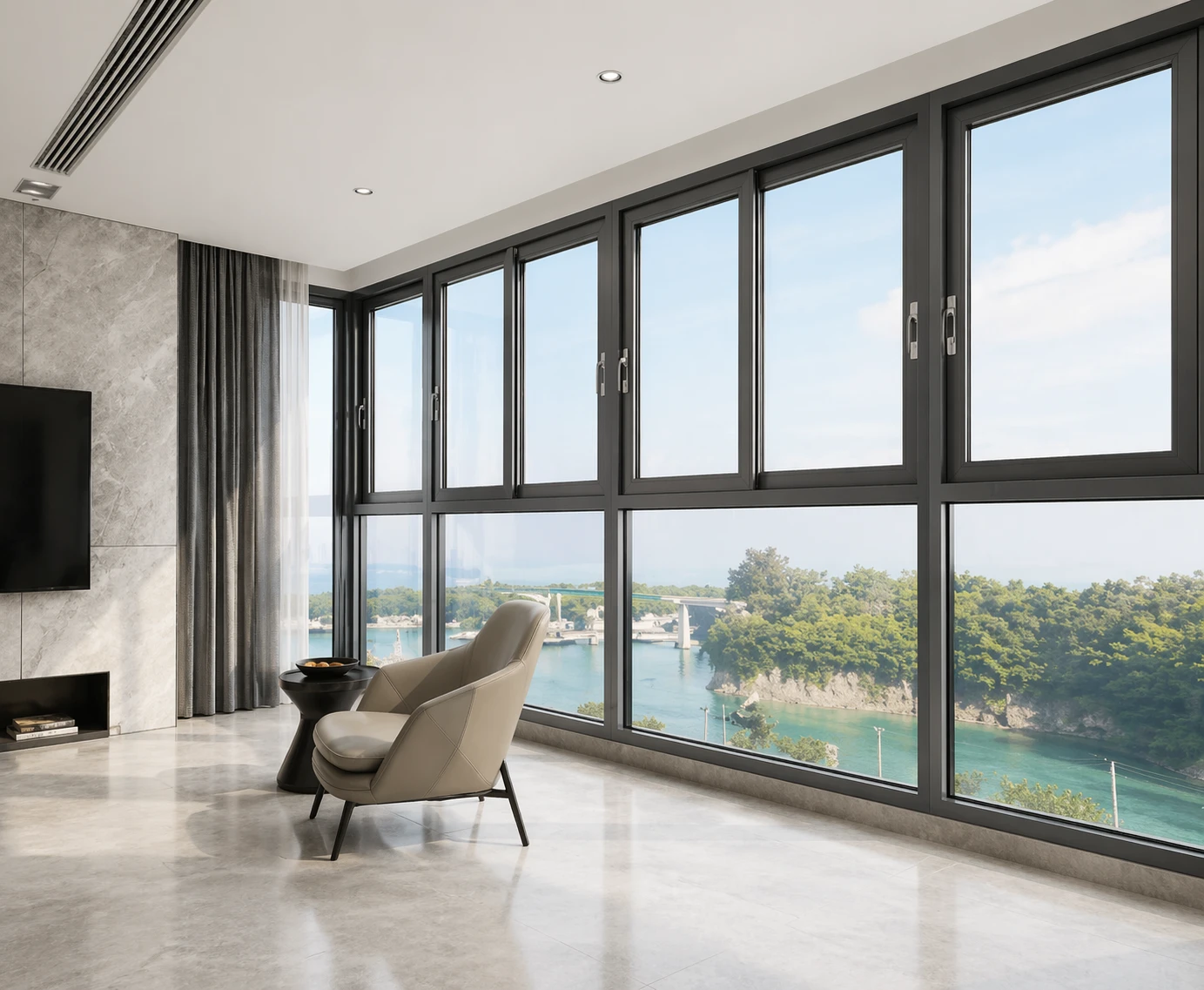
The NSW Planning Portal's BASIX guidance rates frame fraction by operating type: high for hinged and projected windows, medium for sliding windows and low for fixed windows. That fits what the supplier above says about fixed panels: the slimmest widths are most often found on fixed panes, because opening sashes need room for strength and hardware.
Which suits which opening?
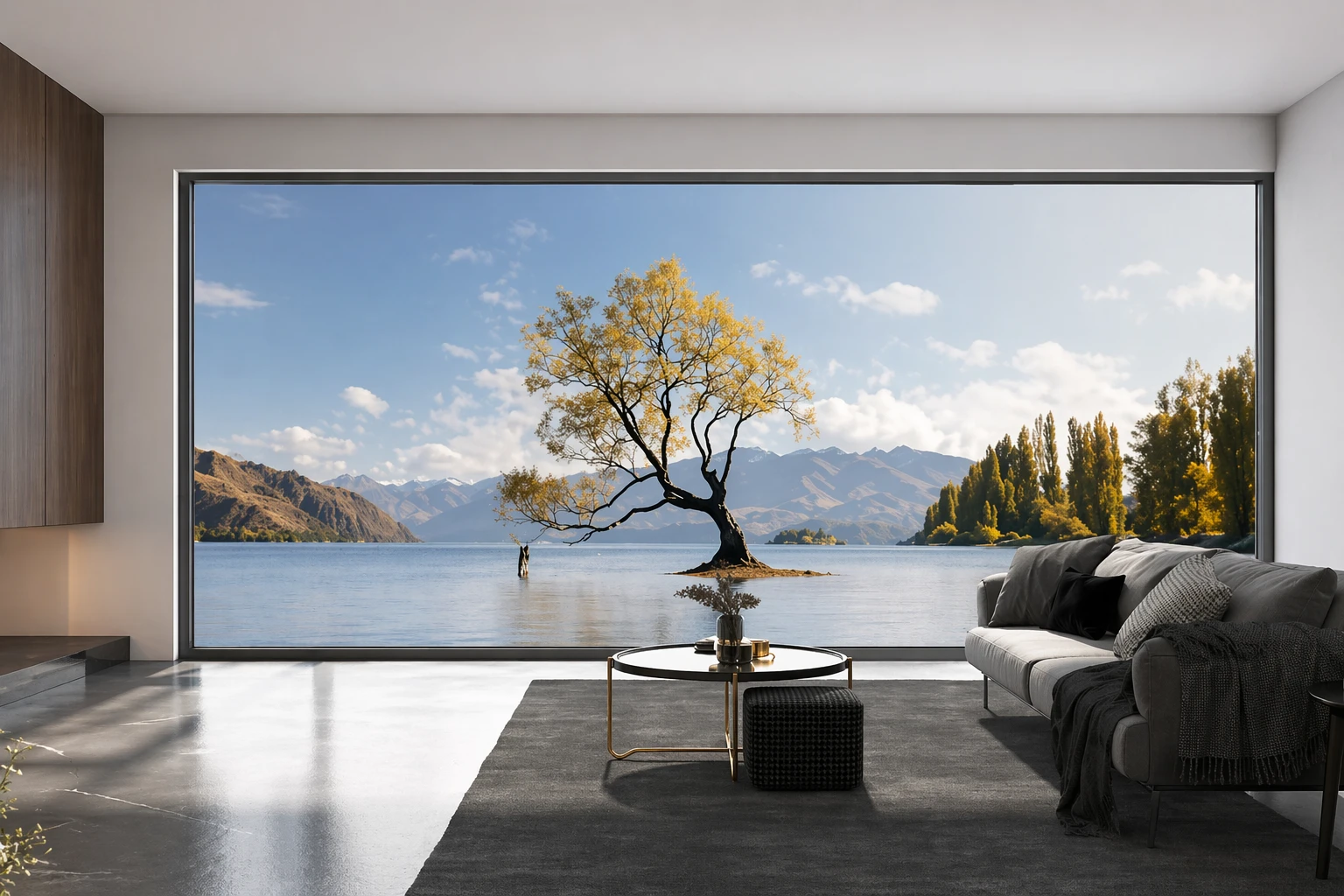
Slimline pays off most on fixed and large glass areas where the view matters. Standard profiles suit small openings, tight budgets and elevations where a heavier frame is part of the style.
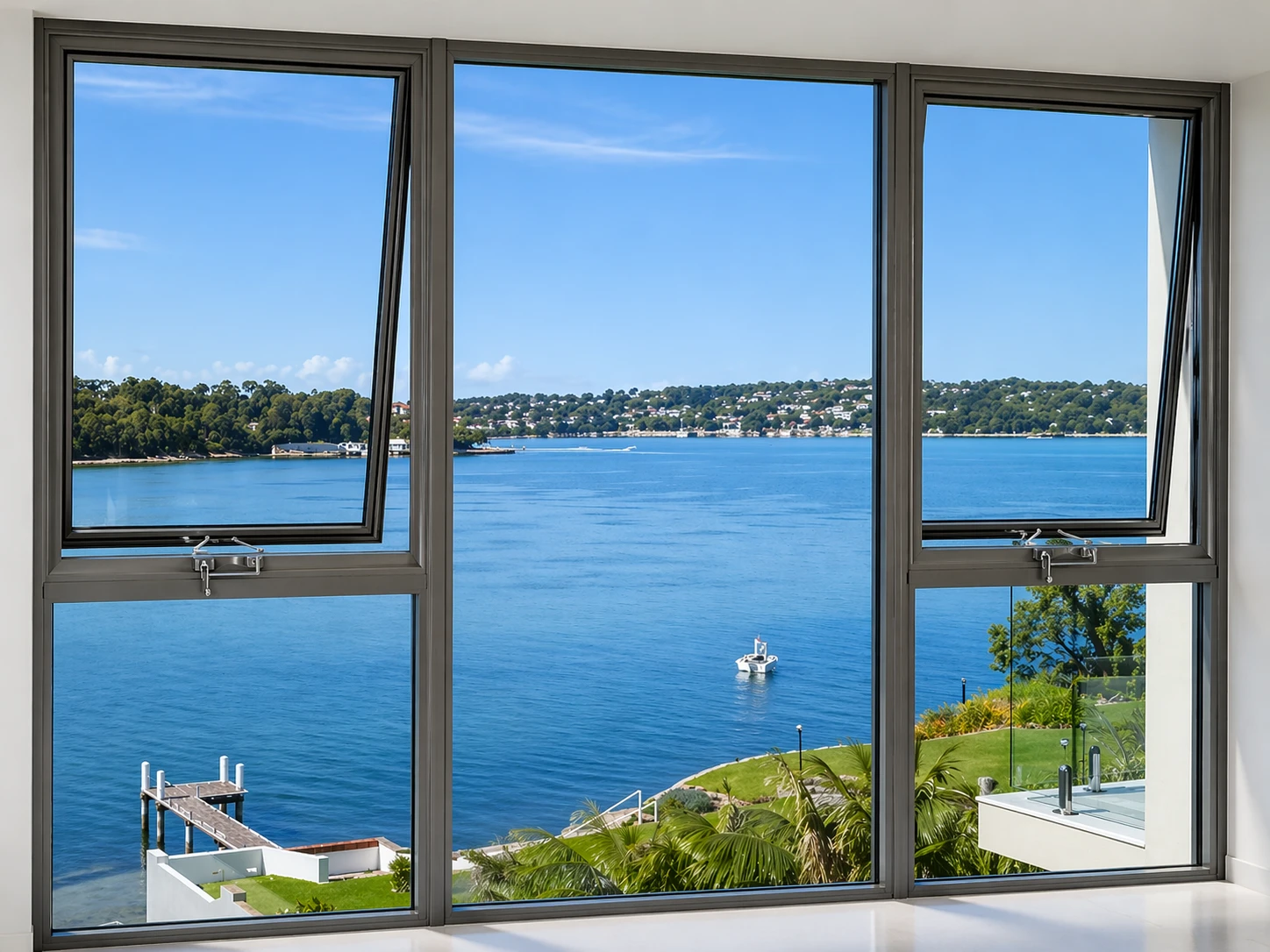
A practical approach, described by the supplier above, is to combine fixed panels where the view matters most with narrow opening windows nearby for ventilation. A living room might have a large fixed window flanked by slim awning sashes. In a small bathroom or laundry window, the arithmetic above shows the glass gain is small, so a standard profile is usually the sensible choice.
Our standard aluminium sliding window sizes guide shows common opening sizes, and the comparison of aluminium and uPVC sliding windows covers the other common frame choice.
Frequently Asked Questions
How much wider is a standard aluminium window frame than a slimline one?
It depends on the supplier. One supplier gives 65 to 75 mm for standard and under 50 mm for slimline, while another gives 80 to 120 mm for standard and 40 to 70 mm for slimline. We found no Australian standard that sets the figures, so ask for the measured face width at a stated point.
Do slimline windows really give more glass?
Yes, but the gain is smaller than the frame reduction suggests. On a 1200 mm by 1800 mm fixed window, going from 65 mm to 45 mm adds about 6% more visible glass in the simple model above. The gain is larger when the starting frame is much wider and smaller on big openings.
Are slimline frames as strong as standard frames?
Not automatically. Strength depends on the tested system, the glass size and the span, not on frame width alone. Slimmer profiles carry less material, so ask for the AS 2047 test report for the exact configuration you are buying.
Can slimline frames be double glazed?
Generally yes. Most slimline profiles in the 40 to 50 mm range take common double glazed unit thicknesses, according to one supplier. Triple glazing usually needs a wider profile, and ultra-slim systems may be limited to thinner units.
Before you accept a quote
Slimline versus standard comes down to a few checks. Confirm where the frame width is measured, work out the glass gain for your own opening, and ask what glass thickness and test evidence come with the slim system. If the quote cannot answer those, the label tells you little.
For fixed windows, where slim frames make the biggest visual difference, start with the fixed aluminium windows guide, then use the sightline explainer to compare quotes like for like.
Our Products
Fixed Windows
View system
Awning Windows
View system
Sliding Windows
View system
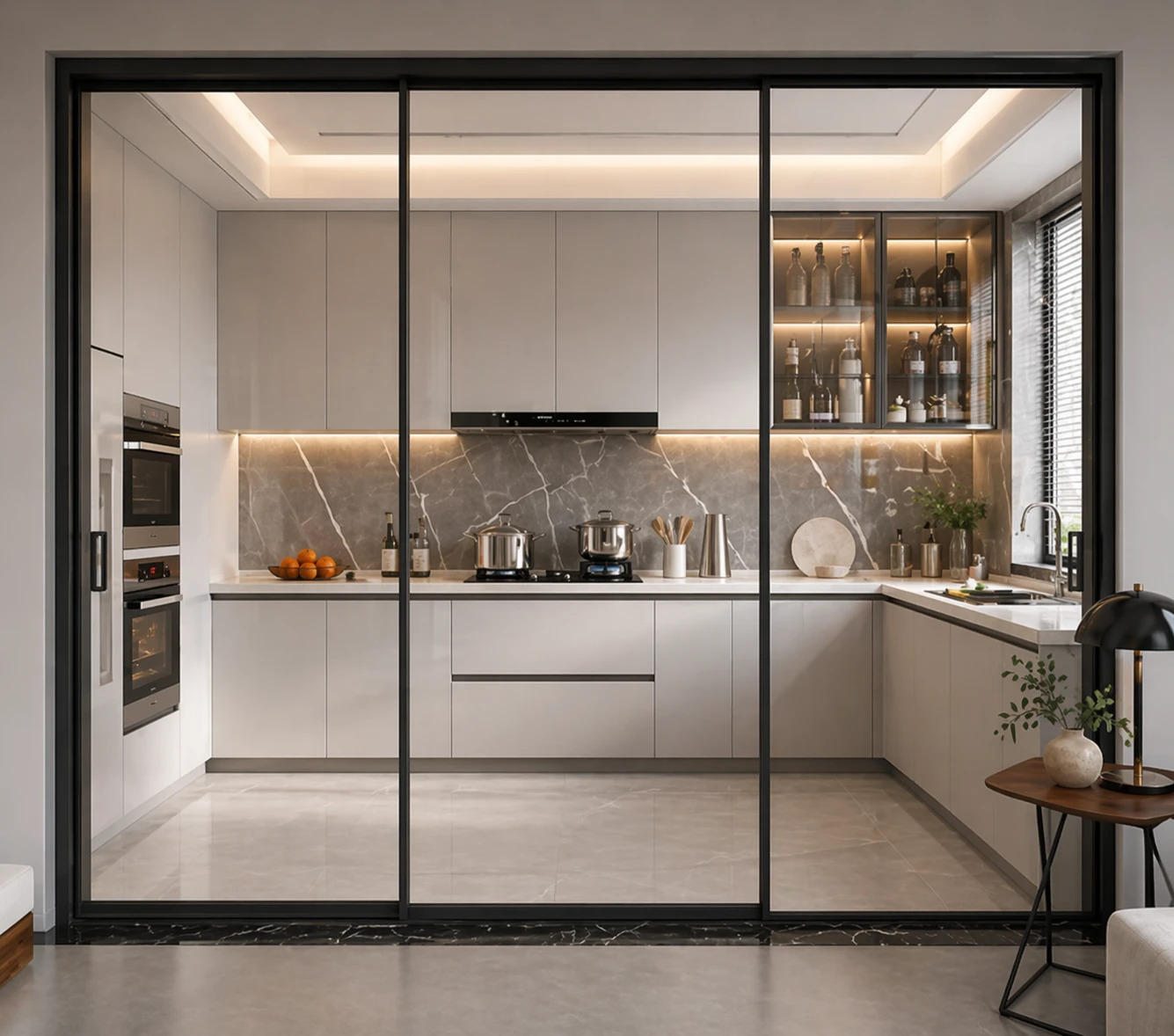
Sliding Doors
View system
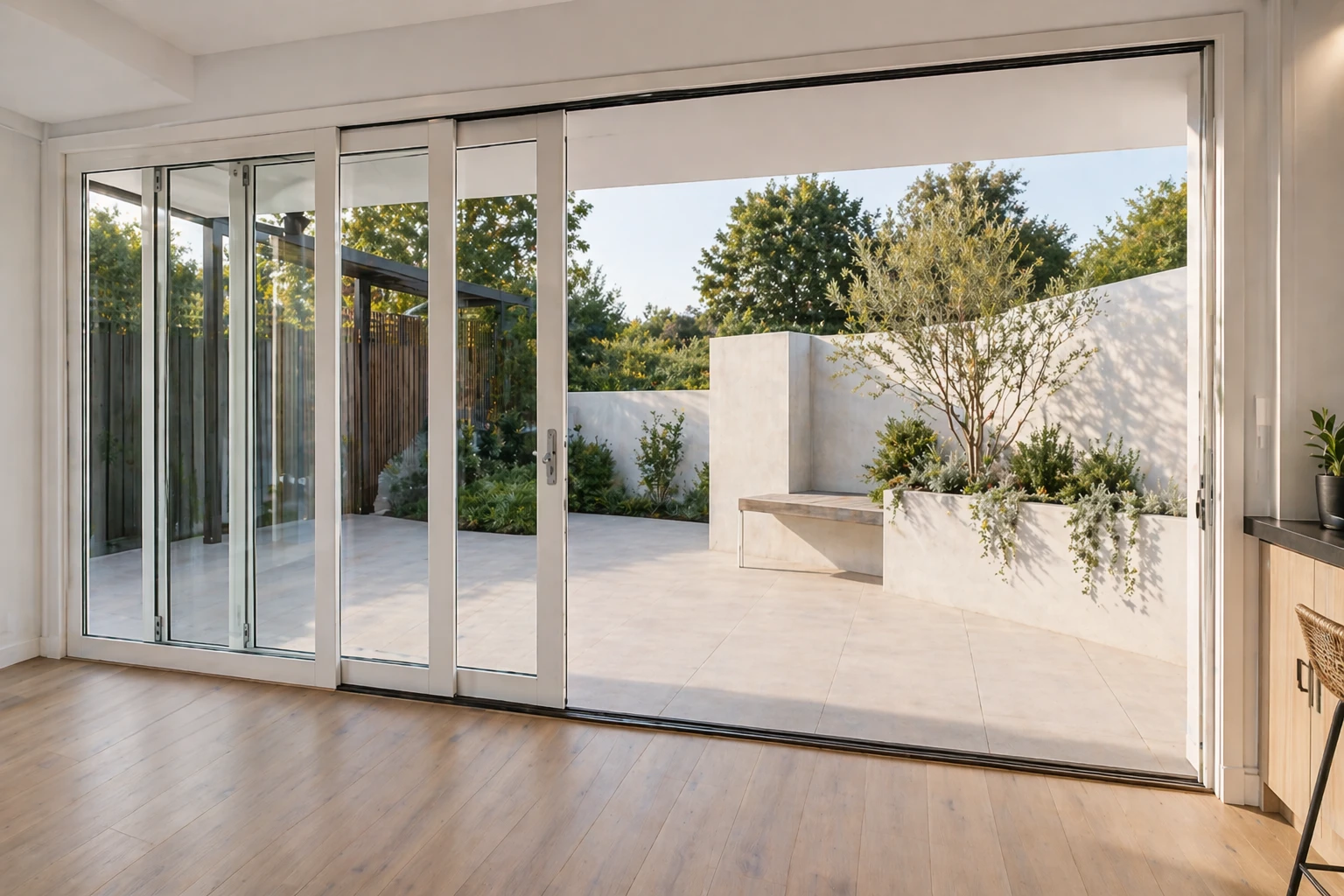
Stacker Doors
View system