Window Comparisons & Selection
Aluminium vs uPVC Sliding Windows: Durability, Lifespan, Thermal Performance and Aesthetics
By Sheng Xu · 25 September 2026
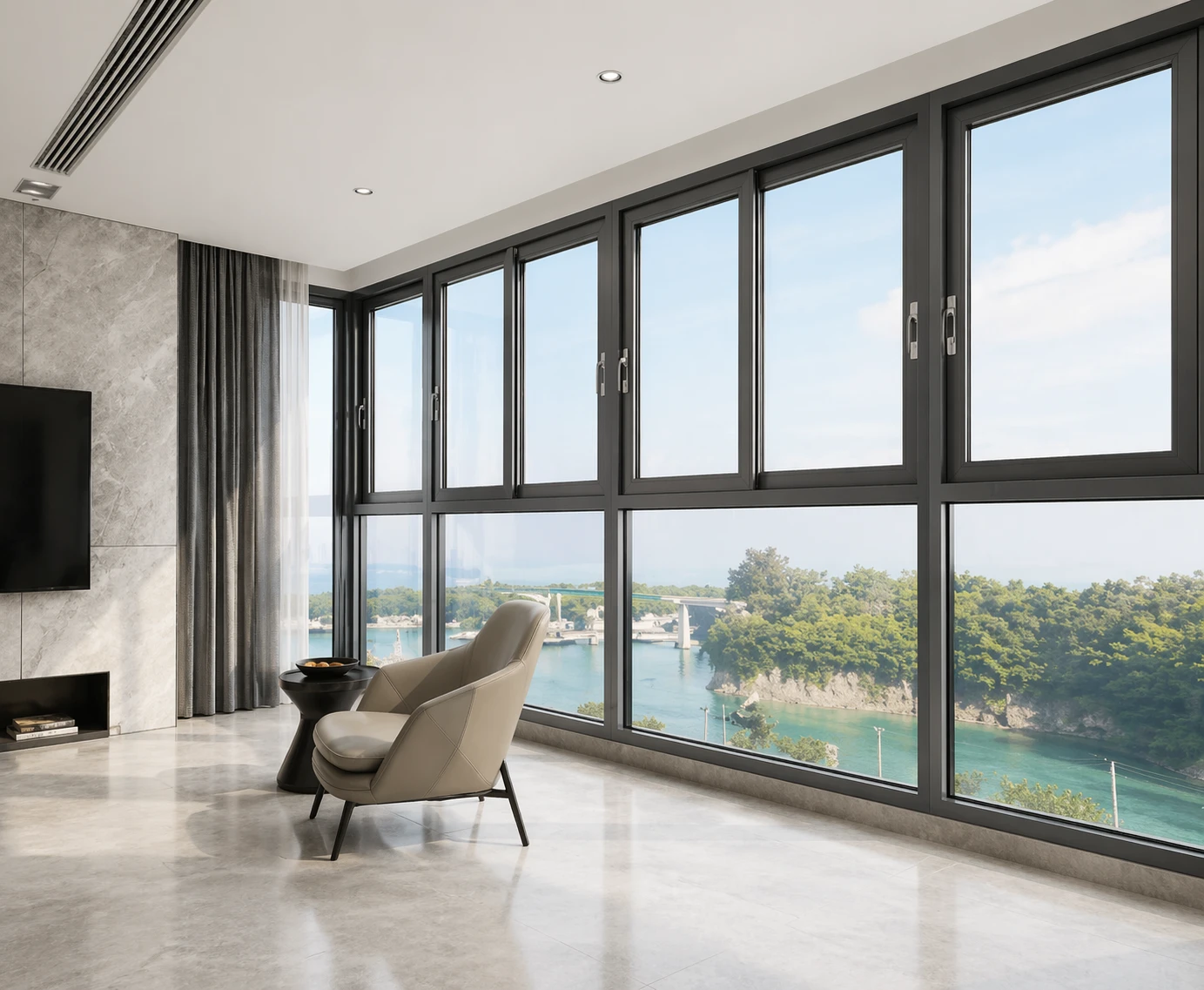
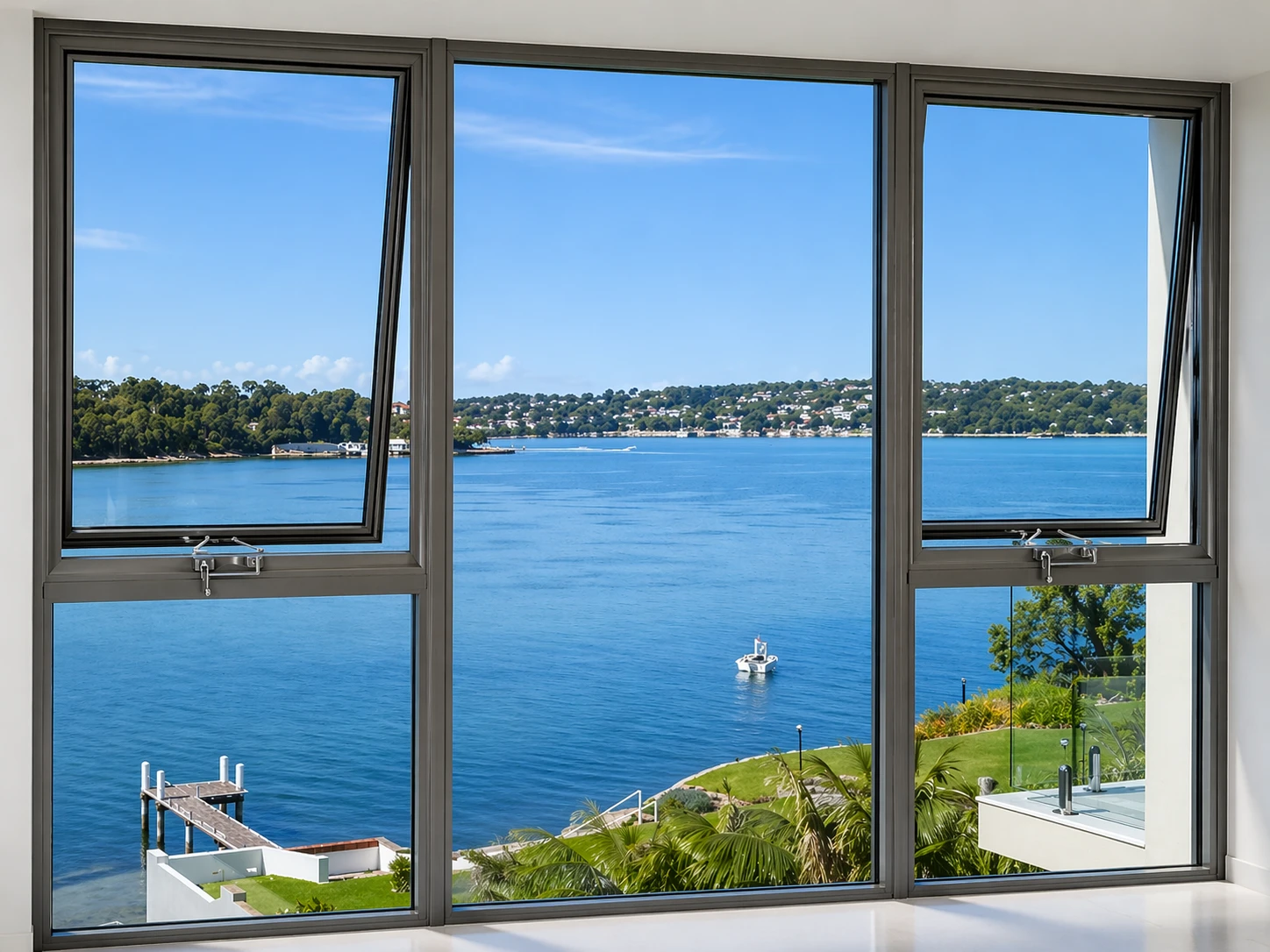
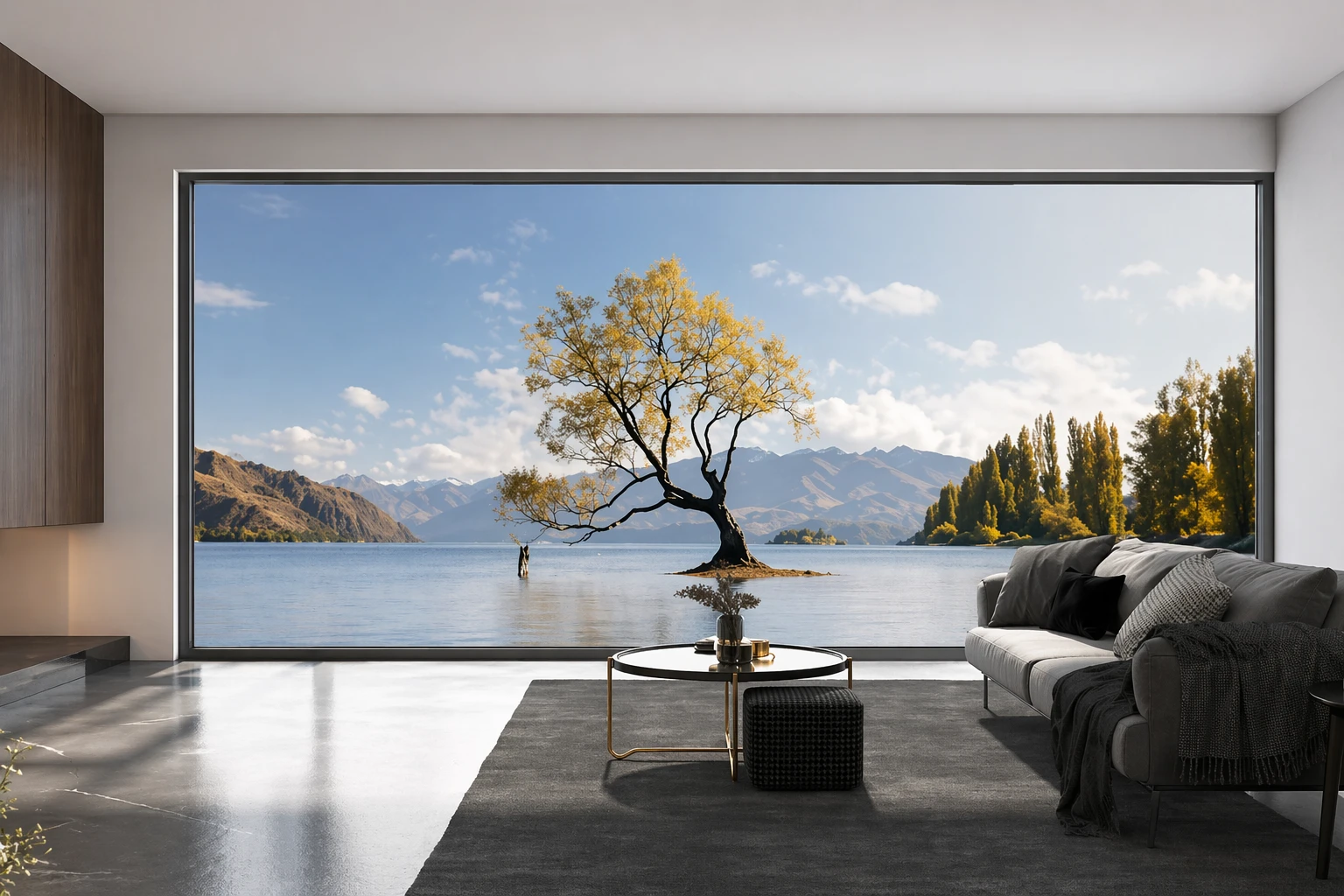
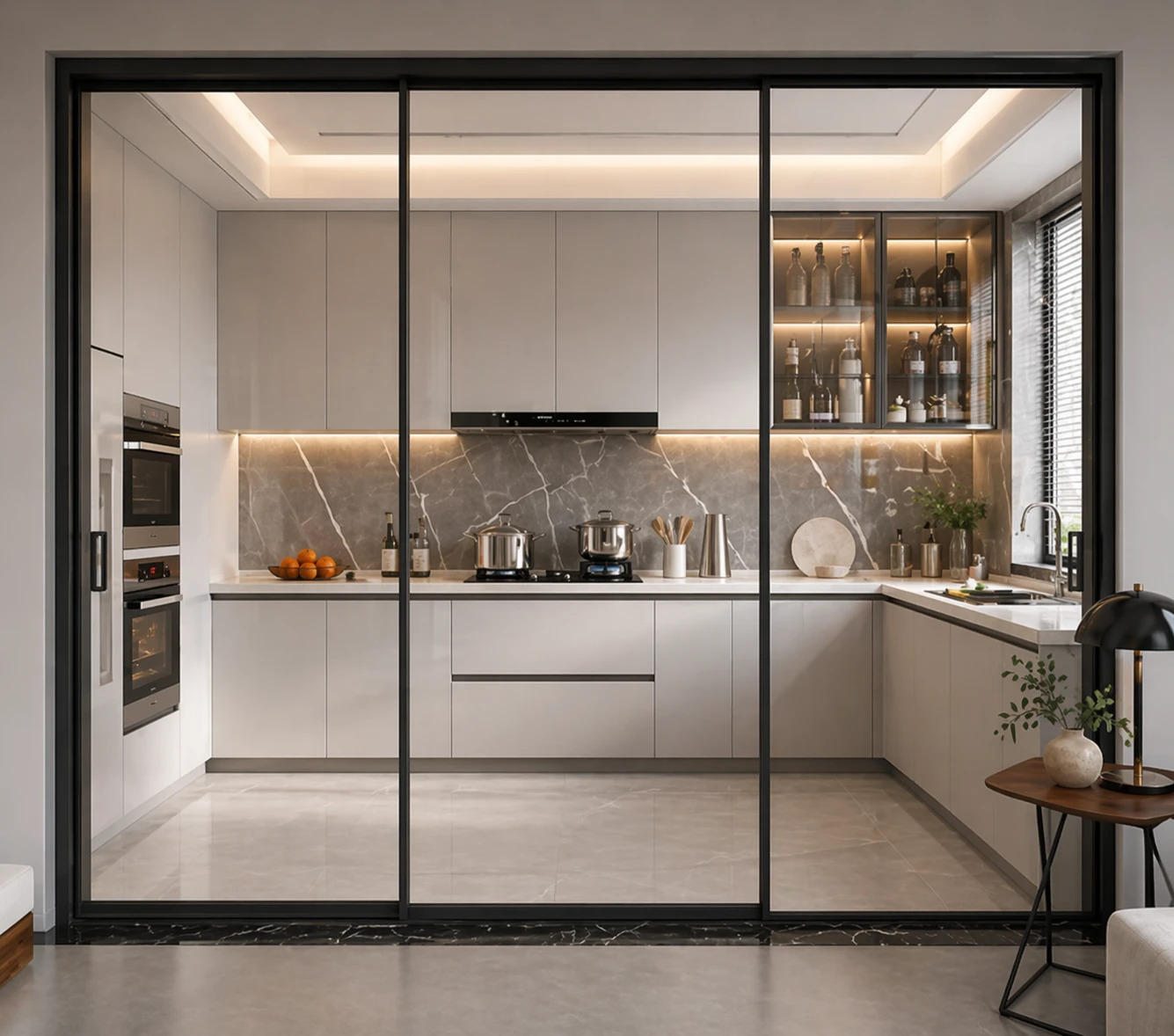
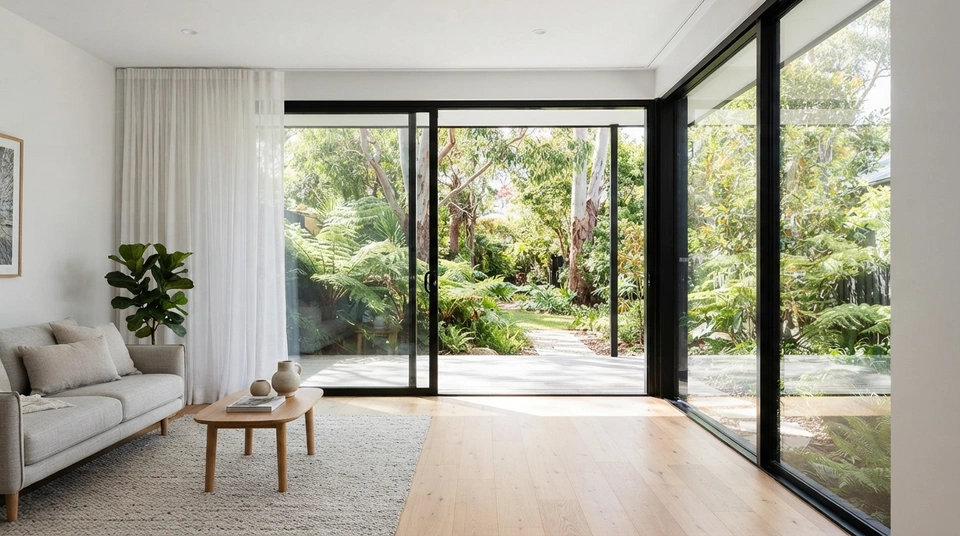
AI-generated illustrative image. Not a product test, certification record or project evidence.
Comparing aluminium and uPVC specifically in sliding window applications reveals distinct engineering trade-offs: aluminium's superior structural rigidity allows for slimline sightlines, massive panel spans (up to 2.4m+ wide), and decades of dimensional stability under intense Australian UV radiation without thermal warping or roller track sag. While uPVC delivers inherent frame insulation at a lower price point, its bulkier multi-chambered profiles, susceptibility to UV discoloration, and lower structural modulus restrict sliding sash dimensions and require heavy steel internal reinforcement to prevent sash flex.
With the enforcement of the 7-star NatHERS energy mandate under the National Construction Code (NCC 2022), Australian home builders and renovators are re-evaluating frame materials with unprecedented scrutiny. Where standard non-thermally broken aluminium once held a near-monopoly on residential building sites, unplasticized polyvinyl chloride (uPVC) has emerged as an aggressive alternative promising European-style thermal insulation at an accessible price point.
However, broad material comparisons often group all window styles together—failing to account for the unique mechanical demands of horizontal sliding joinery. Unlike fixed glass lites or side-hung casement windows, an aluminium sliding window operates under dynamic rolling loads, requires slender interlocking meeting stiles that maximize glass daylight, and must glide smoothly over a bottom sill track across decades of scorching Australian summers. When evaluated specifically within the sliding window scenario, the physical trade-offs between architectural aluminium and uPVC become pronounced.
Structural Rigidity and Large Panel Spans: The Modulus Gap
In a horizontal sliding window, structural stiffness is non-negotiable. When an operable sash is glazed with modern high-performance double glazing (such as 5mm toughened glass, a 12mm argon-filled spacer, and 5mm Low-E glass), an individual panel can weigh between 35 and 65 kilograms. This entire dead load is concentrated onto just two small roller assemblies mounted in the bottom sash rail.
Here, the fundamental material properties of the two frames diverge dramatically. Architectural aluminium (alloy 6060 or 6063) has an elastic modulus (Young’s modulus) of approximately 70 Gigapascals (GPa). Unplasticized PVC is a polymer with an elastic modulus of only 2.5 to 3.0 GPa—meaning aluminium is roughly 25 times stiffer than unreinforced plastic.
Because raw uPVC is inherently flexible, uPVC sliding profiles must be extruded with hollow internal chambers designed to house heavy, roll-formed galvanized steel reinforcement box sections. If an installer or fabricator specifies a large uPVC sliding sash without substantial internal steel stiffeners, the bottom rail will imperceptibly deflect under glass dead loads between the two roller points. This bottom rail sag causes the bottom weatherstrip to drag heavily along the sill track, leading to premature roller failure and binding operation.
Aluminium’s exceptional tensile strength and rigidity allow fabricators to manufacture expansive architectural sliding sashes spanning up to 2100mm to 2400mm in height and 1200mm+ in width per sash without fear of frame deflection or diagonal racking under AS 2047 wind-load testing. In contrast, uPVC sliding sashes are typically restricted to more modest residential spans to prevent sash flex under gusting wind pressures.
Sightlines and Daylight: Slimline Extrusions vs. Multi-Chamber Bulk
Contemporary Australian architectural design is defined by clean geometric lines, minimal visual clutter, and maximizing natural daylight through expansive glass-to-wall ratios. In this aesthetic arena, aluminium holds an overwhelming architectural advantage.
Because aluminium is exceptionally strong, extrusions can be engineered with thin structural wall profiles (typically 1.4mm to 2.0mm thickness) while maintaining full structural integrity. A standard aluminium sliding window frame has an overall depth between 45mm and 65mm, with perimeter sash rails of 40mm to 55mm. Crucially, the central vertical meeting stile—where the sliding sash overlaps the fixed panel—measures a slender 35mm to 50mm in visible width.
To achieve sufficient rigidity and thermal insulation, uPVC sliding profiles must rely on bulky, multi-chambered internal webbing. A standard uPVC sliding frame profile is typically 70mm to 90mm deep, with chunky perimeter rails measuring 65mm to 85mm. When two panels overlap at the center, the combined uPVC meeting stile frequently measures between 80mm and 110mm in visual width—more than double the thickness of an aluminium interlock.
In standard residential window openings—such as a 1200mm high by 1200mm wide (1212) bedroom window—the wide visual borders of a uPVC frame consume 10% to 15% more daylight area than an aluminium frame. For homeowners seeking an ultra-modern, minimalist aesthetic with maximum glass area, bulky plastic framing can create a noticeably heavy, boxed-in visual appearance.
The Australian Sun: Solar UV Radiation and Thermal Expansion
Australia’s climate presents an exceptionally harsh environment for building materials. With summer Ultraviolet (UV) Index readings regularly peaking between 11 and 14 across mainland states, alongside extreme diurnal temperature swings from cold winter mornings to 40°C+ summer heatwaves, exterior joinery is subjected to intense environmental degradation.
Thermal expansion is a critical engineering challenge in sliding windows. Polymers expand and contract at a much higher rate than metals: uPVC has a linear thermal expansion coefficient of approximately 60 to 80 x 10⁻⁶/K, whereas architectural aluminium expands at approximately 23 x 10⁻⁶/K. This means uPVC expands roughly 2.5 to 3 times more than aluminium over identical temperature fluctuations.
This physical behavior becomes problematic in Australia's popular dark exterior color palettes (such as Colorbond Monument, basalt, and charcoal). When a dark-colored window frame faces direct afternoon summer sun, solar absorption can drive surface temperatures up to 70°C to 80°C. In a wide uPVC sliding window, this thermal load causes the plastic extrusion to elongate significantly. If thermal expansion clearances in the rough framing are inadequate, or if internal steel reinforcement is discontinuous, the sliding sash will bow slightly, causing the sash to bind or jam tightly in its track during the hottest hours of the day.
In terms of surface durability, architectural aluminium coated to Australian Standard AS 3715 or Qualicoat Class 1.5/2 standards (using thermoset fluoropolymer or super-durable architectural polyester powders such as Dulux Duratec or AkzoNobel Interpon) delivers exceptional UV stability, backed by 20-to-25-year commercial color retention and chalking warranties. Quality uPVC profiles formulated for Australia must be specified to European Standard EN 12608 Class S (Severe Climate) with high concentrations of titanium dioxide (TiO2) UV stabilizers; uncertified imported uPVC profiles lacking tropical-grade stabilization can suffer surface yellowing, micro-cracking, and plastic embrittlement after 10 to 15 years under the Australian sun.
Thermal Performance: Inherent Insulation vs. Thermally Broken Engineering
Historically, uPVC’s primary market advantage was thermal insulation. Raw unplasticized PVC has a very low thermal conductivity (approximately 0.16 to 0.20 W/mK), meaning multi-chambered uPVC frames naturally achieve frame U-values (Uf) around 1.4 to 2.0 W/m²K without requiring additional thermal isolation.
Standard, non-thermally broken aluminium conducts heat rapidly (conductivity ~160 to 205 W/mK, yielding an unimpressive Uf of 7.0 to 9.0 W/m²K). However, the commercial advent of thermally broken aluminium has completely closed this performance divide. By mechanically crimping low-conductivity polyamide 66 glass-reinforced nylon (PA66 GF25) struts between the interior and exterior aluminium profiles, thermally broken frames lower their frame U-value to 2.6 to 3.2 W/m²K.
When both systems are fitted with identical double-glazed Low-E insulated glass units (such as 4mm Low-E / 12mm Argon / 4mm Clear), the whole-window performance gap virtually evaporates. A thermally broken aluminium sliding window achieves a certified whole-window Uw of 2.4 to 2.8 W/m²K, directly matching high-performance uPVC sliding windows (Uw 2.2 to 2.6 W/m²K). Both systems comfortably surpass the requirements for NCC 2022 7-star NatHERS compliance, allowing homeowners to select their frame material based on structural, aesthetic, and longevity criteria rather than being forced into uPVC solely for thermal compliance.
Cost, Lifecycle Maintenance, and Environmental Longevity
Financial comparison between aluminium and uPVC sliding windows must balance initial supply pricing against long-term architectural lifecycle value:
Initial Purchase Price: In the Australian residential market, double-glazed uPVC sliding windows typically price between $600 and $1,100 per square metre supplied and installed. Thermally broken aluminium sliding windows occupy a premium bracket, generally ranging from $800 to $1,400 per square metre installed. For budget-conscious suburban renovations seeking high thermal performance on standard-sized window cutouts, uPVC provides an attractive thermal-to-cost ratio.
Track Wear and Roller Longevity: A sliding window subjects its running track to repeated, concentrated friction. High-performance aluminium sliding windows incorporate raised extruded aluminium or stainless steel capped running rails that resist roller wear over 40 to 50+ years of daily use. In lower-grade uPVC sliding systems, steel rollers running across softer PVC tracks can gradually abrade grooves into the plastic sill if track debris is left uncleaned, requiring specialized track insert repairs.
End-of-Life Sustainability: Aluminium is one of the most sustainable building materials on the planet, possessing an infinite recycling loop. Recycled aluminium retains 100 percent of its structural and metallurgical properties while requiring only 5 percent of the energy needed to produce primary aluminium from bauxite ore. uPVC joinery, while recyclable in specialized industrial streams, is more challenging to reprocess due to the composite combination of steel reinforcement tubes, fusion-welded corners, and chemical stabilizers.
Frequently Asked Questions
Why does aluminium outperform uPVC for large sliding window sashes?
Architectural aluminium has an elastic modulus of ~70 GPa, making it roughly 25 times stiffer than unreinforced uPVC (~2.8 GPa). Double-glazed sliding sashes weigh 35kg to 65kg, concentrating their load onto two rollers. Aluminium bottom rails resist bending, allowing panels up to 2400mm high and 1200mm+ wide, whereas uPVC requires heavy internal steel reinforcement to prevent rail sag and roller binding.
Do uPVC sliding windows have wider frame profiles than aluminium?
Yes. To achieve structural stiffness and multi-chamber insulation, uPVC sliding profiles are 30% to 50% bulkier than aluminium. A central aluminium meeting stile is 35mm to 50mm wide, while a uPVC meeting stile measures 80mm to 110mm wide, consuming 10% to 15% more natural daylight in standard residential openings.
How does the intense Australian sun affect uPVC sliding windows?
uPVC expands and contracts roughly 2.5 to 3 times more than aluminium over identical temperature changes. In dark colors like Monument exposed to intense summer sun (where surface temperatures reach 75°C), thermal expansion can cause uPVC sashes to bow and bind in their tracks. Furthermore, uPVC must be specified to European Class S (Severe Climate) with high titanium dioxide (TiO2) stabilizers to prevent UV yellowing and chalking.
Can thermally broken aluminium match the thermal efficiency of uPVC?
Yes. While standard aluminium is highly conductive, thermally broken aluminium incorporating polyamide 66 insulating struts achieves whole-window U-values (Uw 2.4 to 2.8 W/m²K) that directly match double-glazed uPVC sliding joinery (Uw 2.2 to 2.6 W/m²K), giving homeowners equivalent 7-star energy compliance with slimmer frames.
Material Selection Summary: Making the Right Choice
To select the optimal frame material for your sliding window schedule, weigh your project against these practical guidelines:
Choose uPVC Sliding Windows If: You are completing a cost-conscious residential retrofit or suburban build where achieving 7-star NatHERS compliance on a constrained budget is your top priority; you prefer standard white, cream, or light-colored window frames; your window openings are standard residential sizes (under 1800mm wide); and you want inherent frame insulation without paying the premium for thermally broken metal joinery.
Choose Thermally Broken Aluminium Sliding Windows If: You are designing a contemporary custom home featuring expansive architectural openings, multi-track stacker doors, or floor-to-ceiling sliding glass; your architectural aesthetic demands ultra-slim sightlines with minimal visual frame bulk; you are specifying dark exterior colors (such as Monument, charcoal, or anodised finishes) exposed to intense afternoon sun; and you want a 40-to-50-year structural lifespan backed by certified commercial powder-coat warranties.