
Brand & Comparison
Smiro vs. SEM Windows: A Complete Buyer’s Guide to Australian Windows
By Sheng Xu · 18 September 2026
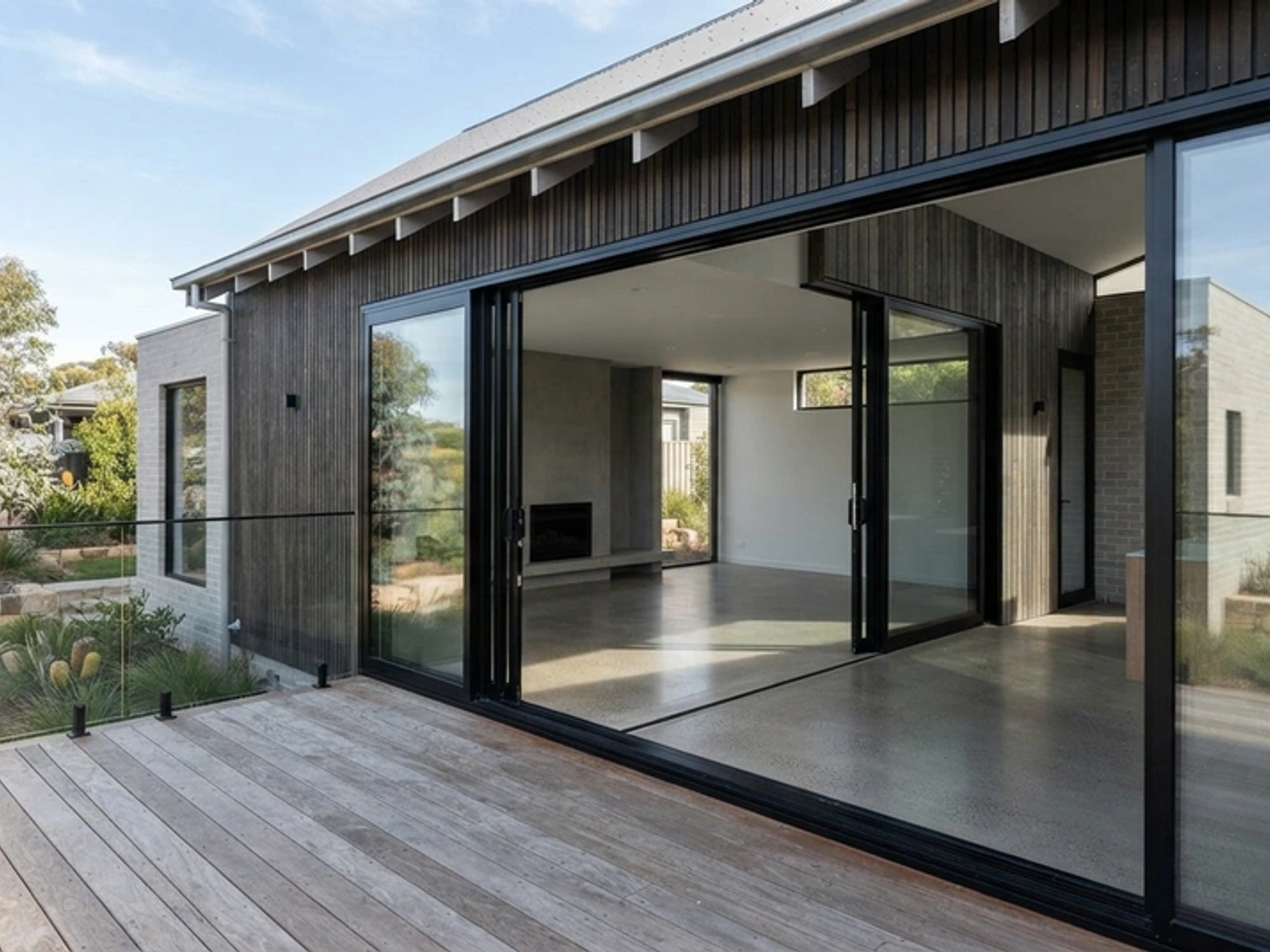
AI-generated illustrative image. Not a product test, certification record or project evidence.
Choosing between Smiro and SEM Windows comes down to supply chain and service models. Both deliver AS 2047 and NCC 2022 7-star compliant aluminium systems. Smiro offers factory-direct pricing with dedicated in-house Australian installation teams—ideal for custom residential and builder projects. SEM Windows pairs an overseas-local hybrid supply model with multi-state showrooms, excelling in large-scale commercial developments.
Selecting the right window and door supplier is one of the most critical structural, aesthetic, and financial decisions in any Australian building project. Windows account for up to 40% of a home's heat loss in winter and up to 87% of heat gain during scorching summer afternoons. With the nationwide implementation of the National Construction Code 2022 (NCC 2022) mandating a minimum 7-star NatHERS energy rating along with stringent heating and cooling load caps, the days of installing generic, uncertified aluminium joinery are officially over.
Among the prominent contenders supplying high-performance aluminium joinery to Australian builders, architects, and developers, Smiro and SEM Windows frequently appear on shortlists. Both brands deliver architecturally styled aluminium systems engineered for tough Australian conditions, fully compliant with Australian Standard AS 2047, and capable of achieving 7-star NatHERS performance. However, their underlying manufacturing infrastructures, supply chain methodologies, installation models, and product lines reflect distinct strategic philosophies.
This buyer's guide breaks down Smiro versus SEM Windows across technical compliance, thermal break engineering, product architecture, supply chain transparency, site installation accountability, and total cost of ownership. Whether you are an architect designing a bespoke coastal pavilion, a residential builder managing tight project margins, or a property developer procuring multi-unit schedules, this analysis provides the objective clarity needed to specify with total confidence.
Brand Background and Business Models
To understand how each brand operates on site, it is essential to first examine their corporate heritage and manufacturing supply chains. Window manufacturing models directly dictate lead time stability, custom engineering flexibility, quality consistency, and pricing structures.
Smiro Windows & Doors traces its foundation back over 15 years, operating as a dedicated, large-scale precision manufacturer of aluminium architectural systems. Backed by modern manufacturing facilities—including a 20,000 m² advanced aluminium fabrication hub in Foshan, China, and an established international division—Smiro combines automated German and European CNC tooling with strict ISO 9001 quality management standards. In Australia, Smiro operates on a direct-from-manufacturer model paired with dedicated local Australian technical and installation teams. By cutting out multiple tiers of wholesale distributors and franchise markups, Smiro delivers heavy-duty commercial profiles and custom architectural suites directly to Australian building sites.
SEM Windows (SEM Windows Pty Ltd / SEM Global) was established around 2015 and gained strong traction from 2018 onwards by focusing heavily on the Australian commercial and residential construction sectors. Headquartered in Dandenong South in Melbourne's south-eastern industrial corridor, SEM Windows has expanded its physical presence with branch showrooms across Victoria, New South Wales (Sydney), the Australian Capital Territory (Canberra), and South Australia (Adelaide). SEM Windows operates a hybrid manufacturing model, utilising three overseas manufacturing partner facilities in conjunction with an Australian local assembly plant. This setup has enabled SEM to secure substantial commercial developer projects, such as Mirvac's Riverlands residential community in Milperra and the multi-level G+ Apartment development.
Australian Standards and Compliance: AS 2047, AS 1288, and WERS
In the Australian building industry, regulatory compliance is non-negotiable. Certifiers, building surveyors, and municipal councils require indisputable verification that external glazed assemblies satisfy Australian statutory standards before issuing building approvals or occupancy certificates.
The benchmark standard for window manufacturing in Australia is AS 2047 (Windows and external glazed doors in buildings). Compliance requires mandatory laboratory testing in NATA-accredited facilities to evaluate five fundamental performance criteria: deflection resistance under positive and negative wind loads, operating force testing, air infiltration limits, water penetration resistance under simulated cyclonic or driving rain conditions, and ultimate limit state structural strength. Additionally, glass thickness, type, and human impact safety must strictly adhere to AS 1288 (Glass in buildings - Selection and installation), while Insulating Glass Units (IGUs) must comply with AS 4666.
Smiro holds verified third-party PAS-Mark product certification (audited by CSi) for AS 2047, certifying that its complete product families—including awning windows, fixed picture windows, sliding windows, sliding doors, and stackers—comply fully with Australian building regulations. Every unit manufactured carries traceable compliance labelling. Furthermore, Smiro maintains ISO 9001 quality certification, ensuring consistent extrusion tolerances, anodising/powder-coat film thicknesses, and corner joint sealant integrity across batch runs.
SEM Windows is a recognised member of the Australian Glass and Window Association (AGWA) and has its products certified to AS 2047. SEM Windows is also registered under the Window Energy Rating Scheme (WERS). This formal registration provides accredited energy assessors with laboratory-certified thermal values (Uw and SHGC) directly inside rating software engines like FirstRate5, HERO, and BERS Pro, eliminating the punitive 15% performance penalty associated with uncertified generic software defaults.
Thermal Performance and NCC 2022 7-Star Compliance
Under NCC 2022 Volume Two Specification 42, achieving thermal compliance for a new home is governed by a mandatory 'dual-gate' framework. A dwelling must achieve an overall 7.0-star NatHERS rating, and its independent heating and cooling loads (measured in megajoules per square metre per annum) must not exceed localized statutory caps across Australia's 69 NatHERS climate zones.
Because standard architectural aluminium has high thermal conductivity (approximately 160 W/m·K), uninsulated aluminium frames act as thermal bridges. During cold winter nights in Melbourne, Canberra, or Hobart, heat rapidly conducts outward through the frame. Conversely, during intense summer heatwaves in Sydney, Brisbane, or Adelaide, solar radiation elevates exterior aluminium temperatures, radiating heat directly into the living space. Thermally broken systems solve this fundamental vulnerability.
Both Smiro and SEM Windows address this challenge through advanced polyamide thermal break technology. A reinforced, non-conductive polyamide nylon strip is structurally crimped between the interior and exterior aluminium extrusions, mechanically isolating the internal frame from outside temperature extremes. This reduces conductive thermal energy transfer through the window frame by between 30% and 70% compared to standard non-thermal aluminium profiles.
SEM Windows markets its thermally broken suite under the proprietary brand ThermalSpace™. Tested and rated to comply with AS 2047, ThermalSpace™ is engineered to assist architects and designers in clearing tightened NatHERS thresholds, delivering lower whole-window U-values (Uw) and flexible Solar Heat Gain Coefficients (SHGC).
Smiro integrates polyamide thermal barrier profiles directly across its Living, Comfort, and Vista series. Smiro pairs these thermally broken frames with high-performance double-glazed insulated units featuring 12mm to 16mm argon gas cavities, warm-edge composite spacers, and specialised solar-control Low-E coatings. In heating-dominated climates (Climate Zones 21, 24, 60, and 66), Smiro's systems achieve whole-window Uw values as low as 1.8 to 2.4 W/m²K, preventing winter condensation and nocturnal heat loss. In cooling-dominated climates (Zones 1, 2, and 10), Smiro tunes glazing configurations to achieve SHGC ratings below 0.28, blocking up to 72% of radiant solar heat gain and preventing cooling load failures.
Product Suites, Aesthetics, and Architectural Flexibility
Modern Australian residential architecture places a heavy premium on indoor-outdoor connectivity, floor-to-ceiling glass expanses, and ultra-narrow frame sightlines that maximize natural illumination while framing landscaped outdoor vistas.
Smiro organizes its aluminium portfolio into four distinct product series tailored to project specifications:
Living Series: Designed for premium residential family homes, balancing robust thermal performance, everyday ergonomics, and versatile operation across awning, fixed, and sliding formats.
Comfort Series: Engineered specifically for energy efficiency and acoustic dampening, featuring enhanced thermal breaks, deeper glazing pockets accommodating heavy laminated acoustic glass, and multi-point compression seals for traffic corridors and airport noise overlays.
Vista Series: Smiro's flagship large-span architectural suite, focused on expansive sliding doors, cavity stacker doors, and panoramic fixed facade glazing with minimalist sightlines, heavy-duty stainless steel carriage rollers rated for heavy glass panels, and seamless sub-floor flush sills.
Urban Series: A versatile, modern range engineered for townhouses, multi-residential developments, and contemporary suburban builds requiring sleek modern profiles, Breezway-compatible louvre systems, and high-durability hinged utility doors.
SEM Windows provides an extensive, market-segmented range of proprietary sub-brands to cater to different budget and design tiers:
Signature™ Series: SEM's core residential and commercial product line, featuring fixed picture windows, awning windows with 45-degree opening angles and chain winders, and heavy-duty sliding/stacker doors fitted with toughened double glazing.
ThermalSpace™: SEM's dedicated thermally broken aluminium window and door series engineered for 7-star NatHERS and NCC 2022 energy performance.
MenoFrame™: A luxury minimalist line designed with ultra-slim aluminium sightlines to reduce visual obstruction and maximise glass surface area for contemporary architectural residences.
CrystalEdge™: A glass-focused enhancement utilising low-iron glass technology and precision-polished bevelled edges to eliminate the natural greenish tint of standard float glass, producing maximum visual clarity and color fidelity.
Sealine™, Greenline™, and VividVue™: Complementary lines specifically developed for coastal exposure, sustainable construction with recycled content, and specialized commercial facade requirements.
Supply Chain, Fabrication Scale, and Lead Time Management
Understanding how each company sources, manufactures, and ships its products reveals critical operational differences that impact construction schedules and budget certainty.
Smiro controls the entire manufacturing pipeline from raw aluminium billet extrusion and thermal barrier crimping through to automated CNC machining, double glazing lamination, and final factory assembly. Operating from an expansive 20,000 m² modern manufacturing hub with over 15 years of continuous production heritage, Smiro functions as a pure original equipment manufacturer (OEM). For Australian clients, Smiro builds custom orders directly to architectural cutting schedules, packs them into purpose-built steel transport crates, and ships them directly to project sites or local consolidation depots. This factory-direct model eliminates wholesaler margins, allowing builders to obtain commercial-grade 2.0mm+ aluminium wall extrusions at prices comparable to standard residential profiles from domestic fabricators.
SEM Windows operates an established hybrid supply model. With three overseas manufacturing factories producing base profiles and sub-assemblies, combined with an Australian local manufacturing and assembly facility in Dandenong South, SEM Windows can balance offshore volume economies with local assembly flexibility. For commercial builders and tier-1 contractors, this local facility allows for rapid adjustments, local timber reveal fitting, re-glazing of broken panels, and on-the-ground project staging.
Regarding lead times, Australian builders must plan procurement proactively regardless of supplier. Typical factory-direct custom orders from Smiro generally require 8 to 12 weeks from sign-off of shop drawings to port arrival and site delivery. SEM Windows can offer faster turnarounds on standardized stock profiles assembled at its Dandenong South plant (typically 4 to 6 weeks for standard builder suites), while custom architectural ThermalSpace™ orders or large commercial runs reliant on offshore fabrication typically run on an 8 to 12-week schedule.
Site Installation and After-Sales Accountability
One of the most persistent complaints in the Australian window sector is the finger-pointing that occurs when an installed window leaks or fails an air infiltration test. Manufacturers often blame the carpenter who installed the frame, while the carpenter blames the manufacturer's glazing seals or squaring tolerances. Under NCC 2022 Part 8.2, installation requirements have tightened significantly, mandating a 10mm non-loadbearing head clearance, non-head packing, and continuous sill pan flashing integration.
This is where Smiro's Australian operational model provides a distinct competitive advantage for builders and developers. Unlike traditional suppliers who merely drop crates of windows onto the kerb and leave installation to subcontracted framing carpenters, Smiro provides dedicated, in-house local Australian installation teams. Smiro's technicians perform preliminary site check-measures, ensure framing openings are properly prepared with compliant sill trays and vapour-permeable wraps, and execute laser-levelled installation adhering to AS 2047 and NCC Part 8.2. This creates single-point accountability: if a sash rubs, a roller binds, or a seal requires tuning, Smiro's own team resolves it without disputes.
SEM Windows also offers full installation services, with particular strength in commercial and Enterprise Bargaining Agreement (EBA) building sites. For tier-1 commercial developments, multi-story apartments, and large residential estates, SEM Windows provides experienced site supervisors, Union-compliant EBA installation crews, and dedicated contract managers. For smaller custom builds or regional renovations, SEM frequently supplies products directly to the head contractor's carpentry team with detailed installation guidelines.
Direct Comparison: Smiro vs. SEM Windows at a Glance
The following comparison highlights the core architectural, operational, and commercial differences between the two brands:
Manufacturing and Corporate Structure: Smiro is a direct manufacturer with a 20,000 m² production facility, 15+ years fabrication experience, and dedicated Australian distribution. SEM Windows operates a hybrid model with three overseas factories plus a local assembly facility in Dandenong South, Victoria.
Compliance and Standards: Smiro holds third-party PAS-Mark certification for AS 2047, ISO 9001 quality management, AS 4666 IGU compliance, and AS 1288 safety glass verification. SEM Windows is an AGWA member with AS 2047 certification, WERS registrations, and Australian building code compliance.
Thermal Break Technology: Smiro incorporates advanced polyamide thermal barrier systems across its Living, Comfort, and Vista suites, combined with custom Low-E and argon-filled IGUs. SEM Windows features its proprietary ThermalSpace™ polyamide thermal break suite designed for 7-star energy compliance.
Product Series and Design Breadth: Smiro offers four distinct collections (Living, Comfort, Vista, Urban) with a strong focus on expansive architectural sliding spans, minimal sightlines, and flush sills. SEM Windows offers a wide branded portfolio including Signature™, ThermalSpace™, MenoFrame™ (ultra-slim), CrystalEdge™ (low-iron), Sealine™, and Greenline™.
Installation Service: Smiro provides dedicated in-house local installation crews for seamless end-to-end site accountability on residential and commercial builds. SEM Windows provides comprehensive installation services with strong capability on commercial EBA union sites and builder-led residential installations.
Showroom Presence: Smiro maintains focused trade-oriented consultation centres and digital shop-drawing workflows. SEM Windows operates full physical selection showrooms in Melbourne, Sydney, Canberra, and Adelaide.
Price Positioning: Smiro delivers high price-to-performance value by offering commercial-grade extrusions and thermal breaks at factory-direct pricing without distributor markups. SEM Windows offers competitive tier-based pricing across its standard builder lines, moving to premium pricing for specialized ThermalSpace™ and MenoFrame™ suites.
Buyer’s Decision Framework: Which Brand Should You Choose?
Choosing between Smiro and SEM Windows is not about declaring a single universal winner; it is about matching each supplier's specific strengths to your project's scope, procurement methodology, and site requirements.
Choose Smiro Windows if you are an architect, custom home builder, or developer who wants maximum architectural specification flexibility, heavy-gauge commercial extrusions, and superior thermal performance without paying steep local distributor markups. Smiro is ideal for whole-home packages where you want a single company to manufacture custom-engineered window schedules, deliver them directly to site, and provide its own dedicated Australian installation team to guarantee installation compliance and airtightness.
Choose SEM Windows if you are a commercial developer or multi-residential builder in Melbourne, Canberra, Adelaide, or Sydney looking for an established partner with extensive experience on tier-1 developments and unionized EBA sites. SEM Windows is also well-suited for clients who prioritize visiting physical suburban selection centres to inspect full-size window mockups, or projects requiring rapid access to standard local stock sizes assembled in Victoria.
Frequently Asked Questions
Are both Smiro and SEM Windows compliant with NCC 2022 7-star requirements?
Yes. Both manufacturers offer thermally broken aluminium systems specifically engineered to meet and exceed NCC 2022 7-star NatHERS ratings. Smiro utilizes polyamide thermal barrier profiles with argon-filled, solar-control Low-E insulated glass units that achieve whole-window U-values down to 1.8 W/m²K. SEM Windows supplies its ThermalSpace™ series, which similarly incorporates polyamide thermal strips to reduce frame conductivity by 30% to 70% and satisfy localized heating and cooling load caps.
How do Smiro and SEM Windows manage AS 2047 certification?
Both brands undergo rigorous structural and weatherproofing verification under AS 2047 in accredited testing facilities. Smiro holds verified third-party PAS-Mark certification audited by CSi along with ISO 9001 factory quality assurance, affixing permanent compliance labels to every delivered window. SEM Windows holds AGWA membership and WERS energy rating listings, ensuring compliant test dockets and WERS certificates for private certifier sign-off.
What is the typical lead time for custom aluminium windows from both suppliers?
Custom architectural window schedules from Smiro typically require 8 to 12 weeks from shop-drawing approval to site delivery, reflecting dedicated factory fabrication, precision packaging, and sea container freight. SEM Windows can supply standard builder-series products assembled at its Dandenong South plant in approximately 4 to 6 weeks, while custom thermally broken systems or large commercial runs from its overseas partner facilities also follow an 8 to 12-week procurement cycle.
Why is having an in-house installation team important when buying high-performance windows?
Under NCC 2022 Part 8.2 and Australian Standards, improper installation accounts for the majority of on-site window failures, including water leaks, frame racking, and air leakage that compromises NatHERS ratings. When installation is outsourced to third-party framing carpenters, accountability is often fragmented between the supplier and the subbie. Smiro solves this by providing its own dedicated local Australian installation crews, ensuring single-point responsibility from initial check-measurement through to compliant weatherproofing, flashing integration, and handover.
Can these windows be used in bushfire (BAL) and high-wind coastal zones?
Yes. Both Smiro and SEM Windows manufacture heavy-gauge aluminium profiles and toughened safety glass configurations suitable for bushfire attack levels up to BAL-40 (and BAL-FZ when combined with compliant bushfire shutter systems) in accordance with AS 3959. For coastal and high-wind environments, both brands supply commercial-grade extrusions and multi-point perimeter compression seals engineered to withstand severe design wind pressures up to Serviceability Limit State (SLS) 1500 Pa and Ultimate Limit State (ULS) 3000 Pa or higher.