
Policy & Compliance
Can a 7-star home still fail NCC 2022? Heating and cooling load limits explained
By Sheng Xu · 8 September 2026
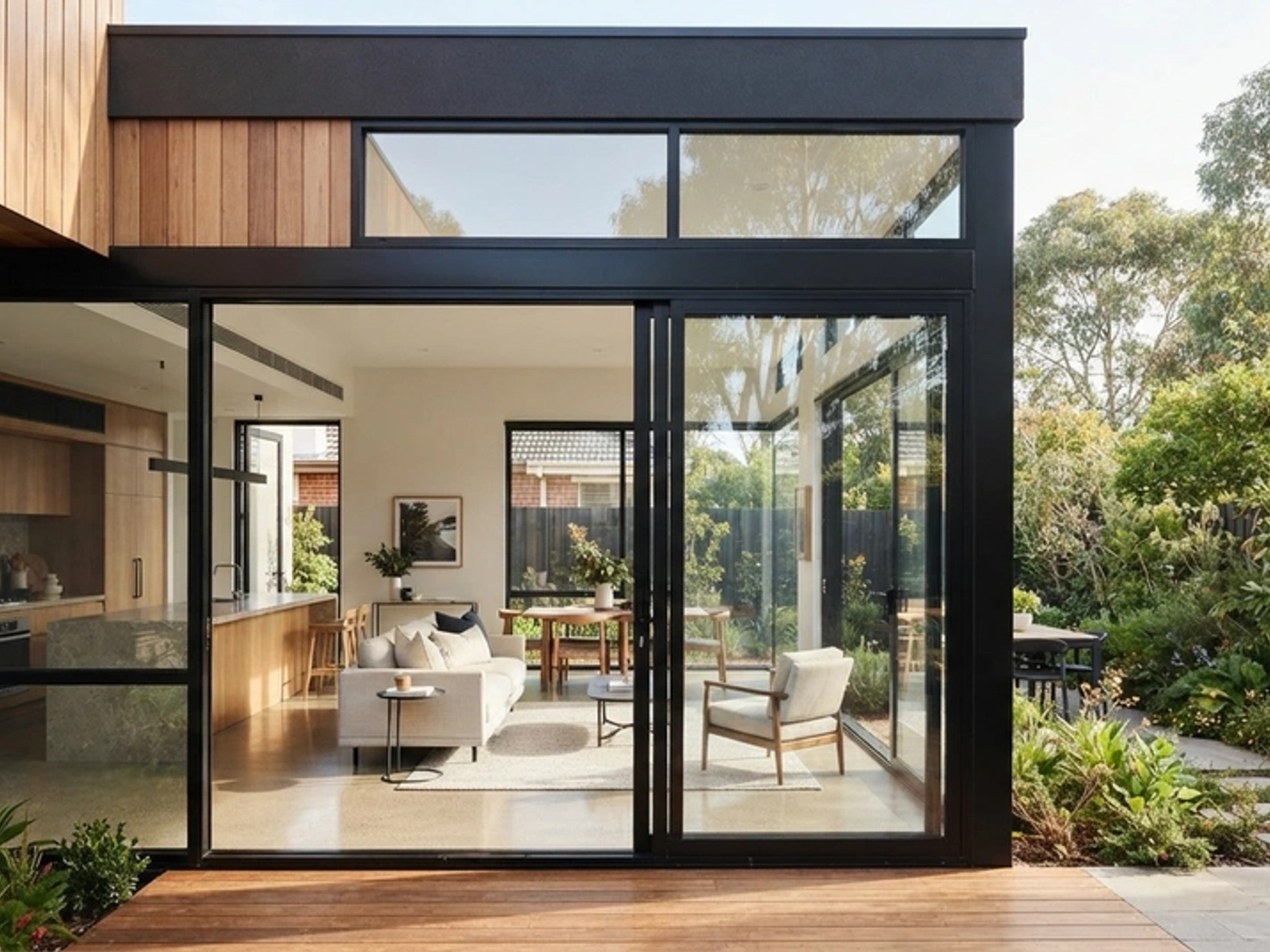
AI-generated illustrative image. Not a product test, certification record or project evidence.
Yes. Under NCC 2022 Volume Two Specification 42, achieving a 7-star NatHERS rating is not enough on its own. A home must pass a dual-gate compliance test: meeting the overall 7-star energy rating while ensuring that separate heating and cooling loads (in MJ/m²·annum) do not exceed the strict caps set out in the ABCB Standard for NatHERS Heating and Cooling Load Limits. If an unshaded window layout breaches the cooling limit, the project fails building approval regardless of its star rating.
In the minds of most Australian builders, architects, and homeowners, achieving a 7.0 or 7.2-star NatHERS rating on an energy report signifies an automatic pass for building code compliance. Under the National Construction Code 2022 (NCC 2022), that assumption is dangerously incomplete. Across Australia, building certifiers are issuing rejection notices for new home plans that comfortably achieve 7 stars on paper. The reason lies in an additional, strictly enforced regulatory mechanism: separate heating and cooling load limits. Under NCC 2022 Volume Two Specification 42, compliance is governed by a 'dual-gate' framework. A dwelling must clear the overall 7-star threshold and simultaneously ensure that its independent heating and cooling energy loads (measured in megajoules per square metre per year) do not breach localized caps set by the Australian Building Codes Board (ABCB). If a design fails either cap, the building permit cannot be legally granted.
The dual-gate mandate: why 7 stars is no longer a guaranteed pass
To understand why this rule exists, it helps to examine how the Nationwide House Energy Rating Scheme (NatHERS) historically operated. Prior to NCC 2019 and the expanded stringency of NCC 2022, NatHERS assessed homes on a single combined total energy metric: total annual megajoules of artificial heating and cooling energy divided by conditioned floor area. A star rating was assigned based on that combined total.
This created a well-documented loophole in passive solar design. A home with huge, unshaded floor-to-ceiling windows facing north could capture immense amounts of free solar thermal energy in winter, dragging its heating load down to near zero and elevating its annual score to 7.2 stars. However, in mid-summer, that same unshaded glass turned the home into a greenhouse, requiring massive air conditioning energy to make the bedrooms habitable. The home was a seasonal thermal compromise: high performance on paper in winter, but an uncomfortable, energy-hungry oven in summer.
To close this loophole, NCC 2022 Volume Two clause S42C2(2) references the mandatory 'ABCB Standard for NatHERS Heating and Cooling Load Limits'. The code requires that both of the following criteria be met simultaneously:
Gate 1 (Total Star Rating): The building must achieve a minimum NatHERS star rating of 7.0 stars (or state-specific concessions, such as 6.5 stars in Queensland tropical zones with compliant outdoor living areas).
Gate 2 (Separate Load Limits): The dwelling's modelled heating load must not exceed the prescribed heating cap (in MJ/m²·annum), AND its modelled cooling load must not exceed the prescribed cooling cap (in MJ/m²·annum).
Failing either individual load limit by even 1 MJ/m² results in an immediate compliance failure, printing a prominent non-conformance warning on the NatHERS certificate that prevents the private certifier or municipal council from issuing a building approval.
How load limits are calculated: climate zones and floor construction
The ABCB Standard for NatHERS Heating and Cooling Load Limits establishes specific numerical ceilings across all 69 official NatHERS climate zones in Australia. These caps are not uniform national numbers; they are precisely calibrated based on three interconnected factors:
Building Classification: Separate tables govern Class 1 detached houses and townhouses versus Class 2 sole-occupancy units (apartments) and Class 4 caretaker dwellings.
Ground Floor Construction: Concrete slab-on-ground (CSOG) vs. suspended timber or lightweight sub-floors (susp). Slab-on-ground construction benefits from ground thermal mass, whereas suspended floors interact directly with ambient sub-floor air temperatures, resulting in different load allowances.
Climate File Calibration: NCC 2022 transitioned from historical 1970–2005 weather files to contemporary 1990–2015 meteorological files. This updated data reflects warmer Australian summers, lifting baseline summer temperatures and making the cooling load cap significantly more challenging to satisfy.
For example, under Table 2 of the ABCB Standard (Class 1 concrete slab-on-ground), NatHERS Climate Zone 20 (covering parts of northern and western Melbourne) sets an allowable heating load limit of 87 MJ/m²·annum and a cooling load limit of 34 MJ/m²·annum, while Climate Zone 21 (central Melbourne) is capped at 48 MJ/m² for heating and 41 MJ/m² for cooling. In Climate Zone 10 (Brisbane), where cooling dominates, the heating load limit is only 16 MJ/m² while the cooling load limit is 39 MJ/m². A design calibrated for Melbourne heating will completely blow out Brisbane cooling limits if duplicated without adjustment.
Scenario 1: the summer cooling trap (excessive unshaded glazing)
In practice, the overwhelming majority of dual-gate failures across Australia occur when a 7-star home breaches its cooling load limit. This trap catches builders and designers off guard because the overall star rating looks healthy.
Consider a typical 230m² modern home in Western Sydney or Adelaide. The architectural design features an open-plan kitchen and living area with expansive 4-metre sliding doors facing west towards an alfresco area, plus large clear-glazed windows on upper-floor bedrooms under a dark metal roof. Because the home incorporates R5.0 ceiling insulation and R2.5 wall batts, its winter heating demand is minimal. On the energy software summary, the home scores 7.1 stars.
However, during summer, unshaded low-angle western sun strikes the clear glass with intense radiant heat (over 800 W/m²). The NatHERS engine calculates that cooling the home requires 46 MJ/m²·annum, exceeding the statutory local cap of 37 MJ/m². Even though the overall star rating is 7.1 stars, the software prints 'FAILED: Cooling load limit exceeded'. The permit cannot be granted.
Crucially, attempting to fix this failure by adding more wall or ceiling insulation will fail. Up to 87% of peak summer heat gain enters through windows. Adding wall insulation only traps the solar heat inside the house longer, making the cooling load worse. The only solution is modifying the glazing specification or adding external shading.
Scenario 2: the winter heating trap (conductive frame and glazing losses)
In cooler southern regions - including Melbourne (Climate Zones 21 and 60), Ballarat (Zone 66), Canberra (Zone 24), and Hobart (Zone 22) - the reverse failure mode regularly occurs. A house easily satisfies its cooling load limit, but fails on winter heating demand.
This typically occurs in architectural homes with high Window to Floor Area Ratios (WFAR exceeding 25% to 28%), large south-facing highlight windows, or expansive sliding glass openings fitted with standard, non-thermally broken aluminium frames. Aluminium is an exceptionally strong heat conductor (conductivity around 160 W/mK). During freezing winter nights, heat rapidly conducts out through the cold metal frame and single glass panes into the exterior air.
Even if the design incorporates northern windows that collect daytime solar warmth to keep the total combined star rating at 7.0 stars, the nocturnal heat loss pushes the heating demand above the maximum allowable MJ/m² threshold. In Climate Zone 24 (Canberra), where the heating limit is 129 MJ/m²·annum, conductive frame losses on poorly detailed southern elevations will trigger a red non-conformance flag every time.
Glazing as the master control dial: tuning U-value and SHGC
When an assessor alerts you that a 7-star plan has failed an individual load limit, windows and doors are the single fastest and most cost-effective lever to bring the project into compliance without altering floor layouts or redrawing structural framing.
Because windows control both conductive heat transfer (measured by whole-window U-value, Uw) and radiant solar transmission (measured by Solar Heat Gain Coefficient, SHGC), energy assessors can precisely tune glazing properties by facade orientation:
To fix a failed cooling load limit: Lower the SHGC on west, east, and north-west elevations. Upgrading from clear glass (SHGC 0.65–0.75) to solar-control Low-E glass or lightly tinted insulated units (SHGC 0.25–0.35) blocks solar radiation at the building envelope. Combining this with 450mm–600mm eaves or external shading screens typically cuts cooling loads by 6 to 12 MJ/m², turning a failed cooling score into an instant pass.
To fix a failed heating load limit: Lower the whole-window Uw across the entire house, focusing especially on south and west elevations. Upgrading standard aluminium frames (Uw ~6.5 W/m²K) to argon-filled double glazing in thermally broken aluminium frames (Uw 2.2–3.2 W/m²K) halves nocturnal heat conduction, preserving interior warmth and pulling the heating demand comfortably below the cap.
The orientation-tuning rule: Never apply a blanket window specification across all four walls. In heating-dominated climates, keep north-facing glass at a high SHGC (0.50+) to harvest free winter sun, while driving Uw down. On west-facing glass, enforce low SHGC (<0.30) regardless of winter needs.
The software secret: eliminating conservative default penalties
Before spending thousands of dollars on architectural redesigns or expensive motorized external louvres, ask your energy assessor to examine which window library was used in the software.
Rating software platforms (such as FirstRate5, HERO, BERS Pro, and AccuRate) contain two categories of window data: generic software defaults and custom WERSLink entries. Generic defaults (such as 'Aluminium DG Clear') carry built-in conservative penalties of 10% to 15% on U-value and model unfavourable air infiltration rates to account for uncertified products. This artificial penalty often adds 3 to 6 MJ/m² to the modelled loads.
When an assessor replaces generic software defaults with certified custom WERS test certificates from a quality fabricator (specifying tested AS 2047 compliant aluminium window suites with known, laboratory-verified Uw and SHGC values), the software recalculates using true performance figures. In hundreds of documented cases across Australia, this single administrative adjustment drops breached heating or cooling loads back under the statutory cap without changing a single nail on the job site.
Remember that this software selection creates a strict legal obligation on site. Building certifiers will inspect the delivered window stickers and manufacturer delivery dockets against the NatHERS stamped schedule. The windows installed on site must match or exceed the exact WERS product numbers and performance ratings specified on the approved energy report.
How SMIRO helps you clear both compliance gates
Navigating the dual-gate compliance of NCC 2022 requires proactive collaboration between your building designer, energy assessor, and window supplier during the preliminary design stage. Waiting until a certifier rejects your permit application leads to expensive redesign fees, drafting delays, and rushed product changes.
At SMIRO, our technical team works directly with Australian builders, architects, and certifiers to review draft NatHERS window schedules and load reports. We supply fully tested, AS 2047 compliant aluminium sliding doors, awning windows, casements, and hinged doors with verified WERS-rated Uw and SHGC performance values. Whether your design needs low-SHGC solar-control glazing to beat a cooling limit in Queensland or high-performance thermally broken frames to satisfy winter heating caps in Victoria, we ensure your window schedule clears both gates smoothly on the first submission.
Frequently Asked Questions
What happens if a house scores 7.5 stars but fails the cooling load limit?
The building permit cannot be issued. Under NCC 2022 Volume Two Specification 42, compliance requires satisfying the star rating AND both independent heating and cooling load limits. Even if a design scores 7.5, 8.0, or 9.0 stars, exceeding the maximum allowable cooling load in MJ/m²·annum results in a formal non-conformance that blocks council or private certifier sign-off.
Can installing a larger rooftop solar system fix a failed cooling load limit?
No. Rooftop solar PV is calculated exclusively under the separate Whole of Home energy budget (which assesses domestic appliance consumption). Solar panels cannot be credited to offset or reduce the thermal envelope heating and cooling loads in NatHERS. The thermal fabric and its individual load limits must comply entirely on their own merit.
Are heating and cooling load limits identical across all states and territories?
No. Load limits vary substantially based on the 69 NatHERS climate zones and localized state adoptions. For example, New South Wales uses BASIX-aligned heating and cooling caps, while the ABCB Standard defines separate thresholds for climate zones across Victoria, Queensland, Western Australia, South Australia, Tasmania, the ACT, and the Northern Territory.
Which window orientation has the greatest impact on cooling load failures?
Unshaded west-facing and north-west facing windows are the primary culprits in cooling load failures. The intense afternoon sun strikes western glazing at a low angle in summer, completely bypassing standard roof eaves and transmitting immense solar heat directly into the living areas. Specifying solar-control Low-E glass (low SHGC) or external shading on western windows is the most effective fix.
How can I check if my plan passes load limits before submitting for a building permit?
Examine the official NatHERS certificate generated by your accredited energy assessor. Below the overall star rating, the certificate lists the modelled heating load, modelled cooling load, and the allowable limits for each in MJ/m²·annum. If either load exceeds the limit, the certificate will display a clear non-compliant status, signaling that window properties or shading must be tuned before submission.