Energy & Thermal Performance
Acoustic Insulation for Aluminium Sliding Windows: Soundproof Glazing & Rw Ratings Explained
By Sheng Xu · 25 September 2026
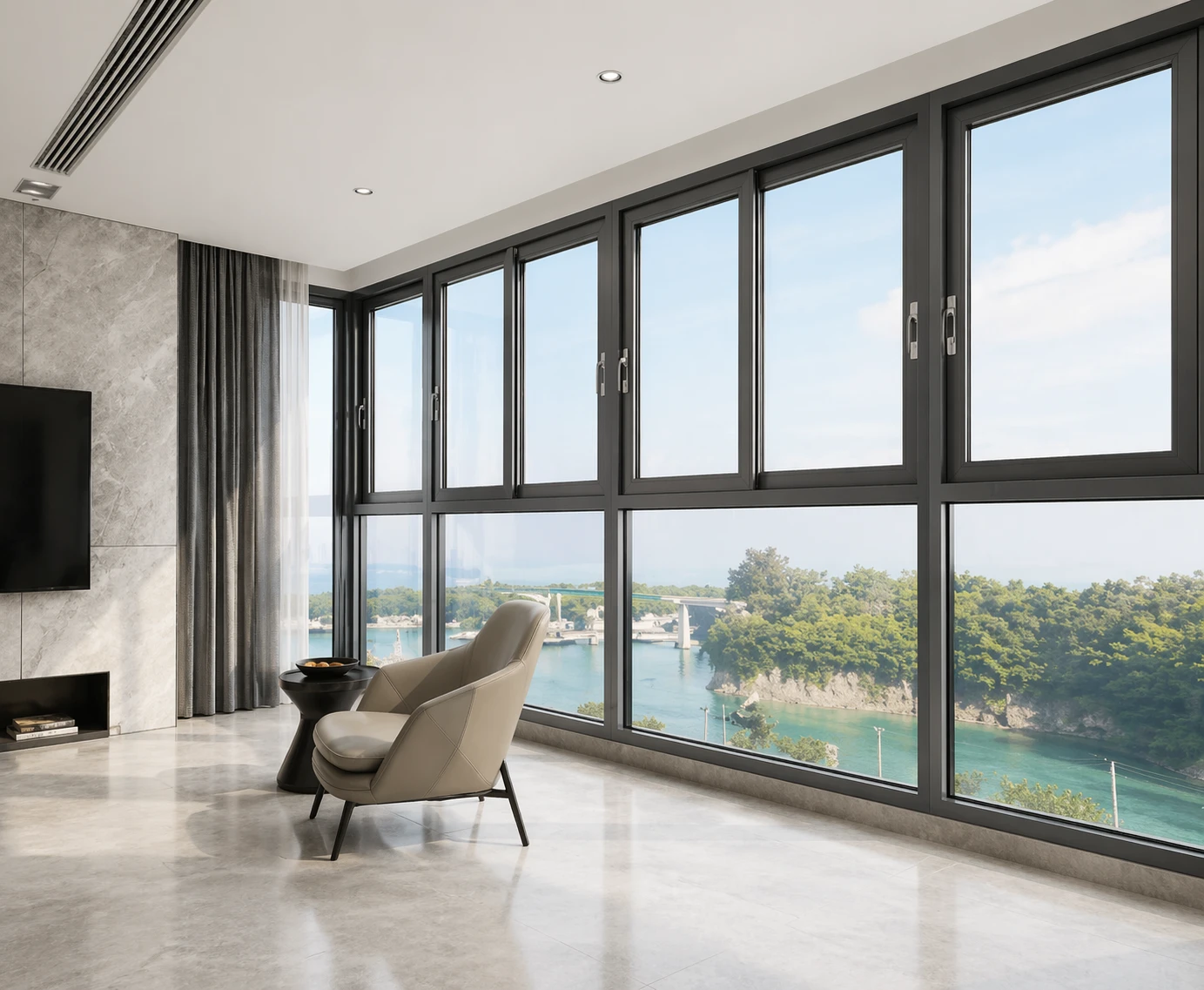
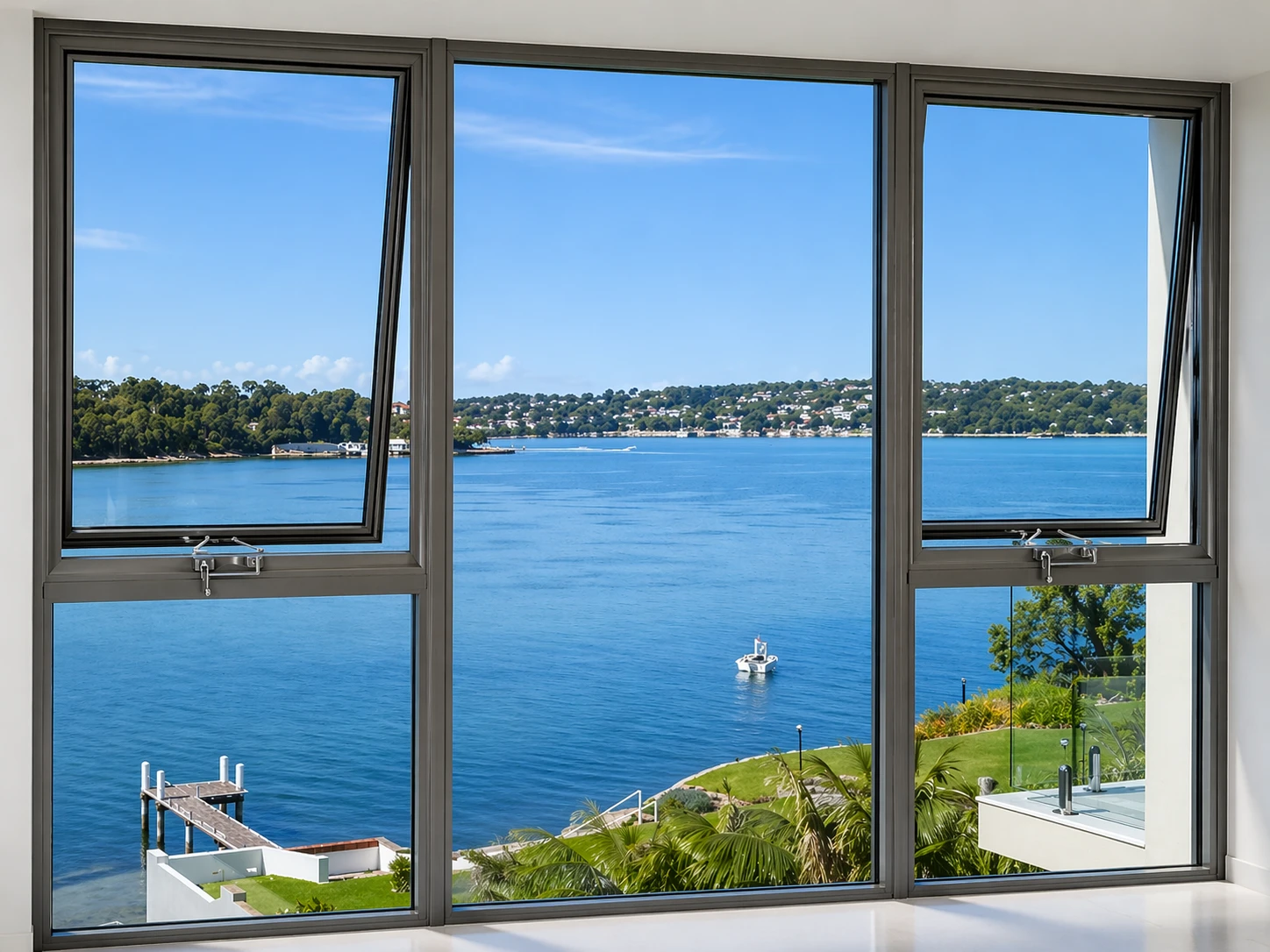
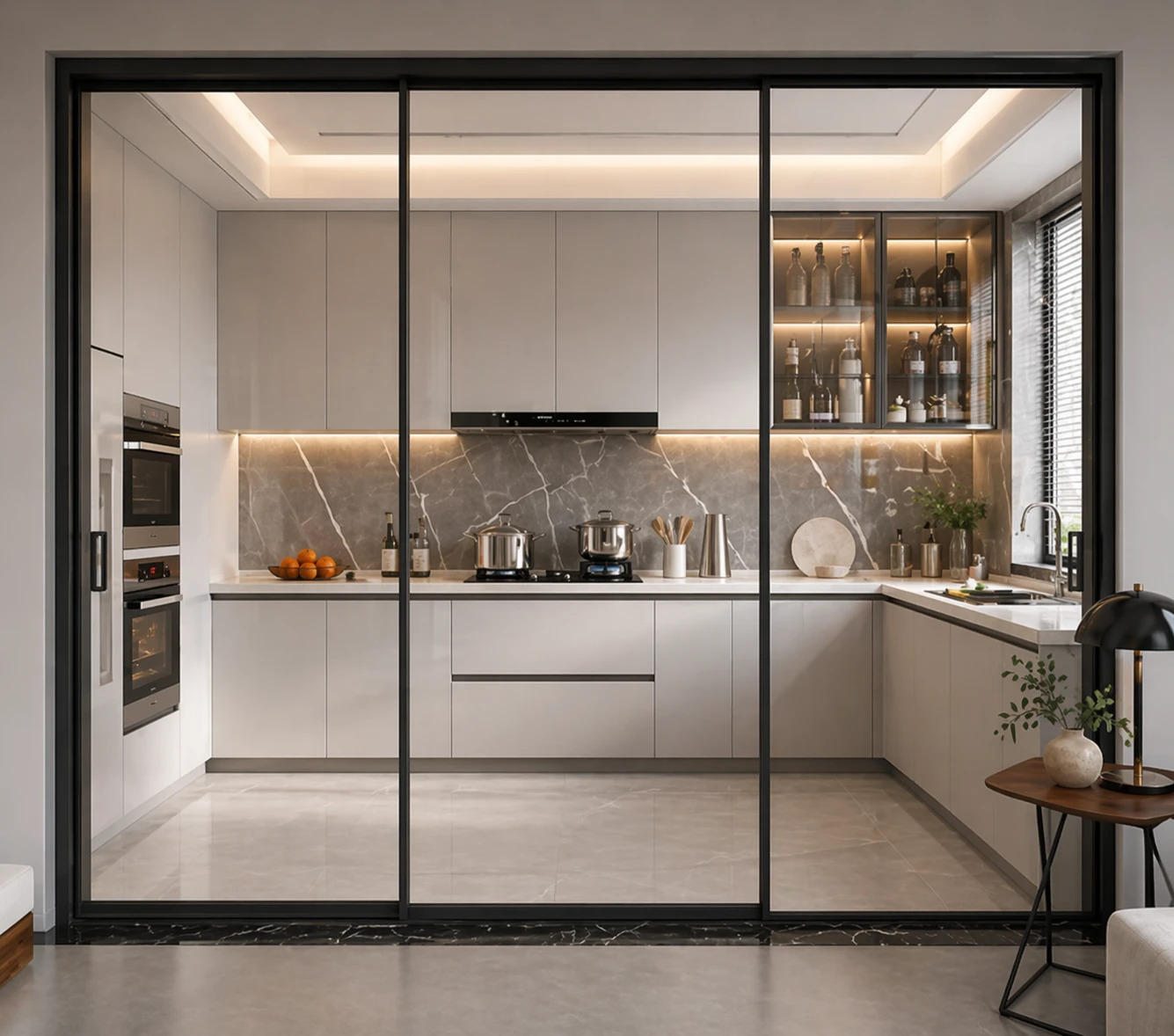
AI-generated illustrative image. Not a product test, certification record or project evidence.
While upgrading to thick acoustic laminated glass or asymmetric double glazing significantly enhances sound reduction, the primary acoustic bottleneck in aluminium sliding windows is weathersealing rather than glass mass. Sound travels through microscopic air gaps in standard brush-pile weatherstripping, causing acoustic flanking that can downgrade high-performance Rw 40 glass down to an installed whole-window rating of Rw 28 to 32. Understanding the weighted sound reduction index (Rw) and low-frequency traffic spectrum adaptation term (Rw + Ctr) is essential for targeting urban road traffic and aircraft noise.
Across Australian capital cities, rapid urban consolidation along transport corridors has elevated acoustic comfort to a primary building requirement. In suburbs bordering busy arterial roads, rail corridors, and flight paths in Sydney, Melbourne, and Brisbane, intrusive external noise is one of the most frequent sources of homeowner dissatisfaction. While upgrading to high-performance architectural glazing is the proven solution to mitigate environmental noise, homeowners who install double-glazed aluminium sliding windows are frequently underwhelmed by the acoustic outcome.
The reason for this disappointment is an acoustic engineering reality that window marketing rarely highlights: in a sliding window, the primary bottleneck governing sound transmission is the perimeter weathersealing, not the glass. While heavy laminated glass or thick insulated glass units (IGUs) possess exceptional laboratory sound-deadening properties, the horizontal sliding mechanism creates persistent airborne acoustic flanking pathways that can undermine the performance of high-specification glass.
The Sealing Bottleneck: Why Weatherstripping Outweighs Glass Mass
In building acoustics, sound travels as an airborne pressure wave. Acoustic energy behaves like water under pressure: it seeks out the path of least physical resistance. A fundamental rule of acoustic engineering is that an unsealed perimeter gap representing just 1 percent of a window's total surface area can transmit up to 50 percent of incoming acoustic energy, effectively cutting the window's sound insulation value in half.
This physical principle explains why window style dictates acoustic performance. Top-hung awning windows and side-hung casement windows close by pulling an operable sash tight against continuous, non-porous EPDM rubber compression gaskets under mechanical winder or lever pressure. Because there are no open air channels, the installed acoustic performance of a compression window closely matches the tested performance of its glass unit.
Aluminium sliding windows, by contrast, cannot utilize high-compression rubber gaskets. If solid rubber seals were clamped tightly along the bottom track and top head channel, the sliding sash would experience immense friction and seize in place. Sliding windows must instead rely on synthetic woolpile (mohair) brush seals that sweep across the aluminium extrusions to allow smooth horizontal movement.
Standard brush seals consist of thousands of flexible nylon bristles. While effective at stopping insects and coarse dust, the microscopic interstitial gaps between the bristles are porous to high-energy sound waves. Acoustic flanking occurs around the entire perimeter of the sliding sash, through the overlapping interlock cavity at the central meeting stiles, and directly through the sill weep holes required for water drainage. Consequently, an acoustic glass unit rated at Rw 40 in an acoustic test laboratory will frequently drop to an installed whole-window performance of just Rw 28 to 32 when mounted in a standard residential sliding frame.
Decoding Australian Acoustic Metrics: Rw vs. Rw + Ctr
To specify soundproof sliding windows intelligently, buyers and specifiers must understand how acoustic performance is measured in Australia. Under Australian Standard AS/NZS ISO 717.1 (and AS 1276.1), acoustic performance is expressed through two primary figures: the Weighted Sound Reduction Index (Rw) and the Traffic Noise Spectrum Adaptation Term (Ctr).
The Weighted Sound Reduction Index (Rw) is a single-number laboratory metric expressed in decibels (dB). It measures how much airborne sound energy a building element blocks across standard mid-to-high frequency bands (from 100 Hz to 3150 Hz). A higher Rw number indicates superior sound reduction. Because the decibel scale is logarithmic, every 3 dB increase represents a 50 percent reduction in sound energy, while a 10 dB improvement is perceived by human hearing as roughly halving the subjective volume of the noise.
The critical limitation of the raw Rw metric is that it is heavily weighted toward high-pitched sounds such as human speech, birdsong, and dog barking. It fails to account for low-frequency acoustic energy, which has much longer wavelengths and greater penetration power.
To solve this, Australian standards introduce Ctr—a negative correction factor, typically ranging from -3 dB to -7 dB, that specifically adjusts the rating for low-frequency transportation noise such as diesel bus engines, heavy semi-trailers, accelerating motorcycles, braking suburban trains, and low-flying aircraft. When an acoustic engineer or regulatory authority (such as Transport for NSW or VicRoads) sets noise attenuation standards for residences near major roads, the legal metric is always the combined Rw + Ctr rating.
Relying on Rw alone can lead to severe specification mistakes. For example, a window with a published laboratory rating of Rw 36 might carry a heavy traffic correction of Ctr -6 dB, resulting in an effective traffic noise attenuation of just 30 dB. Conversely, an acoustic window engineered specifically for traffic noise might publish an Rw of 35 with a minor Ctr of -2 dB, yielding an effective Rw + Ctr of 33 dB—delivering substantially quieter living conditions despite a lower headline Rw number.
The Symmetrical Double Glazing Resonance Trap
One of the most surprising pitfalls in architectural soundproofing is that standard thermal double glazing can actually perform worse against urban traffic noise than basic monolithic glass. This counterintuitive behavior is caused by a physical phenomenon known as mass-air-mass resonance.
In a standard residential double-glazed window—typically configured with two identical 4mm glass panes separated by a standard 12mm air cavity (4/12/4)—the two glass lites act as acoustic diaphragms, and the trapped air cavity acts as an elastic spring. When low-frequency sound waves strike the outer glass, the acoustic energy transfers across the air spring, causing both panes to vibrate in sympathetic resonance.
This creates a catastrophic dip in sound insulation in the frequency band between 150 Hz and 250 Hz—the exact acoustic spectrum where heavy diesel engines and tyre rumble peak. While a 4/12/4 IGU achieves an Rw of 31 dB, its traffic correction is a severe -5 dB, yielding an effective Rw + Ctr of just 26 dB. In comparison, a single sheet of 6.38mm acoustic laminated glass achieves an Rw of 35 dB with a Ctr of -2 dB, delivering an Rw + Ctr of 33 dB. Against urban traffic rumble, the single laminated sheet outperforms the standard double-glazed unit by 7 decibels—more than a 50 percent perceived reduction in noise.
High-Performance Acoustic Glazing Solutions for Sliders
To achieve both 7-star thermal compliance and high-performance noise insulation in an aluminium sliding window, glazing fabricators utilize three advanced glass technologies designed to defeat harmonic resonance:
1. Asymmetric Double Glazing
By pairing glass panes of unequal thickness—such as a 6mm exterior pane and a 4mm interior pane separated by a 12mm to 16mm argon cavity—each pane possesses a completely different coincidence frequency and resonant pitch. When sound waves pass through the exterior 6mm pane, the vibrational frequency does not match the resonant frequency of the interior 4mm pane, breaking the mass-air-mass resonance and increasing traffic noise attenuation by 4 to 6 dB.
2. Acoustic Laminated Glass
Acoustic laminated glass (such as Viridian VLam Hush or standard 6.38mm / 10.38mm acoustic laminate) consists of two sheets of glass permanently bonded with a specialized 0.50mm to 0.76mm acoustic polyvinyl butyral (PVB) interlayer. Unlike standard structural PVB, acoustic PVB is formulated as a viscoelastic polymer. When sound waves hit the glass, the acoustic interlayer flexes, transforming sound energy into microscopic shear friction and dissipating it as harmless thermal energy. This eliminates the coincidence dip that causes monolithic glass to transmit high-frequency noise.
3. Asymmetric Acoustic Insulated Glass Units (IGUs)
The premier configuration for urban homes combines both strategies: an asymmetric double-glazed unit incorporating an acoustic laminate on one side, a wide gas-filled cavity, and a thick float or Low-E pane on the other (for example: 6.38mm acoustic laminate + 12mm argon cavity + 5mm toughened Low-E glass). In laboratory testing, this build-up achieves an Rw of 38 to 40 dB with an Rw + Ctr of 34 to 36 dB, delivering both 7-star NatHERS thermal efficiency and near-complete isolation from city street noise.
Engineering the Frame: Upgrading Sliding Seals and Weep Holes
Investing in high-performance acoustic glass is wasted if the sliding window frame allows airborne flanking. To achieve installed performance that honors the glass specification, an acoustic sliding window must be specified with mechanical frame enhancements:
Multi-Fin Barrier Weatherstripping: Replace standard bristle brush pile with high-density triple-fin barrier woolpile. These seals incorporate a solid, flexible polypropylene plastic fin embedded down the center of the bristles, creating an impermeable physical barrier against airborne sound waves while gliding smoothly along the track.
Meeting Stile End Baffles: Install custom-molded Santoprene or high-density PVC draft plugs at the top and bottom of the vertical interlocking meeting stiles. This caps the open interlock cavity, eliminating the acoustic chimney flanking path where external street noise enters between overlapping panels.
Acoustic Weep Hole Baffles: Standard open drainage slots act as acoustic funnels into the room. Acoustic sliding joinery incorporates gravity-assisted labyrinth weep hole covers. These specialized fittings allow water to drain outward under gravity while forcing incoming sound waves through a tortuous acoustic trap that dampens decibel levels.
Heavy-Duty Structural Extrusions: Thin residential aluminium profiles can vibrate sympathetically under low-frequency bass rumbles, turning the window frame into a secondary acoustic radiator. High-performance acoustic sliding windows utilize heavy architectural extrusions with deep profile walls and structural polyamide thermal breaks, which provide substantial damping against frame vibration.
Frequently Asked Questions
Why do sliding windows isolate less noise than awning or casement windows?
Awning and casement windows clamp tightly against continuous, solid EPDM rubber compression gaskets under winder torque, eliminating air channels. Sliding windows must use brush-pile seals to glide along tracks; the microscopic gaps between bristles allow airborne sound waves to flank around the sash perimeter and through drainage weep holes, reducing installed acoustic performance below laboratory glass ratings.
What is the practical difference between Rw and Rw + Ctr in window acoustic ratings?
Rw (Weighted Sound Reduction Index) measures overall airborne noise reduction across mid-to-high frequencies such as human speech and barking dogs. Ctr is a negative correction factor (typically -3 to -7 dB) that adjusts the rating for low-frequency transportation rumble, such as diesel trucks, buses, trains, and aircraft. In Australian traffic noise corridors, legal acoustic compliance is governed by the combined Rw + Ctr rating.
Why can standard 4/12/4 double glazing perform worse against traffic noise than single laminated glass?
When two glass panes of identical thickness (4mm) are separated by a narrow 12mm air cavity, they create mass-air-mass harmonic resonance. Both panes vibrate sympathetically like drum skins between 150 Hz and 250 Hz, which is the exact frequency of low-end diesel engine noise. Symmetrical 4/12/4 double glazing achieves an effective traffic rating (Rw + Ctr) of only 26 dB, whereas a single sheet of 6.38mm acoustic laminated glass achieves 33 dB.
What is the best glass specification for an acoustic aluminium sliding window?
The premier specification is an Asymmetric Acoustic Insulated Glass Unit (such as 6.38mm or 10.38mm acoustic laminate on the exterior, a 12mm argon cavity, and a 5mm or 6mm float or Low-E pane on the interior). The different glass thicknesses break harmonic resonance, the acoustic PVB interlayer dampens sound vibration, and the argon cavity provides thermal insulation, delivering laboratory ratings of Rw 38 to 40 dB (Rw + Ctr >= 34 dB).
Noise-Specific Glazing Selection Guide
To avoid over-specifying or under-specifying joinery, select your acoustic sliding window package based on the measured noise levels of your building site:
Suburban Low-Density Streets (Ambient Noise < 50 dBA): Standard residential noise from distant traffic and neighbors. Specification: Standard two-panel sliding window with 6.38mm laminated glass or 6/12/4 asymmetric double glazing with standard finned weatherseals. Target Performance: Installed Rw 28 to 30 dB.
Urban Collector Roads & Bus Routes (Ambient Noise 55 to 65 dBA): Frequent diesel bus acceleration, local delivery trucks, and continuous suburban traffic. Specification: Thermally broken sliding window with asymmetric acoustic double glazing (6.38mm acoustic laminate + 12mm argon + 5mm float), barrier-fin mohair seals, and meeting stile end-baffles. Target Performance: Installed Rw 32 to 34 dB (Rw + Ctr ≥ 29 dB).
Major Highway Frontage, Rail Corridors & Flight Paths (Ambient Noise > 65 dBA): Severe, continuous low-frequency rumble. Specification: Commercial-grade thermally broken sliding frame with heavy acoustic IGU (10.38mm acoustic laminate + 12mm argon + 6mm toughened glass), complete acoustic weep baffles, and multi-point perimeter compression interlocks; or evaluate alternative operable styles such as high-performance awning windows where continuous compression seals are required. Target Performance: Installed Rw 36 to 38 dB (Rw + Ctr ≥ 32 dB).