
Policy & Compliance
NCC 2022 vs NCC 2025: which code applies to your windows and doors in 2026?
By Sheng Xu · 8 September 2026
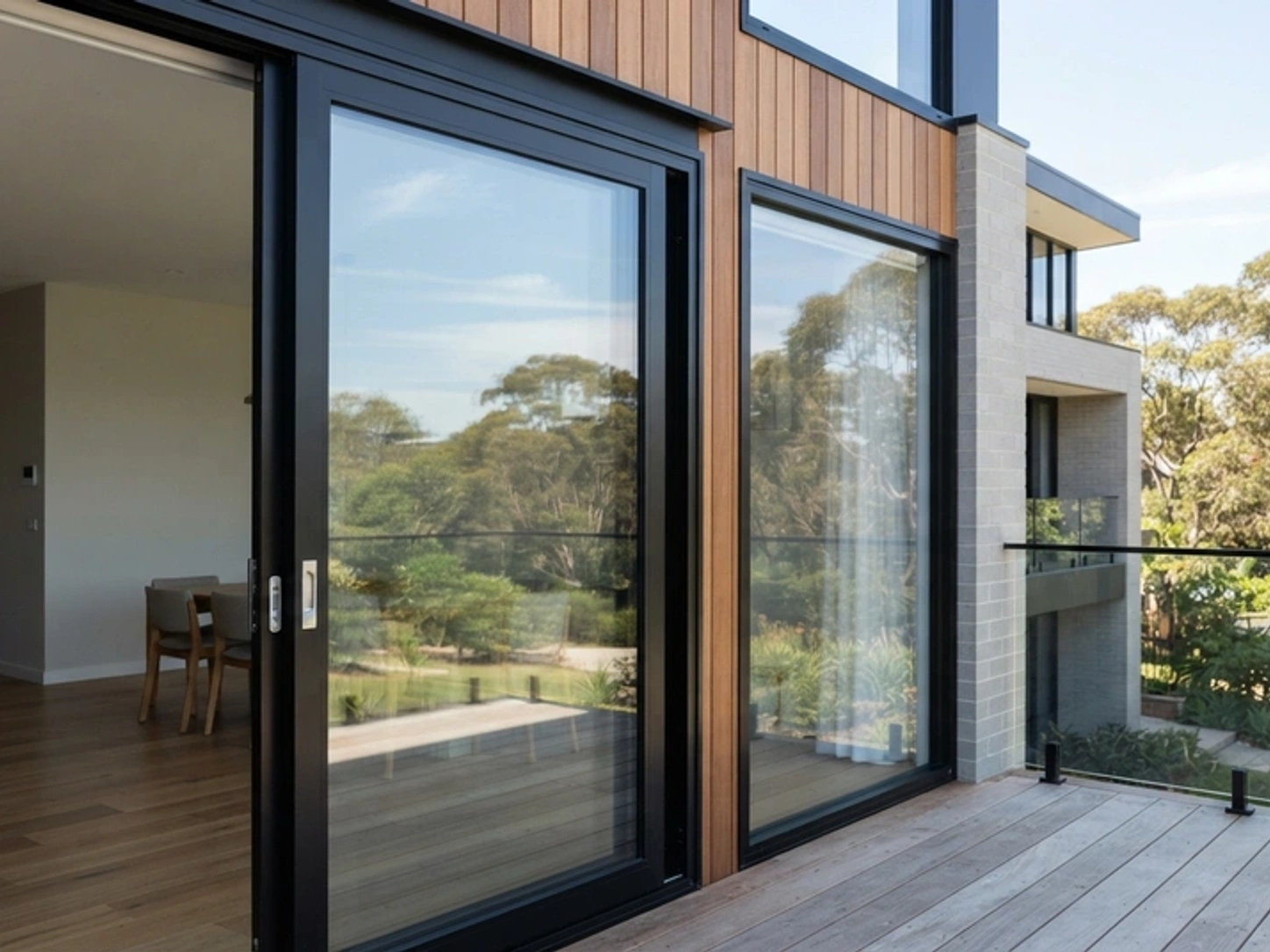
AI-generated illustrative image. Not a product test, certification record or project evidence.
In 2026, the applicable building code depends on your state and permit lodgement date. While Victoria, the ACT, and Western Australia adopted NCC 2025 on 1 May 2026, New South Wales, Queensland, and South Australia (for building work) deferred adoption to 1 May 2027, meaning NCC 2022 remains legally operative. For detached residential homes, building ministers confirmed a freeze on new energy stringency until mid-2029, so the 7-star NatHERS and 60-point Whole of Home standards from NCC 2022 carry forward unchanged into NCC 2025.
On 1 May 2026, the Australian Building Codes Board (ABCB) officially published NCC 2025, superseding NCC 2022 as the latest national model code. In an ideal world, a single publication date would mean a single set of rules for builders, architects, and window manufacturers nationwide. In reality, Australia's federal system does not work that way. The National Construction Code is given legal effect solely through legislation enacted by individual state and territory governments. In 2026, that constitutional structure has produced a fragmented regulatory landscape. While Victoria, the Australian Capital Territory, and Western Australia adopted NCC 2025 upon publication, New South Wales, Queensland, and South Australia (for building work) have formally deferred adoption until 1 May 2027. If you are specifying, purchasing, or certifying windows and doors in 2026, understanding which code edition applies to your specific site is vital to avoiding costly compliance disputes and permit delays.
The golden rule of code timing: permit lodgement date
The most fundamental principle of Australian building compliance is that a project is legally governed by the code edition in force in that specific state or territory on the date the building approval (or Construction Certificate) application is formally lodged, not the date architectural sketches begin or the day windows arrive on site.
Under grandfathering and transitional provisions, once an application is lodged and approved under a given code edition, that approval remains operative throughout construction. If your project received building approval in Sydney in February 2026 under NCC 2022, you are legally entitled to build to those approved NCC 2022 drawings and window schedules throughout the construction period, even if the state subsequently transitions to NCC 2025 before practical completion.
Conversely, if you are designing a project for lodgement in Melbourne or Canberra in the second half of 2026, the building certifier will assess the documentation against the provisions of NCC 2025. Specifying superseded NCC 2022 details on a project lodged under an active NCC 2025 regime can lead to immediate request-for-information (RFI) notices from the surveyor.
State-by-state adoption map: where each jurisdiction stands in 2026
Because state planning and building ministers have staggered their adoption schedules, the code landscape in 2026 is divided into early-adopter states and deferred states:
Victoria: Adopted NCC 2025 on 1 May 2026. NCC 2025 is the governing standard for all new building permit applications lodged on or after 1 May 2026, with the Victorian Building Authority (VBA) overseeing enforcement.
New South Wales: Deferred adoption of NCC 2025 until 1 May 2027. NCC 2022 remains the mandatory operative code throughout 2026. NSW continues to use its BASIX thermal performance framework (aligned with 7 stars) rather than national NatHERS defaults.
Queensland: Deferred adoption of NCC 2025 until 1 May 2027. The Queensland Building and Construction Commission (QBCC) continues to assess all residential and commercial building work under NCC 2022. Voluntary early adoption is permitted, but standard industry practice remains anchored to NCC 2022.
South Australia: Split adoption model. On 1 May 2026, South Australia adopted NCC 2025 Volume Three (Plumbing Code of Australia), but formally deferred Volumes One and Two (the Building Code) until 1 May 2027 via Ministerial Building Standards. For windows, glazing, and building fabric, NCC 2022 Amendment 2 remains the governing law in SA.
Australian Capital Territory: Adopted NCC 2025 on 1 May 2026 with a 12-month dual-code transition window running until 1 May 2027. Builders and certifiers can choose to comply with either NCC 2022 (with the ACT 2022 Appendix) or NCC 2025 (with the ACT 2025 Appendix) during the transition period.
Western Australia: Adopted BCA 2025 on 1 May 2026, but under WA building regulations, permit applications may be assessed against the building code in force 12 months earlier. In practical terms, most WA residential building permits throughout 2026 continue to run under NCC 2022 provisions.
Tasmania: In June 2026, the Tasmanian Parliament passed the Building Amendment Bill 2026, legislating a pause on NCC 2025 adoption and reverting the state back to NCC 2022 until 1 May 2027. Note that Tasmania also maintains a state-specific variation exempting residential housing from the 7-star fabric increase, remaining on a 6-star residential thermal baseline.
Northern Territory: The NT government has not adopted NCC 2025, and NCC 2022 Amendment 2 remains in effect with local variations.
Because New South Wales and Queensland represent Australia's two largest housing construction markets by volume, the practical reality is that the majority of Australian detached home builds in 2026 continue to be designed, approved, and constructed under NCC 2022.
The residential pause: did NCC 2025 change 7-star or Whole of Home rules?
A widespread misconception among homeowners and builders is that NCC 2025 increased residential energy efficiency requirements to an 8-star NatHERS standard or tightened glazing U-value targets. This is factually incorrect.
At the Building Ministers' Meeting in late 2025, federal and state ministers acknowledged the acute cost-of-living and housing supply pressures facing the construction sector under the National Housing Accord. The ministers agreed on a formal policy freeze: no new energy efficiency stringency increases will be introduced for residential buildings (Class 1 houses and Class 2 apartments) until at least mid-2029.
Consequently, NCC 2025 Volume Two carries forward the identical residential energy standards established under NCC 2022:
The minimum 7-star NatHERS thermal shell performance standard remains the national benchmark.
The Whole of Home annual energy budget (minimum score of 60 for houses, 50 for apartments) remains unchanged.
The ABCB Standard for NatHERS Heating and Cooling Load Limits applies identically across both code editions.
The Livable Housing Design silver standards (820mm clear opening entrance doorways and step-free thresholds) carry over without structural alteration.
For residential builders and window specifiers, this provides vital stability: a window and door package specified to meet NCC 2022 7-star requirements will comply seamlessly whether your project is assessed under NCC 2022 in Queensland or NCC 2025 in Victoria.
Where NCC 2025 actually hits: commercial glazing and Section J
While residential energy requirements were held steady, commercial construction under NCC Volume One received substantial overhauls in NCC 2025. For architects, facade engineers, and glazing subcontractors working on commercial projects (Class 3 multi-residential and Class 5 to 9 commercial, retail, hotel, and institutional buildings), the differences between NCC 2022 and NCC 2025 are pronounced.
NCC 2025 Section J significantly raises the energy performance bar for commercial glazed building envelopes. The updated ABCB Commercial Facade Calculator introduces lower maximum allowable whole-window U-values (Uw) and tighter Solar Heat Gain Coefficient (SHGC) bands to combat commercial cooling peak loads. Furthermore, NCC 2025 strengthens mandatory building envelope sealing and air-tightness verification under Part J5 and ISO 14644 standards.
This creates a genuine commercial divergence in 2026: a hotel or office building designed in Melbourne must satisfy the rigorous NCC 2025 Section J facade limits, requiring high-specification thermally broken commercial curtain walls and advanced solar-control insulated glass units. An identical commercial project lodged in Sydney or Brisbane in late 2026 can legally achieve compliance under the more flexible NCC 2022 Section J calculations.
Moisture, durability, and condensation refinements
NCC 2025 also introduces targeted technical refinements to condensation management and waterproofing, building upon the foundations laid in NCC 2022 Part 10.8.
The updated provisions clarify the vapour permeance ratings of pliable wall membranes (Class 3 vs. Class 4 membranes under AS 4200.1) across cooler climate zones and require more explicit detailing of perimeter drained cavities beneath window sills. These refinements aim to prevent interstitial moisture accumulation within external wall stud cavities.
For window manufacturers, these technical updates place even greater importance on the integration of sub-sills, sill drainage trays, and flexible flashings, ensuring that incidental water penetrating around window jambs can drain freely to the exterior without contacting moisture-sensitive building elements.
Cross-border construction: avoiding common specification mistakes
The fragmented national code creates specific commercial risks for prefabricators, modular builders, and volume contractors working across state borders - such as along the NSW-Victorian border (Albury-Wodonga), the Gold Coast-Tweed corridor, or the ACT-NSW region.
The most common operational mistake is issuing a single generic window specification across interstate offices. For instance, a commercial modular builder who applies a standard NCC 2022 Section J glazing schedule across all projects will face permit rejection when lodging a job in Victoria under NCC 2025. Conversely, applying NCC 2025 commercial specifications to a project in regional NSW or Queensland introduces unnecessary procurement costs that reduce competitive bidding margins.
To navigate cross-border operations safely in 2026, builders should maintain separate specification templates: one anchored to NCC 2022 for NSW, Queensland, South Australia, and Tasmania, and one aligned with NCC 2025 for Victoria and the ACT.
How SMIRO ensures compliance under both code editions
Whether your project is lodged under NCC 2022 in Brisbane, Sydney, and Adelaide, or under NCC 2025 in Melbourne and Canberra, SMIRO provides complete compliance certainty.
All SMIRO aluminium window and door systems are manufactured and rigorously certified to AS 2047:2014, satisfying the mandatory structural and weatherproofing benchmarks common to both code versions. Our products carry verified WERS performance ratings covering whole-window U-values, SHGC, and air infiltration, allowing your energy assessor or facade consultant to model accurate compliance in both residential NatHERS software and commercial Section J calculators.
With localized sales and technical support across Queensland, Victoria, and South Australia, our engineering team can review your project's permit lodgement date and jurisdiction to ensure your window schedules meet the exact statutory edition required for immediate certifier sign-off.
Frequently Asked Questions
If my house plans were approved under NCC 2022, must I upgrade to NCC 2025 during construction?
No. Under standard statutory grandfathering provisions, your building approval is legally assessed against the code edition in force on the date of application. Once a building permit or Construction Certificate is granted, you are entitled to build to those approved plans and window specifications without being forced to incorporate new requirements from a subsequent code edition.
Does NCC 2025 require 8-star energy ratings for new Australian homes?
No. Federal and state building ministers agreed to a national freeze on residential energy efficiency stringency increases under the National Housing Accord. The 7-star NatHERS thermal shell requirement and the 60-point Whole of Home energy budget established in NCC 2022 remain the residential benchmark through at least mid-2029.
When will New South Wales and Queensland officially adopt NCC 2025?
Both the New South Wales and Queensland state governments have formally announced a 12-month deferral, scheduling the mandatory commencement of NCC 2025 for 1 May 2027. NCC 2022 remains the active governing building code across both states until 30 April 2027.
Can a builder in a deferred state choose to adopt NCC 2025 early?
Yes. Most deferred jurisdictions, including Queensland and New South Wales, permit voluntary early adoption of NCC 2025 from 1 May 2026, provided the entire building design complies with the new code edition holistically rather than cherry-picking isolated clauses.
How do I know which code edition my building surveyor will assess my windows against?
Your building surveyor will determine the applicable code edition based on your site's state jurisdiction and the official lodgement date of your building permit or Construction Certificate. Always confirm with your certifier prior to freezing your final window schedule and ordering materials.