
Cost & Practical Guides
Stacker Door Fly Screens & Security Screens: How Multi-Panel Doors Work With Screens and What to Allow Before Install
By Sheng Xu · 4 October 2026
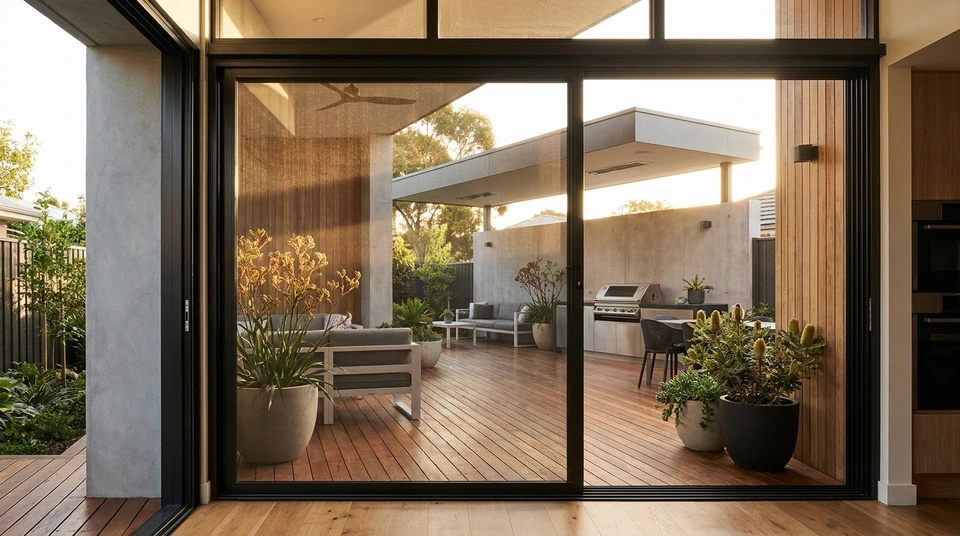
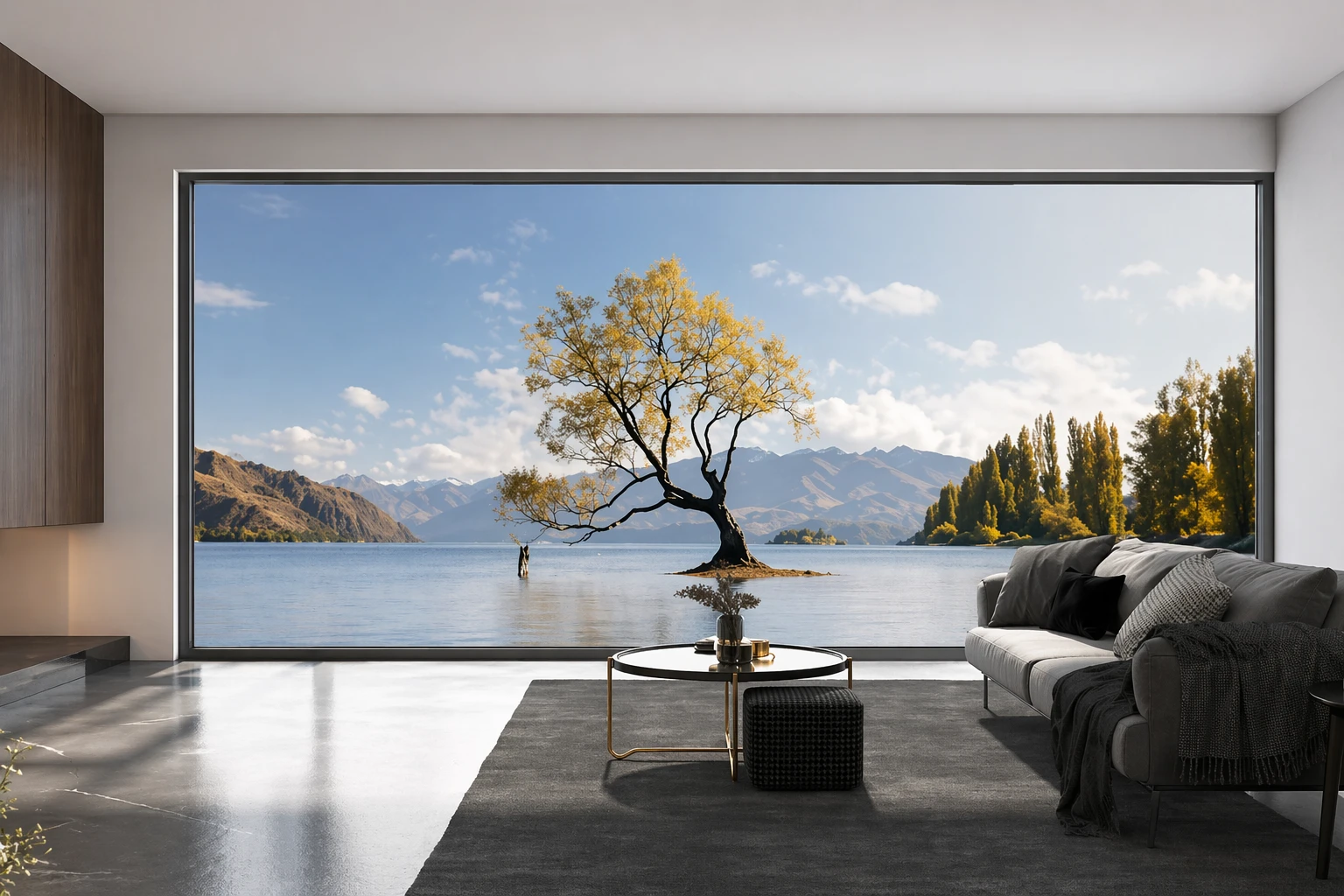
AI-generated illustrative image. Not a product test, certification record or project evidence.
Screening an aluminium stacker door is an architectural rough-in decision, not an afterthought. Homeowners can specify integrated multi-track sliding screens that run on dedicated parallel outer tracks (expanding frame depth from 150mm–187mm up to 200mm–240mm, as in the SMIRO Urban Reinforced 240 series) or retractable cassette screens that pull horizontally across the opening. For rigid sliding screens, panels exceeding 1200mm width require a horizontal spreader bar at 1050mm to maintain mesh tension. Upgrading to 0.8mm 316 marine-grade stainless steel mesh (SMIRO's standard specification) delivers certified AS 5039 security protection with triple-point locks, pet resistance, and AS 3959 bushfire compliance up to BAL-40.
In the Australian climate, expansive aluminium stacker doors are designed to dissolve the boundary between indoors and outdoors. However, leaving three to six metres of glass doors wide open on a warm summer evening introduces immediate practical challenges: flying insects, mosquitoes, neighborhood pets, and home security concerns. To truly enjoy natural cross-ventilation, an effective screening system is an indispensable requirement.
Unlike standard single-track sliding doors where a basic insect screen easily clips onto an outer extrusion, screening a multi-panel stacker door involves complex mechanical and architectural considerations. Screen panels must telescope and interlock across wide spans, resist wind deflection, and fit within the overall wall framing envelope. Treating screens as an afterthought frequently results in costly framing clashes or unsightly surface-mounted compromises. Understanding the mechanics of integrated sliding screens versus retractable cassettes is essential before finalizing door joinery schedules.
Integrated Multi-Track Sliding Screens vs. Retractable Cassette Screens
When screening an aluminium stacker door in Australia, homeowners and builders must choose between two distinct engineering methodologies:
1. Integrated Multi-Track Stacking Screens: This approach utilizes rigid extruded aluminium screen sashes that ride on their own dedicated parallel tracks on the exterior of the door frame. In a 3-panel stacker (XXO), two sliding screen panels glide along dual screen tracks and park neatly over the stationary fixed panel, mirroring the movement of the glass doors. In a 6-panel bi-parting stacker (OXXXXO), four sliding screen panels meet at the centre and latch securely. This system is exceptionally durable, pet-resistant, and supports certified AS 5039 security screen specifications with triple-point mortise deadlocks.
2. Retractable Cassette Screens: Manufactured by specialists such as Centor (S7/S4 series), Freedom Retractable Screens (Infinity Zipline), and RetractAScreen, this system utilizes a flexible mesh fabric that rolls into a slim vertical aluminium cassette mounted to the door jamb. When needed, the screen is pulled horizontally across the opening along an ultra-low-profile floor track (often 19mm or fully recessed into tiles). Retractable screens provide an elegant minimalist aesthetic because the mesh disappears completely into the wall when not in use. However, retractable systems provide insect protection only—they offer zero resistance against physical intruders, are vulnerable to damage from enthusiastic dogs or cats, and cost significantly more ($800 to $2,500+).
Frame Depth and Wall Stud Requirements: The 187mm vs. 240mm Expansion
The single most critical structural factor when planning rigid stacking screens is frame depth. A standard residential 3-panel stacker door without screens (such as the SMIRO Vista 187mm series) requires three parallel tracks to carry its three glass panels, resulting in a substantial 187mm perimeter frame depth.
When you incorporate integrated external channels to carry two sliding screen panels, the aluminium extrusion must expand to accommodate four or five parallel running channels. In the SMIRO Urban Reinforced 240mm series, the overall frame depth expands to 240mm.
In Australian residential building, standard exterior wall framing utilizes 90mm timber studs (or 70mm/90mm lightweight steel studs). When lined with 10mm plasterboard internally and clad with standard weatherboards or fibre cement externally, the total finished wall thickness is typically only 115mm to 130mm.
A 240mm stacker door frame will project significantly beyond the stud frame line. Builders must plan for this at the rough-in framing stage by ordering custom wide timber reveals (typically 138mm to 160mm primed pine or clear hardwood), detailing cantilevered sub-sill flashings to support the exterior screen tracks, or framing internal plasterboard bulkheads. If a homeowner attempts to retrofit rigid sliding screens to a standard 187mm frame after the home is completed, there is simply no physical track space available, forcing reliance on surface-mounted aftermarket cassettes.
Configuration Rules: 3-Panel, 6-Panel and Why 4-Panel Systems Differ
Screening feasibility is strictly tied to door configuration. Understanding what Australian fabricators can and cannot manufacture prevents major design headaches:
3-Panel Stackers (XXO / OXX): Highly compatible with rigid stacking screens. Two sliding screen panels stack over the single fixed glass panel. The frame depth expands from 150mm–187mm to 200mm–240mm, creating a clean, synchronized sliding experience.
6-Panel Bi-Parting Stackers (OXXXXO): Highly compatible with rigid stacking screens. Because a 6-panel door is essentially two mirrored 3-panel doors meeting in the centre, it utilizes the same 200mm–240mm frame depth. Four moving screen panels glide outward to park over the two stationary end panels, meeting at a central latch with overlapping interlocks.
4-Panel (XXXO) and 8-Panel Single-Direction Stackers: Rarely available with rigid sliding screens. Fabricators such as Rylock explicitly note that 4-panel and 8-panel doors require four dedicated glass tracks. Adding dedicated multi-track screen channels would balloon overall frame depth past 260mm to 300mm—exceeding standard extrusion dies and creating unmanageable wall projections. For 4-panel single-direction stacks, retractable cassette screens or motorized drop-down external blinds are the only viable screening solutions.
Wide-Span Engineering: Spreader Bars, Interlocking Stiles & Mesh Tension
Stacker doors feature individual panel widths between 900mm and 1200mm and heights up to 2400mm or 2700mm. At these architectural dimensions, an aluminium screen sash is exposed to considerable wind pressure and manual operating stresses.
Spreader Bar Requirements: Under Australian window and door fabrication standards (e.g. Rylock Technical Sizing Manual and AGWA joinery guidelines), screen panels exceeding 1200mm in width or 2100mm in height require a horizontal 'spreader bar' (midrail). Without a spreader bar, wide aluminium screen stiles bow inward under mesh tension and wind suction, causing the perimeter bristles to lose contact with the frame and letting insects bypass the screen. In premier architectural systems, this spreader bar is positioned at exactly 1050mm above the floor to align visually with mandatory glass manifestation bands under AS 1288.
Interlocking Stacking Stiles: In a multi-panel sliding screen, adjacent panels cannot simply overlap loosely. When closed, the trailing stiles must engage with continuous extruded interlocking aluminium hooks. This interlock prevents the screens from being pushed apart by intruders or strong wind gusts, guaranteeing an airtight insect barrier and continuous structural integrity across the entire 3m to 6m span.
Mesh Selection: Fibreglass, Pet Mesh, and 0.8mm 316 Stainless Steel
The choice of mesh material fundamentally dictates transparency, durability, airflow, and security:
Standard Fibreglass Insect Mesh: Woven from vinyl-coated glass fibres. Provides basic fly and mosquito protection at the lowest cost. However, it offers zero physical security, sags and stretches over wide panels, is easily torn or pushed out of its spline by household pets, and is strictly prohibited in bushfire-prone areas.
Heavy-Duty Pet-Resistant Mesh: Manufactured from thick vinyl-coated polyester yarn, pet mesh is roughly seven times stronger than standard fibreglass. It resists scratching, clawing, and impact from energetic dogs and cats. However, the thicker yarn reduces open ventilation area (dropping to ~35% airflow) and creates a darker, heavier visual barrier across garden views. For a detailed comparison, read our guide on pet-resistant security screen mesh.
0.8mm 316 Marine-Grade Stainless Steel Mesh (SMIRO Standard Specification): High-tensile woven 316 marine-grade stainless steel wire (0.8mm diameter wire with an aperture of approximately 1.58mm) represents the pinnacle of fenestration screening. Clamped into heavy-duty extruded aluminium sashes, 316 stainless mesh provides an exceptional 42.7% open area for natural airflow, maintains near-invisible optical transparency looking out into gardens, and delivers impenetrable resistance against knife-slashing, impact, and corrosion in coastal salt-air environments. Learn more in our technical guide on what is security mesh.
Standards Compliance: AS 5039 Security & AS 3959 Bushfire (BAL-40) Protection
In the Australian building industry, there is a strict legal distinction between a decorative 'flyscreen door' or 'barrier door' and a certified 'security screen door'.
Under Australian Standard AS 5039-2023 (Security screen doors and window grilles) and AS 5039.2:2024 (Installation), a stacking screen can only be certified as a security screen door if it successfully passes six rigorous independent laboratory tests:
1. Dynamic Impact Test: Simulates an intruder kicking the door with repeated heavy blunt-force pendulum impacts.
2. Knife Shear Test: A heavy mechanical blade attempts to slice through the mesh under sustained pressure across three continuous strokes.
3. Jemmy Attack Test: A steel crowbar applies extreme levering force against the lock, hinges, and interlocking meeting stiles.
4. Pull and Probe Tests: Evaluates whether mesh or frame edges can be pried loose from the perimeter frame.
To achieve AS 5039 compliance, the primary sliding panel must incorporate a certified triple-point mortise lock (such as a Lockwood multi-point deadlocking system that throws steel shoot-bolts into the head, jamb, and sill simultaneously). Trailing panels must feature interlocking stiles and internal locking pins to prevent panels from being lifted off their tracks.
Bushfire Compliance under AS 3959: For homes situated in designated bushfire prone areas (Bushfire Attack Levels BAL-12.5, BAL-19, BAL-29, and BAL-40), Australian building regulations mandate that all openable external glazed doors must be screened to prevent wind-borne burning embers from entering the home. AS 3959 strictly requires non-combustible corrosion-resistant metal mesh with a maximum aperture of 2mm (specifically stainless steel or bronze). SMIRO's 0.8mm 316 stainless steel security mesh satisfies all AS 3959 ember-screening requirements up to BAL-40, whereas fibreglass mesh instantly melts and fails.
Frequently Asked Questions
Can I add rigid security screens to an existing stacker door?
Only if the existing door frame was originally manufactured with dedicated external screen tracks. If your stacker door is a glass-only 3-track frame (typically 150mm to 187mm depth), there is physically no sill track or head guide to receive sliding screen sashes. In that scenario, your only options are installing an aftermarket retractable cassette screen or surface-mounting a secondary screening frame.
How much frame depth is required for a stacker door with screens?
While a glass-only stacker frame requires 150mm to 187mm, incorporating integrated multi-track sliding screens expands the overall frame depth to 200mm to 240mm (such as the SMIRO Urban Reinforced 240 series). Builders must account for this depth during wall framing by specifying wide timber reveals (138mm to 160mm) and sub-sill flashings.
Do 0.8mm stainless steel security screens block airflow or garden views?
No. Certified 0.8mm 316 marine-grade stainless steel woven mesh provides approximately 42.7% open area. It permits free natural cross-ventilation while maintaining exceptional optical clarity. Looking from inside a lit room toward the garden, the black powder-coated mesh visually recedes, providing near-transparent outdoor views. For full testing data, see does security screen mesh block airflow and natural light.
Why do wide stacker screen panels need a horizontal spreader bar?
Screen panels wider than 1200mm or taller than 2100mm experience high mesh tension and wind suction that can cause slender aluminium stiles to bow inward. A horizontal spreader bar positioned at 1050mm above the floor maintains structural rigidity, keeps the perimeter woolpile tightly sealed against insects, and aligns with mandatory AS 1288 visual manifestation heights.
Specifying Stacker Screens with SMIRO
Screening your aluminium stacker doors allows you to embrace Australia's outdoor lifestyle without compromising on security, comfort, or bushfire resilience. By selecting the SMIRO Urban Reinforced 240mm series with integrated screen tracks and standard 0.8mm 316 marine-grade stainless steel security mesh, you achieve seamless architectural beauty backed by certified AS 5039 and BAL-40 performance.
To finalize your fenestration schedule, explore our flagship SMIRO Stacker Door System, compare opening systems in our stacker doors vs bifold doors guide, review detailed pricing in our stacker doors cost guide, or consult our sizing guide on 3-panel vs 6-panel dimensions to ensure your project rough-in is perfectly planned.
Our Products
Stacker Doors
View system
Sliding Doors
View system
Bi-folding Doors
View system
Fixed Windows
View system
Sliding Windows
View system