

Door Types
Are Aluminium Hinged Doors Worth It? The Honest Answer
By Sheng Xu · 14 August 2026
Aluminium hinged doors are built from one or two sashes that swing on side-mounted hinges and compress into a continuous perimeter seal when they close. That compression makes them the tightest-sealing aluminium door type in Australia - better than sliding on energy, sound and weather, with multi-point locks as standard security. They trade that seal for swing space: every hinged door needs clear floor in front of it.
Aluminium hinged doors are the sealing counterpart to the louvre's ventilation. A single or double sash swings on hinges set into one side of a frame, and when the handle is lifted a multi-point lock pulls the door flush against a continuous perimeter seal. That one action is the whole difference between a hinged door and a sliding door, and why the hinged door has become the airtightness standard of the aluminium range.
What are aluminium hinged doors?
Aluminium hinged doors are built around one or two sashes that swing open on hinges down one side of a frame, opening inwards or outwards as a single door, a French pair, or with sidelights and highlights. The frames are standard aluminium sections, 100 to 125 millimetres deep on typical systems, and quality ranges now handle panels up to around 2700 millimetres high by 1000 to 1120 millimetres wide.
The design exists for one reason: a tight seal. A swinging sash presses against a continuous weatherseal around the frame, compressing into its seals in a way a sliding door, which must glide past a brush-pile interlock, never quite manages. When a multi-point lock lifts the handle, it pulls the door flush against that seal at three or more points. Every strength of a hinged door, and every weakness, flows from that one mechanism.
Do hinged doors seal better than sliding doors?
Yes, and the reason is mechanical rather than marketing. A hinged sash swings shut and compresses into the perimeter weatherseal, where a sliding sash can only brush against an interlock at the meeting stiles. Practitioners on Australian building forums put it plainly, one thread on aluminium window and door replacement saying all the hinged ones have seals way beyond sliders, and the 2026 fabricator guides lead with the same point, that aluminium hinged doors create a tight seal.
The published numbers back the claim. Thermally broken hinged door systems rate their whole-door U-value at roughly 2.0 to 3.1 for Stegbar's EnviraLuxe, 2.3 to 3.2 for Alspec's Carinya and 2.4 to 3.7 for Capral's Futureline, the top of the aluminium door table. AWS, a major systems supplier, specifies its hinged doors as having low air infiltration, making them suitable for air-conditioned buildings. Treat these as indicative industry data from the manufacturers' published spec sheets, not SMIRO-tested values.
Sound follows the same pattern. Hinged doors are what installers reach for when a door must stop noise, with published acoustic ratings of roughly Rw 31 to 35 for standard double glazing and up to Rw 42 for tandem glazing. The caveat: these numbers only appear with a thermally broken frame and double glazing - a plain single-glazed aluminium door is still a conductor, and practitioners are blunt that thermally broken is the version worth buying.
The trade-off: swing space and the honest drawbacks
The price of the seal is floor space. Every hinged-versus-sliding comparison in the Australian market lists the swing arc as the number one drawback: the door needs clear floor to open, so furniture and foot traffic must stay out of its path, and in a small room that arc can make the space feel noticeably smaller. A sliding door needs none of that, which is why the comparison always ends the same way - hinged for the rooms where you can spare the floor, sliding where you cannot.
Outward-swinging doors add a wind consideration. Left open in a breeze, an outward door can slam shut with real force, which is loud and hard on the frame; inward-swinging doors avoid that but rate lower on water, a trade-off covered in the next section.
Heavy double-glazed hinged doors also carry a running cost that buyer guides rarely mention: door sag. Over time a large door drops a few millimetres on its hinges, and because a multi-point lock depends on precise alignment between its hooks and keeps, the handle stiffens and the door stops closing cleanly. The fix is adjustment rather than replacement - the hinges and keeps are realigned, usually starting with the top hinge - which is why quality systems now ship with 3D-adjustable hinges as standard.
Two less obvious limits round out the picture: hinged doors are harder for wheelchair users to operate than sliders, and any door opening onto a pool area must be self-closing and self-latching under Australian pool fencing rules.
Are aluminium hinged doors secure?
Yes, with the right lock, and the security lives in the hardware rather than the door. A hinged door with a single-point latch is a barrier door, not a security door, because one latch can be forced. The standard fix is a multi-point compression lock that engages three or more points into the frame - top, middle and bottom - and pulls the whole door into the seal, which is why lock makers describe the upgrade as turning a barrier door into a security door.
The performance bar is published. Mechanical locksets for doors are tested to AS 4145.2, where a physical security level of S7 with durability D8 is what premium hinged-door locks claim, and security screens to AS 5039. The Australian Standards installation guide for hinged security doors is specific: a 3-point lock with a 5-pin cylinder and three tamper-resistant hinges.
Hinges are the other side. On outward-opening doors, hinge bolts, sometimes called dog bolts, stop the door being lifted off its hinges, and concealed hinges are standard on quality systems. French doors secure both leaves: the master panel carries the main lock and the slave panel its own twin-bolt and shoot-bolt mechanism, so neither leaf is a weak point. The newest trend is keyless - one premium hinged door now offers a smart lock as an option.
Do hinged doors leak? Water, weather and wind reality
A hinged door leaks only when it is built or swung the wrong way, and the water rating is a published number that depends on which way the door opens. Outward-swinging doors reach the higher ratings, tested at 380 pascals on AWS's Vantage system and up to 450 pascals on some others when a sub-sill is fitted. Inward-swinging doors are the honest weak spot, rating 150 to 200 pascals, which is still fine for a sheltered site but not for an exposed coastal wall.
The rest is in the details. Perimeter weatherseals, a correctly fitted threshold and a sub-sill lift the rating, and the door's drainage holes must stay clear - a blocked weep path is the classic way a sealed door leaks. In coastal areas the running cost is hardware: hinges and locks near the ocean need lubrication monthly rather than annually.
Wind cuts both ways. An outward door pressed by the wind tightens into its seals, a real advantage on a stormy site, but the same door can slam shut when left open. And because a water rating applies to a specific swing direction and glazing build-up, ask for the tested AS 2047 configuration for your exact opening rather than accepting a generic compliant label.
Aluminium hinged doors vs sliding, French and bifold: which should you choose?
Match the door to the room, because the choice is space and use, not quality. For the main entry, the hinged door is the near-universal answer - the comparison guides call it almost always the winner for the front door, where strength, robust locking and kerb appeal matter more than a wide opening. French doors, a double hinged pair, extend the same logic to full-width openings, sealing the two leaves with a weatherstop or rebated stiles.
For the patio, sliding and stacking doors win where the opening is large and the floor tight, and bifold for a full-width fold-away. The slider's half-open rule is the trade-off: a standard two-panel slider opens only half its width, while a hinged pair opens fully - the real reason the French-door retrofit is so popular.
On cost, the honest answer is that hinged doors sit in the same band as sliding. A standard two-panel aluminium sliding door installs for roughly $1,500 to $3,500, a thermally broken frame adds about $300 to $700, and double glazing adds about $200 to $500 per door. A hinged door's own hardware - three or four hinges plus a multi-point lock - is its main cost variable. Treat every figure as indicative: size, glazing and supplier move the price more than the door type does.
Where wheelchair access matters, sliding or cavity doors are the easier call, which is why accessible projects often pair a hinged entry with sliders everywhere else.
Are aluminium hinged doors right for your home?
The verdict is simple. Choose hinged for front and rear entries, French door openings, bedrooms on noisy streets and cold-climate rooms - anywhere a tight seal beats a wider opening. Choose sliding or bifold for large patio openings, small rooms and kitchens that lead straight to a deck, anywhere swing space is scarce.
When you do specify hinged doors, the checklist is short: a multi-point compression lock with at least three points and a deadlatch, 3D-adjustable or concealed hinges, a thermal break and double glazing where energy performance matters, and the published water rating for the exact swing direction of your door rather than a generic compliant label. That combination is what turns an aluminium hinged door from a simple door into the tightest seal in the house.
Our Products
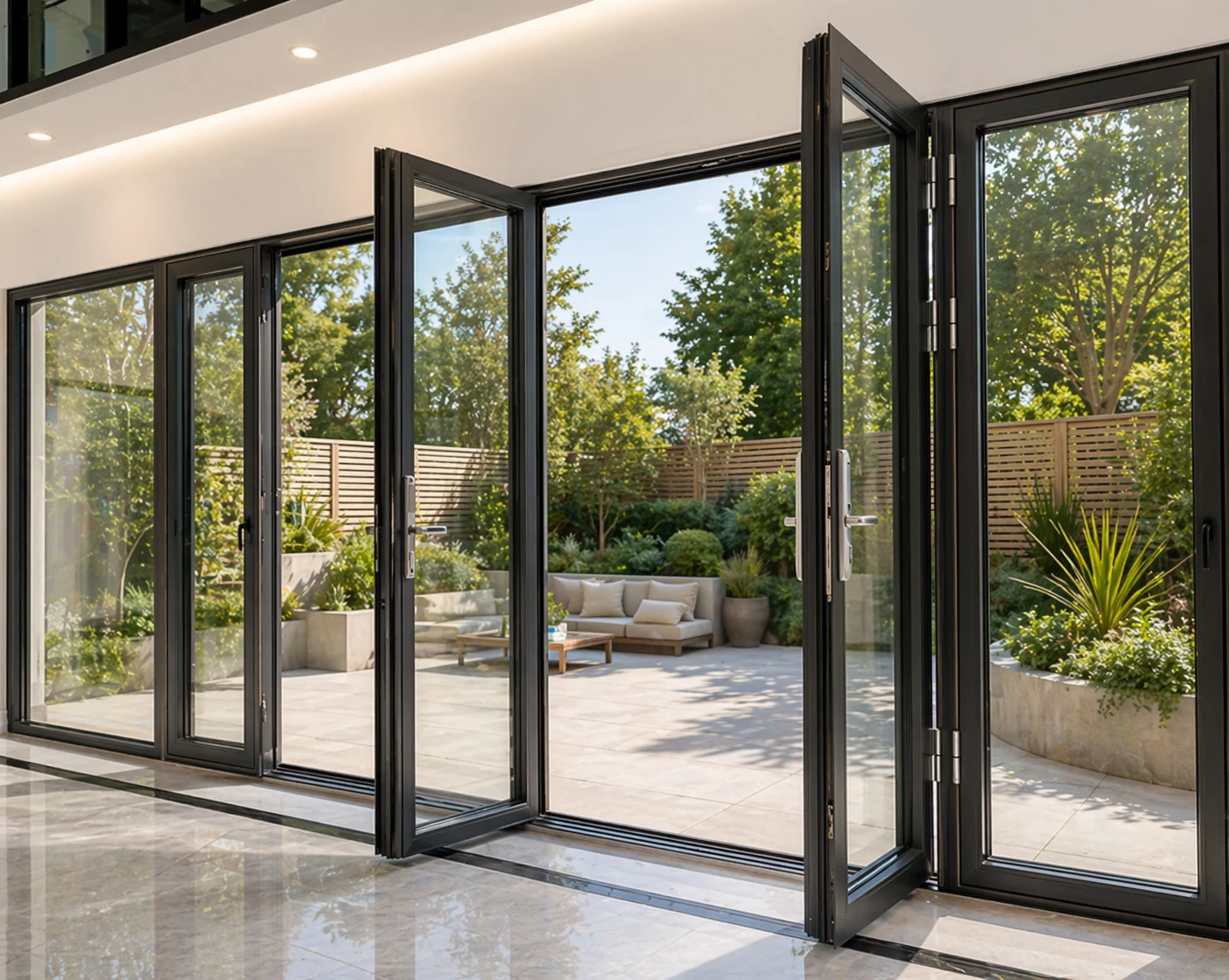
Hinged Doors
View system
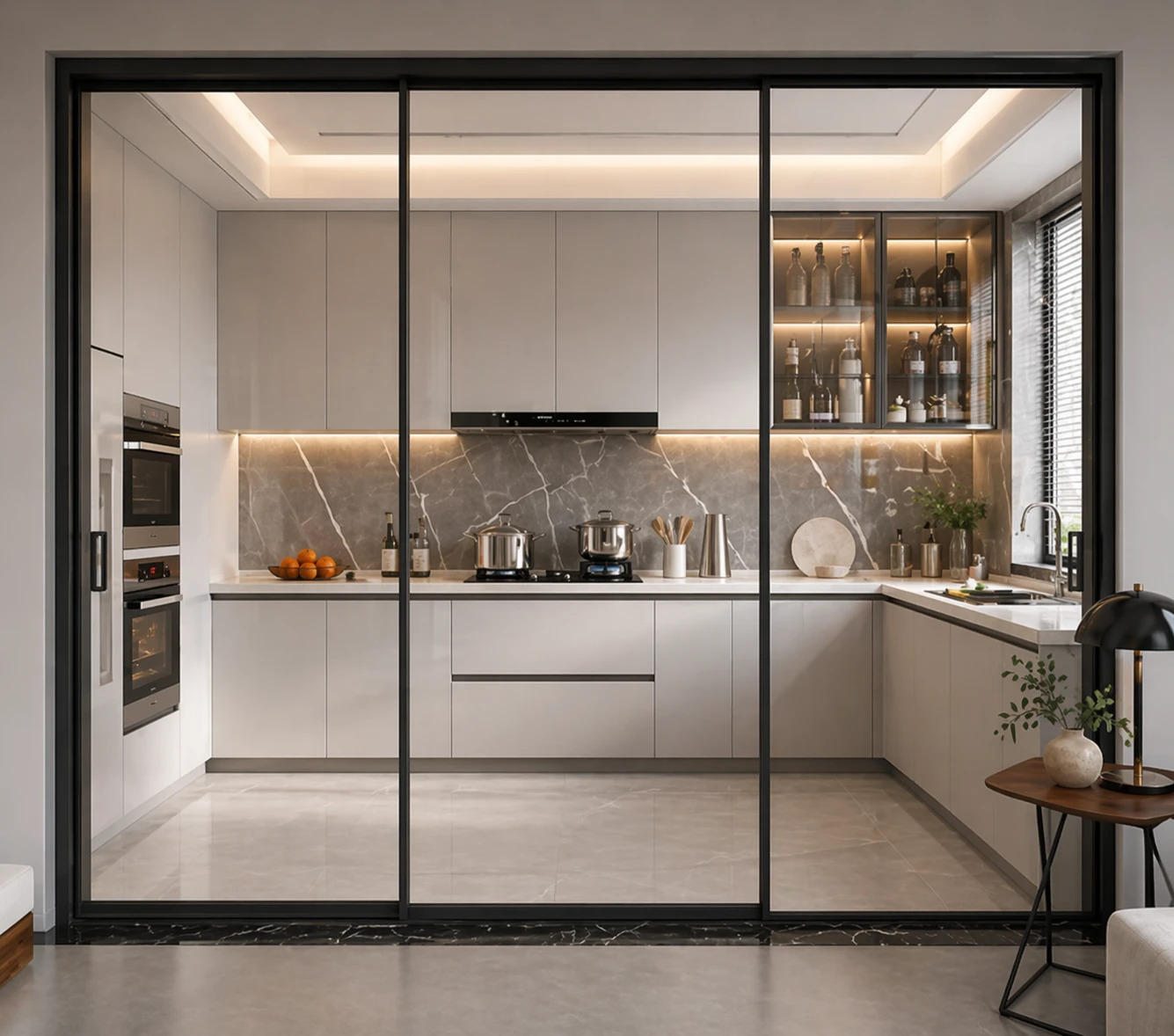
Sliding Doors
View system
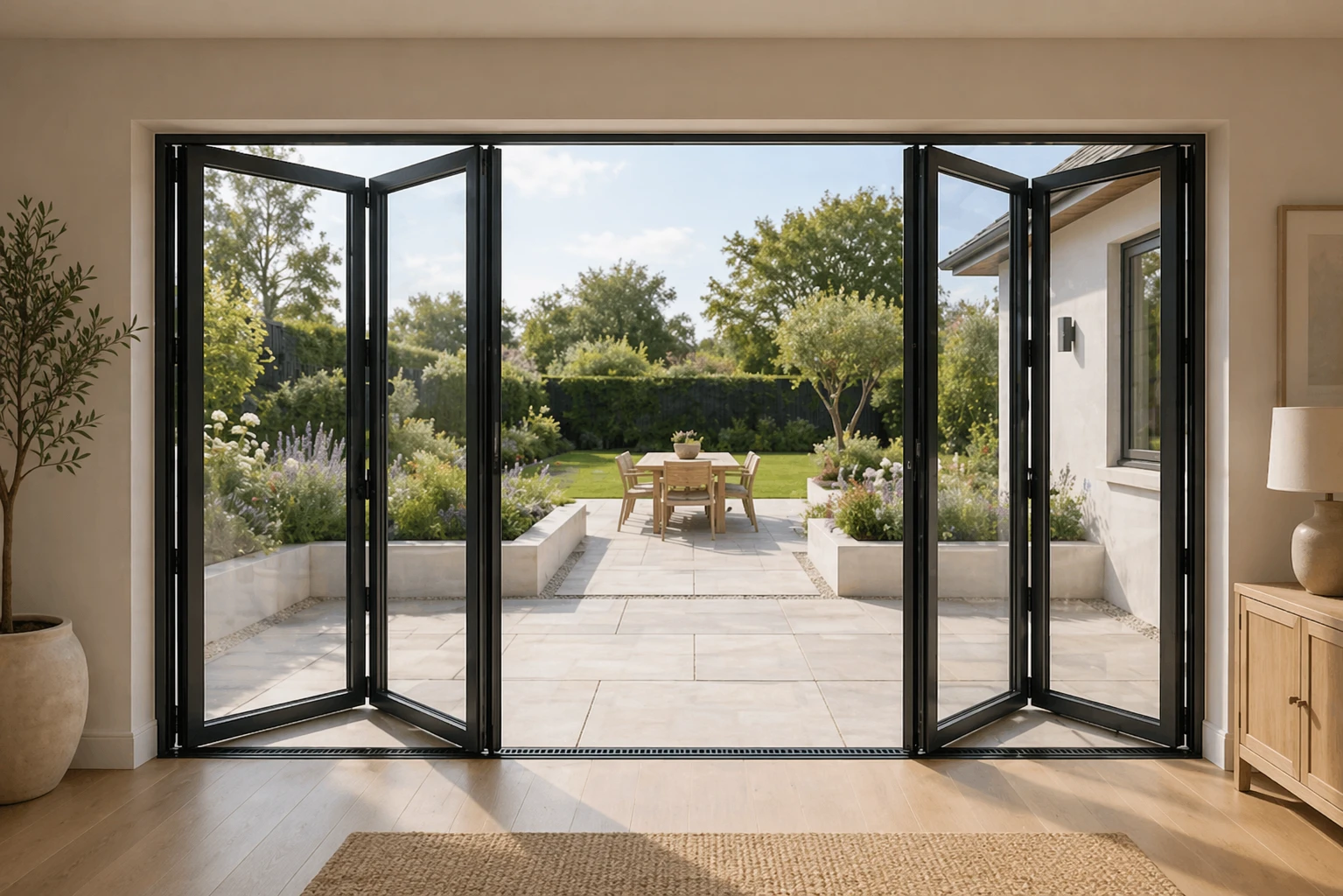
Bi-folding Doors
View system
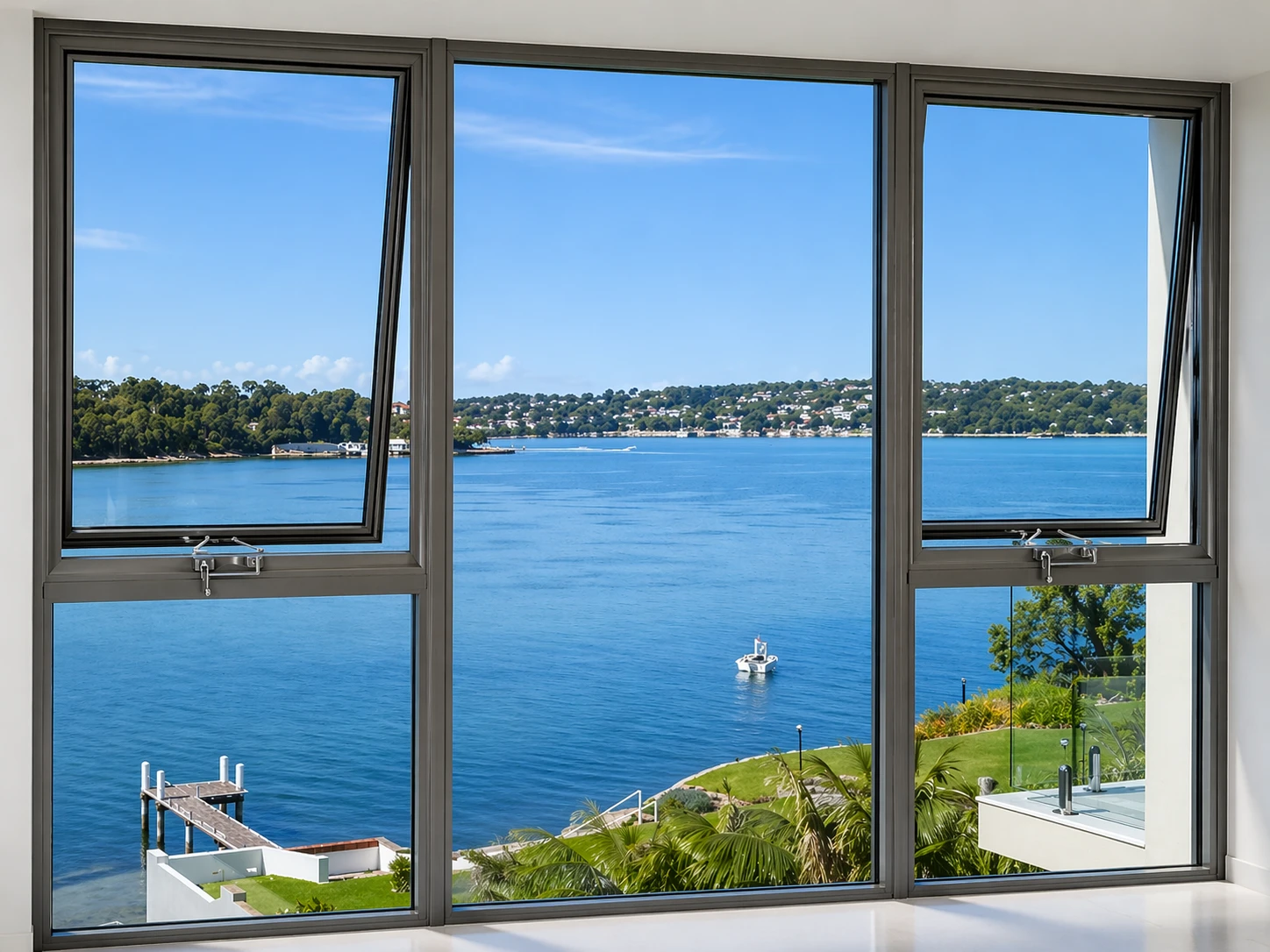
Awning Windows
View system
Fixed Windows
View system