Cost & Practical Guides
Is It Worth Replacing 20-Year-Old Aluminium Windows? Eight Checks Before You Quote
By Sheng Xu · 23 November 2026
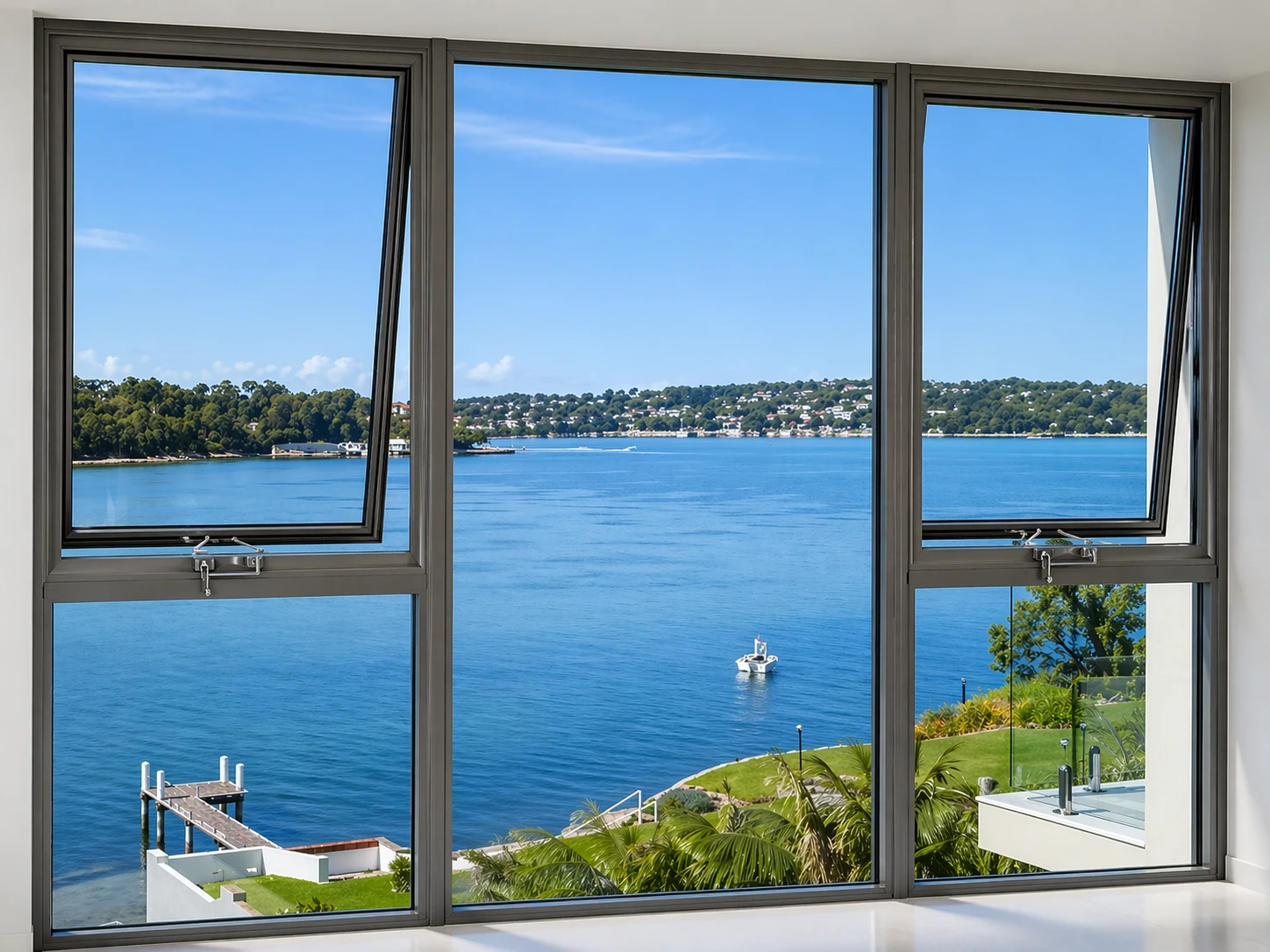
AI-generated illustrative image. Not a product test, certification record or project evidence.
Is it worth replacing 20 year old windows? Only if the frame has failed, not because the calendar says so. Published Australian lifespans run from about 20 to 25 years for average aluminium joinery (Wideline) to 40 to 70 years for a well-built, well-maintained system (Meichen, June 2026), so two houses of the same age can sit at opposite ends of their service life. Work through eight checks and let each one name its fix: a repair, a reglaze, a respray or a new window.
Run the checks from the frame outward, because the frame sets the ceiling on everything else. A window with sound aluminium and tired hardware is a repair job with a known ending. A window whose profile is pitting through, whose sash no longer sits square or whose glass cannot be re-seated is a replacement candidate however new its rollers look. Judge one window at a time, then the whole elevation.
What decides whether it is worth replacing 20 year old windows
Each check ends with the intervention that fixes it. Repair means new hardware, seals or adjustment inside the existing frame. Reglaze means new glass into the existing frame. Respray means the finish is restored, usually by removing and re-coating the frames. A new window is the answer when the frame itself has failed. So when to replace aluminium windows is answered per window, not per decade. Wideline puts average aluminium window life at 20 to 25 years, Ecovue at 25 to 40, and Meichen (June 2026) at 40 to 70 with seals renewed after 15 to 20.
Check one: frame corrosion and pitting
Start at the bottom rails and sills, where salt spray and water sit longest. A chalky white powder that returns after washing is surface oxidation. Pitting is different: small craters where chlorides have eaten into the metal, often from a scratch, a cut edge or a fixing point (Meichen, August 2026). Depth decides the verdict. Under about 1 mm, clean and re-coat. Between 1 and 2 mm, or where coating has failed widely, the frame can be stripped and re-powder-coated with hardware and seals renewed. Beyond 2 to 3 mm, or where a pit has passed a third of the profile wall, the section has lost strength. Corrosion around screw holes matters too, because a frame that cannot grip a fixing cannot hold new hardware. Verdict: respray for surface damage, a new window where the metal has gone.
Check two: seized rollers and broken locks
A dragging sliding panel, a lock that will not pull the sash home or a winder that grinds is service wear, not structural failure. Of all the failure modes, hardware is the most repairable (MC Window, October 2026), because the worn part is a component with a replacement, not a section of the building. Verdict: repair. It stops being a repair when fixing points have torn out of the aluminium or the hardware rebate has worn away.
Check three: failed seals and draughts
Seal replacement is the most straightforward repair in the trade, and it works when the failure is confined to the seal: rubber that has hardened, shrunk away from a corner, flattened so it no longer springs back, or torn at a joint (MC Window, October 2026). Verdict: repair. It is the wrong spend when the seal is a symptom. A twisted sash compresses the new seal unevenly and a blocked drainage path pushes water past it, so both faults return within a season.
Check four: condensation and mould
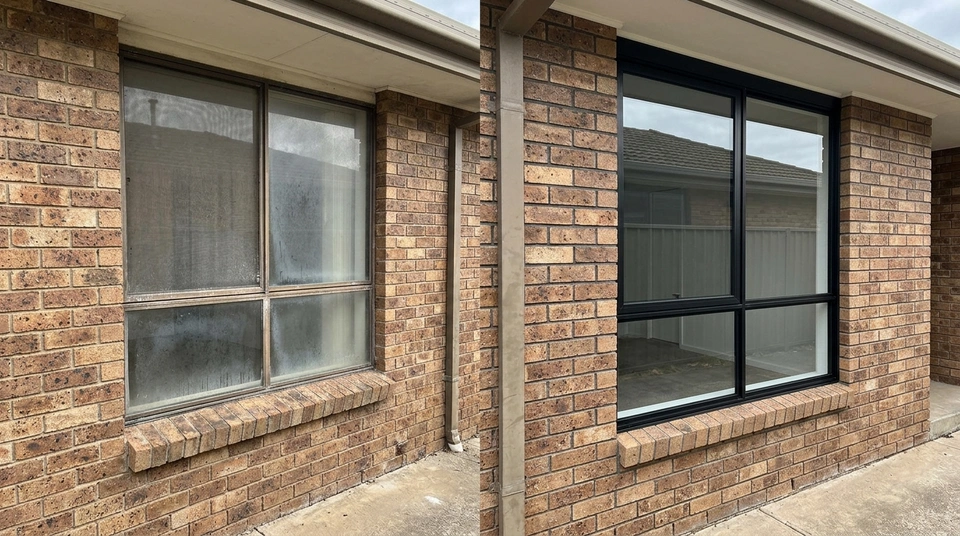
Where the water sits changes the verdict. Condensation on the room-side glass that runs onto the sill is a humidity and ventilation problem, which is how YourHome and the Victorian Building Authority describe it: warm moist air meeting a cold surface. A milky haze or water between the panes of an insulated unit is a failed seal, and wiping does nothing, so the unit is replaced. Aluminium conducts heat, so a standard frame stays colder than a thermally broken one and collects water at the sill (YourHome). Verdict: reglaze for a failed unit, ventilation for room-side water, and a new window when the frame is the cold surface keeping the room damp.
Check five: single glazing in winter rooms
A single pane is not broken, it is limited. YourHome puts up to 40 per cent of a home's heating energy loss through windows, and a cold winter room with a large single-glazed window is the clearest case in the house. Putting an insulated unit into an existing aluminium frame only works if the rebate is deep enough and the glazing bead can hold it, which a glazier measures on site (MC Window, October 2026). Verdict: reglaze where the frame allows, a new thermally broken window where it does not.
Check six: noise
Noise is where old aluminium performs worst. The Australian Glass and Window Association notes that the most effective barrier is two panes of different thickness spaced 100 to 200 mm apart, that laminated glass is next best and mostly helps at higher frequencies, and that even a small air leak cancels much of the gain. So the order is seals and closing pressure first, laminated glass into the existing frame second, a new window third. Verdict: repair, then reglaze, then replace.
Check seven: screens
Flyscreen frames and mesh age on a different schedule from the window behind them. The Quote Yard's 2026 Victorian guide describes re-meshing as the cheapest path where the frame is straight, unbroken at the corners and still holding its shape, and replacement as the right answer where the frame is bent, corroded at the corners or out of square (read November 2026). Verdict: repair or replace the screen only. Tired screens are not evidence that the windows are finished.
Check eight: parts availability
Every other verdict assumes the part can be found, and for most Australian profiles it can. TradeBase Australia stocks replacement rollers, catches, winders and clips to suit more than 60 brands, including older Wintec and Trimview windows (read November 2026). The exception is an imported or short-run system with a proprietary mechanism and no local stock. If the part does not exist and the window cannot be made to close, lock and drain, that window is a replacement candidate even with a perfect frame. Verdict: repair where a part exists, replacement where it does not.
Adding the checks up
One failed check on one window is a repair. The same check failing across every window on the same elevation, at the same age, is a systemic failure, and a systemic failure is a replacement event even when each window still looks acceptable (MC Window, October 2026). Where two or more checks fail on one elevation, compare one replacement against the sequence of repairs.
Replacement is also not an energy investment that pays for itself. Owners report bigger gains in comfort and noise than in bills, and some report little difference at all; a Whirlpool double glazing thread from May 2025 carries both views. If the signs you need new windows are thermal and acoustic rather than structural, budget for comfort and treat any saving on bills as a bonus.
Frequently asked questions
Is it worth replacing 20 year old windows or repairing them?
Repair the components and replace the frame, in that order. At 20 years the seals, rollers, locks and screens are the parts most likely to have failed, and each is replaceable on a sound frame. Move to a new window only when a check finds a frame fault: pitting through the profile, a distorted sash, a rebate that cannot hold new glass, or hardware with nowhere to fasten.
Are 20 year old windows still good?
Often yes. At 20 years a window is around the point where seals and hardware need attention, and Meichen (June 2026) puts seal renewal at 15 to 20 years, but the frame may have decades left. The question is what has failed, not how old it is.
How long do aluminium windows last?
Published answers disagree widely, which is why the number should not drive the decision. Wideline says about 20 to 25 years, Ecovue (January 2026) says 25 to 40, and Meichen (June 2026) says 40 to 70 for a well-made, well-maintained system. Exposure, coating quality and maintenance move a window across that whole range.
Should I replace 30 year old windows?
Replace the ones that fail a check. At 30 years, hardware and seals have usually been renewed at least once, so a window that still closes, locks and drains may need nothing. A frame pitting at the sill, a fogged unit the frame cannot carry or a sash no longer sitting square is a replacement candidate at any age.
How do you know when to replace your windows?
Replacement is justified when the frame has failed, not when a component has. Pitting through the wall thickness, corrosion at the fixing points, a distorted sash and glazing the frame cannot hold are frame failures. Worn seals and a failed glass unit are component failures.
Should I replace 50 year old windows?
Not automatically. A 1970s window may be sound aluminium with original single glass, so the decision is about thermal comfort and noise rather than failure. It may also be corroded at the fixing points with parts no longer made, in which case the frame is finished. The eight checks separate the two.
Key takeaways: age is a weak signal, and published lifespan estimates for aluminium range from 20 to 25 years to 40 to 70. Hardware, seals and a single fogged unit are repairs to a sound frame. Pitting through the profile wall, a sash that no longer sits square, glazing the rebate cannot hold and parts that no longer exist are replacement signals. Judge one window, then the elevation.
When you are ready to price the replace-worthy ones, SMIRO quotes from drawings, elevations or a window schedule. Every SMIRO series is tested to AS 2047 and is WERS-rated, and the label for your size and glass can be supplied on request. Standard quotes are supply-only, so ask for supply and installation in your quote if you want SMIRO to fit them, and SMIRO supplies and installs in Victoria.