Cost & Practical Guides
Adding a Window to an Existing Brick Wall: Cost, Lintels and Permits
By Sheng Xu · 23 November 2026
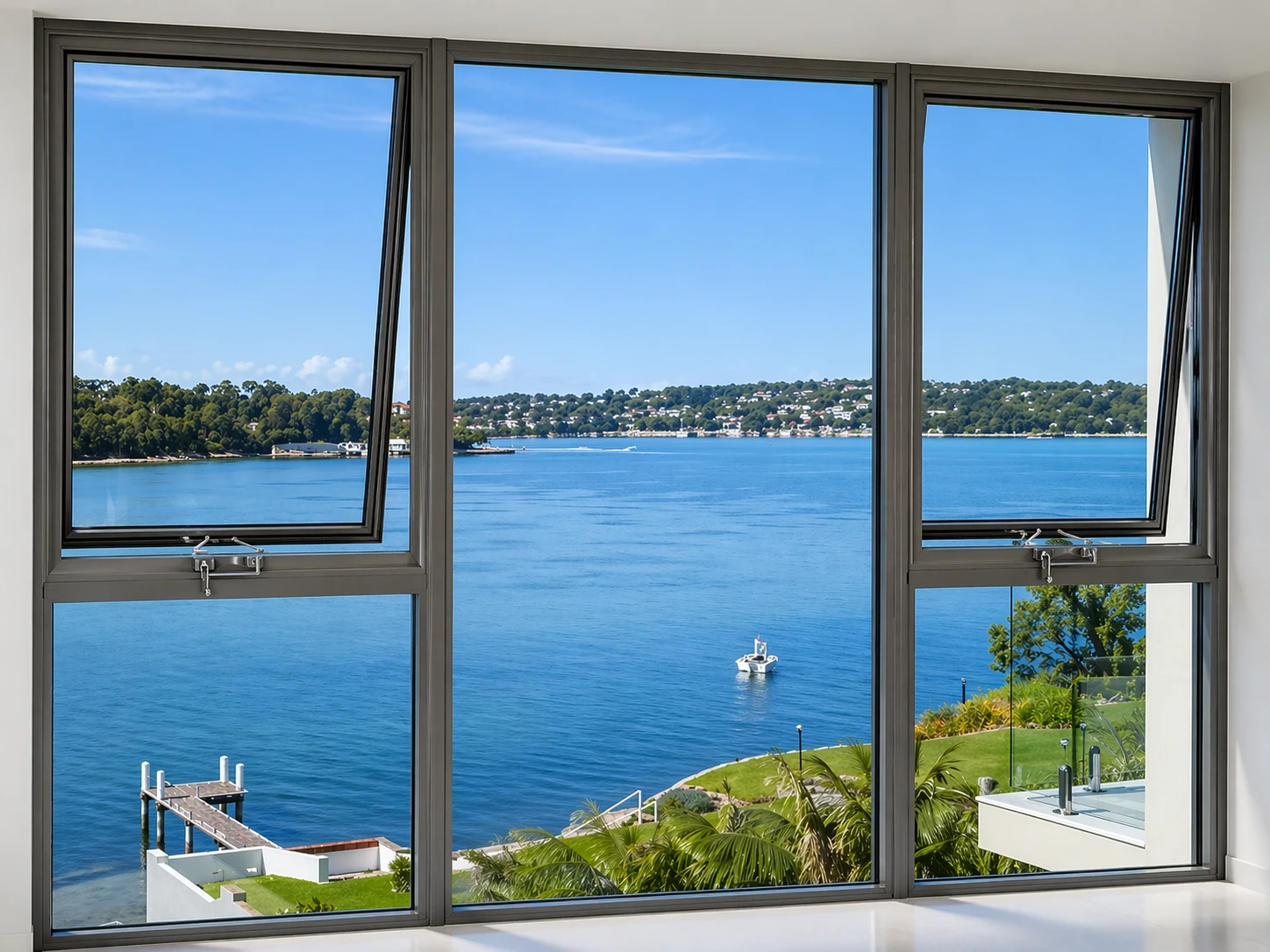
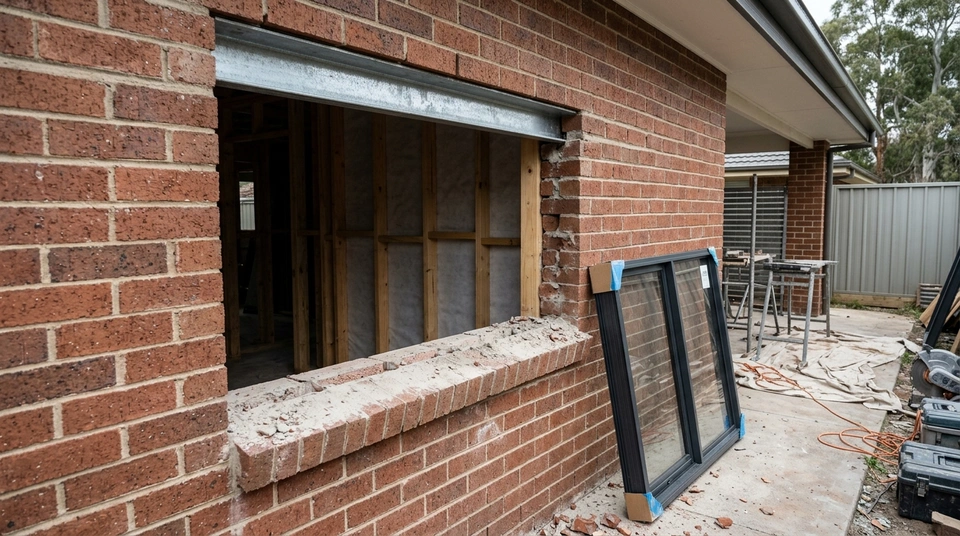
AI-generated illustrative image. Not a product test, certification record or project evidence.
The cost to install a window in an existing wall is two costs, not one: cutting a new opening, and supplying the window that goes into it. One published guide prices a new opening requiring structural modification at $1,500 to $3,500 including the lintel, engineering and building approval, with the window extra (Quote Yard, February 2026). Another puts the whole job in brick or a load bearing wall at $800 to $2,000 or more (First Point Windows, April 2026). The opening is builder, bricklayer and plasterer work; the window is quoted separately.
A replacement window drops into a hole that already exists. A new opening has to be created: the wall is propped, the brickwork or cladding cut, the load above picked up on a lintel or steel angle, the reveal and sill formed, and the wall closed again inside and out. That package has its own trades and its own approvals, and it never appears on a window quote.
What the cost to install a window in an existing wall covers
Four jobs sit behind the phrase. The opening is set out, checked for cables and pipes, then cut, which in masonry means a bricklayer with a diamond saw. The structure above is carried on a lintel or steel angle. The weather skin is reinstated with flashing, sill bricks, mortar and a matching finish. The inside face is rebuilt in plaster, cornice and paint. The window is a fifth, separate line.
Published opening figures spread widely because scope does. The Quote Yard's Queensland window guide (18 February 2026) prices a new opening requiring structural modification at $1,500 to $3,500 including the lintel, engineering and building approval, with the window on top. First Point Windows (21 April 2026) says the total cost may rise to $800 to $2,000 or more where the opening goes into brick or a load bearing wall, and does not say whether the window is inside that figure.
Lintels, steel angles and what carries the load
A lintel takes the load the wall carried and passes it to sound wall at each end. Brick veneer needs two forms of support for one opening: the timber frame inside carries the roof, so it takes a framed lintel, while the brick skin carries only itself and sits on a galvanised steel angle. Weatherboard usually needs one lintel. Double brick is the least forgiving, because both leaves are structural (Weatherall Windows, 2 August 2026).
Bearing sets the design. A lintel lands on sound wall at each end, about 100 mm minimum on a small opening and more as the span grows, and AS 4773.2 puts the cavity flashing at least 150 mm past each side (Weatherall Windows, 2 August 2026). Near a corner the bearing runs out, and a stock steel angle becomes an engineered beam.
The steel is the cheap part. Scott Metals, with prices updated 17 November 2026 and including GST, lists an 85 x 7 mm flat lintel at $42 for 1200 mm. Its 100 x 100 x 6 mm galvanised angle is $82 for 1500 mm and $130 for 2400 mm. Propping, cutting and making good is where the money goes.
When an engineer and a Victorian building permit are needed
In Victoria a structural alteration needs a building permit. City of Monash building guidance says a like for like replacement is a repair, but changing a window size or cutting a new opening affects structure, and structural alterations always require a permit. Heritage overlay and Bushfire Prone Area checks can sit on top of that.
The Schedule 3 exemption in the Building Regulations 2018 is narrower than it looks. Alterations are exempt only where they do not affect structural soundness and do not alter an element supporting another element (Victorian Building Authority, building practice note BP 01). A wall carrying roof trusses or a floor above fails that test, so the work goes to a registered building surveyor, who will want an engineer's computations for the beam.
Engineering fees in 2026 run about $1,000 to $2,000 plus GST for load bearing wall removal work, or $1,500 to $3,500 plus GST as alterations and extensions, on Prime Engineers' Melbourne market ranges (31 March 2026). Permit charges are smaller: a 0.128 per cent levy on work over $10,000, a $142.10 council lodgement fee and $474.10 for a siting report and consent in 2026 to 2027 (JLN Consultants, 29 September 2026).
How the wall type changes the quote
Brick veneer is the most common external wall across Australia (Perth Brickwork, last reviewed 3 September 2026) and the most predictable case: one skin to cut, a framed lintel plus a steel angle, and brickwork to match outside. Double brick adds a second structural leaf, so both leaves need support over the opening and any patch is harder to blend. Timber or rendered cladding moves the job to a carpenter, and the cut is quicker, but the repair has to match a whole elevation.
Services and finishes complete the picture. Yakka Labour (1 October 2026) puts a new double power point in a brick or rendered wall at $280 to $450, and moving one at $180 to $350, because the cable is chased into solid masonry and then patched. Plasterers charge $50 to $120 an hour nationally, with board labour at $25 to $65 per square metre and a small patch at $150 to $280, and bricklaying at $45 to $120 an hour (whatsthedamage, last verified November 2026).
Where the window sits in the total
The window is often the smaller half. Weatherall Windows (2 August 2026) puts double glazed windows in Melbourne at roughly $700 to $3,800 per window installed depending on size and glass, and notes the opening can add more than the window costs. The Quote Yard's February 2026 figure prices the opening and approvals at $1,500 to $3,500, window extra.
Real quotes spread wider than any band. In a Whirlpool Home thread from September 2024, a reply to a Melbourne owner planning two openings in a 1980s brick veneer house put the job at a rough $15,000 to $20,000 including the windows. Another poster in the same thread described using a wall cutting or lintel specialist to form the opening and fitting the window separately.
SMIRO supplies and installs windows in Victoria, and the opening stays with the builder or bricklayer. Ask for supply and installation in the quote and send the finished opening size, or drawings, elevations or a window schedule. Every SMIRO series is tested to AS 2047 and WERS rated, and the label for your size and glass can come with the quote.
Frequently asked questions
How much does it cost to install a window in an existing wall?
Published figures run from about $800 for a straightforward opening to $3,500 once a lintel, engineering and a permit are in scope, before the window (Quote Yard, February 2026; First Point Windows, April 2026). A double glazed window in Melbourne adds roughly $700 to $3,800 installed (Weatherall Windows, August 2026). Compare itemised quotes for the same opening size.
Can you put a window in a load bearing brick wall?
Yes, with design behind it. The load above the opening is carried on a lintel or beam sized by an engineer, the wall is propped while it goes in, and the work needs a building permit before it starts. The bearing at each end is part of the design, not a detail for site.
Does adding a window need a structural engineer?
Often. Victoria's exemption turns on whether the work affects structural soundness and whether an element supporting another element is altered (building practice note BP 01). Where a wall carries roof or floor load, the building surveyor will ask for computations, and an engineer produces them.
Do you need a permit to add a window in Victoria?
Yes when the job is structural. City of Monash guidance treats a like for like replacement as a repair, but a new opening or a changed window size is a structural alteration, and those always need a building permit. Heritage overlays and Bushfire Prone Areas add separate checks.
What does a steel lintel cost?
Less than the labour around it. Scott Metals listed a 100 x 100 x 6 mm galvanised angle at $82 for 1500 mm and $130 for 2400 mm including GST in November 2026. Longer spans, heavy roof load or a second storey move the job to an engineered beam.
Key takeaways: treat a new opening as a building project, with the opening, structure, permit and making good as separate lines. Published figures for the opening run from about $800 to $3,500 before the window, lintel steel is under $200 for a typical domestic span, engineering fees run about $1,000 to $2,000 plus GST, and plaster and brickwork bill at trade rates. Settle the opening design and approval before the window is ordered.
To price the window for a new opening, send the finished opening size, or the drawings, elevations or window schedule, and ask for supply and installation in Victoria to be included. The SMIRO team quotes from drawings and schedules, and the Melbourne Sample Room at 8 Havelock Road, Bayswater is open to see the systems and hardware first.