
Importing aluminium windows and doors into Australia: duty, GST, anti-dumping and compliance
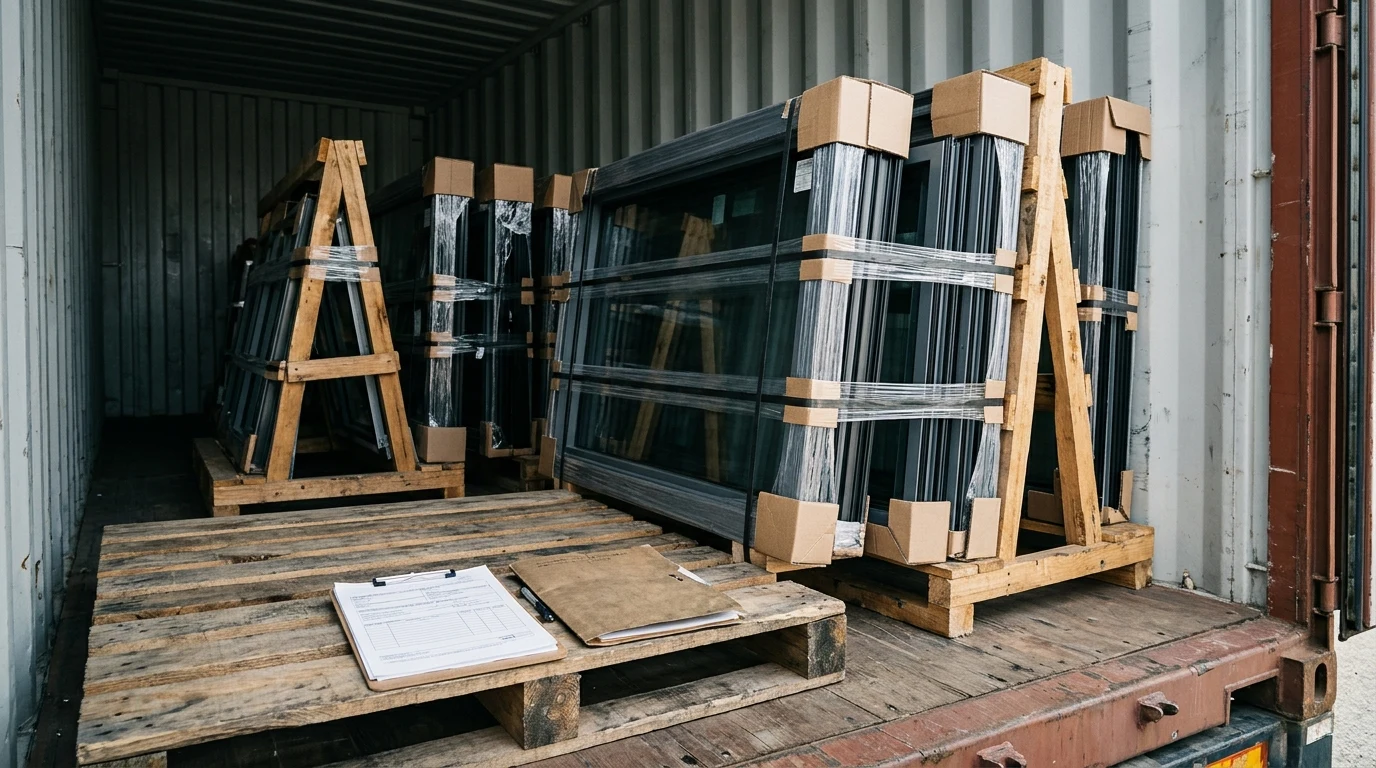
A window package imported from China is charged at the border in a fixed order: customs value, then customs duty, then any anti-dumping security or interim duty, then GST on the running total, then the import processing charges. Most of the cost confusion comes from treating those as one number. They are four separate lines with four different rules, and one of them, origin evidence, decides whether the duty line is 5 per cent or zero.
The anti-dumping measure that started on 15 October 2026 added a fifth line for affected goods, and it is the one that broke quotes. But it did not change the order in which the border works. Whatever happens with the measure, the GST line is still calculated on top of whatever duty and security sit beneath it, and only a GST-registered business can claim that GST back. This article sets out the whole bill, then the compliance questions that decide whether the goods can legally go into the building.
What you actually pay at the border
The first number is the customs value. Under the transaction value method this is the price actually paid or payable for the goods, and the Australian Border Force (ABF) guidance on valuation treats it as the default basis for ad valorem duty. The customs value does not include the international freight and insurance to Australia; those are added later. It does include overseas packing, and inland freight and insurance incurred before the goods leave the place of export. A supplier quoting DDP has already bundled freight and duty into the price, which means the invoice is not the customs value and the broker has to work backwards to it.
The second number is customs duty. Aluminium doors, windows, their frames and thresholds for doors sit in tariff subheading 7610.10.00. The ABF's current tariff schedule sets that subheading at 5 per cent, with the notation CA:Free, which means the rate falls to zero for goods that qualify as originating in China and are claimed under the China Australia Free Trade Agreement. The 5 per cent is not a penalty for importing from China. It is the rate that applies when the origin claim is not made or cannot be supported, and that distinction is where most of the published cost guides go wrong.
The third number, for goods inside the scope of investigation 691, is a security or interim duty. Securities have applied since 15 October 2026 to affected aluminium windows and doors from China entered for home consumption on or after that date. The rate depends on the exporter, and the mechanics are set out below. What matters for the arithmetic is that the security is calculated on the dumping export price, not on the invoice total, and its effect on the final cost is not settled until the investigation finishes.
The fourth number is GST. It is 10 per cent of the value of the taxable importation, and the value of the taxable importation is the sum of the customs value, any duty payable, the international transport and insurance, and any wine tax. The ABF's system calculates the three duty types separately, and its published formulas include both countervailing duty and dumping duty inside the line total before GST is applied. In plain terms, dumping duty is not a separate world: if the security converts to interim dumping duty, the 10 per cent is charged on a base that includes it.
The fifth line is the import processing charge, and for a window package it is noise. An electronic import declaration at a consignment value of $10,000 or more attracts $152, plus a biosecurity full import declaration charge of $71 for sea cargo or $48 for air. A container of windows is always in the top band, so the charge is fixed regardless of whether the package is worth $30,000 or $300,000. It is worth knowing so that a broker's invoice does not look mysterious, but it is not a number to plan around.
Why the “5 per cent duty” figure keeps appearing
Search for the cost of importing windows and you will find guides that budget 5 per cent customs duty and 10 per cent GST, and forums where someone reports paying a few hundred dollars of duty on a container. Both are describing the same thing: the general rate, paid because no origin claim was made. That is a legitimate outcome, and it is what happens when the supplier cannot or will not produce the paperwork.
A ChAFTA Certificate of Origin must be issued by an authorised body in China, which for Australian imports means the General Administration of Customs of China or the China Council for the Promotion of International Trade. It covers a single shipment, may list up to 20 goods, and remains valid for 12 months. A Declaration of Origin, completed by the exporter in the template set out in the agreement, is accepted in place of a certificate where an advance ruling on origin covers the goods.
If the paperwork is missing at the time of import, the customs administration can impose the non-preferential duty or take a deposit equal to it, and the importer can then claim the excess back. The Department of Foreign Affairs and Trade (DFAT) guide sets out the retrospective windows: refunds can be claimed for up to 12 months from the date of shipment where the certificate is issued retrospectively, and for up to four years where a certificate was held at the time of importation. Either way, the money leaves your account first.
The practical rule is therefore simple. Ask for the certificate or declaration of origin before you pay the deposit, and check that the exporter named on it is the entity that will appear on the commercial invoice and the bill of lading. A certificate in the factory's name when the invoice comes from a trading company is the kind of mismatch that turns a zero-duty line into a five per cent one at the worst possible moment.
GST: the line only some buyers get back
GST on imported goods is not a duty and not a concession. It is payable by businesses, organisations and private individuals, whether or not they are registered for GST, and it is generally payable before the goods are released. The Australian Taxation Office (ATO) is explicit on the point, and it is the sentence that breaks the common belief that a free trade agreement removes both taxes.
Whether it comes back depends on what you are. A GST-registered business importing goods for a creditable purpose can claim a GST credit in the activity statement for the tax period in which it pays the assessed GST, which for a builder importing a package for a client project is usually the same quarter. A registered business can also apply for the deferred GST scheme, which moves the payment to the next business activity statement instead of the border; that helps cash flow but does not change the amount.
An owner-builder who imports a package for their own home is not making a creditable importation, even if they have an ABN for another purpose. The 10 per cent is a real cost in that case, and it should be in the budget alongside freight. A private buyer has no input tax credit to claim, and a refund is not available simply because the goods went into a house.
The size of the line is worth stating plainly, because it is larger than the duty in most packages. On a customs value of $40,000 with $3,000 of freight and insurance and no duty because the origin claim is valid, the value of the taxable importation is $43,000 and the GST is $4,300. A builder claims that back; an owner-builder does not. That single difference is often larger than the gap between two suppliers.
The anti-dumping measure, in one page
Investigation 691 began on 25 November 2025, following an application by Ventora Group and the Australian Glass and Window Association. On 14 October 2026 the Commissioner of the Australian Trade Remedies Commission (ATRC, formerly the Anti-Dumping Commission) published Statement of Essential Facts 691 and made a preliminary affirmative determination. Under Trade Remedies Notice 2026/147, securities apply from 15 October 2026 to the goods entered for home consumption on or after that date. The goods in scope are aluminium windows and doors, fully or partially assembled, up to 3.0 metres high and 4.0 metres wide for windows and up to 3.0 metres high and 7.0 metres wide for doors. Curtain wall is excluded.
The rate follows the exporter, not the brand or the Australian supplier. Six exporters were examined individually and their preliminary margins run from 5.3 per cent to 51.6 per cent; one of the six, Altop Facade, was found not to have dumped and is listed as exempt. Exporters that responded to the preliminary information request but were not individually examined share a residual rate of 24.4 per cent. Everyone else, described in the notice as uncooperative and all other exporters, is at 70.4 per cent dumping plus 2.9 per cent countervailing, an effective 73.3 per cent. These are the notice's own categories, and they are repeated here as general information about how the measure works. They say nothing about which category any particular supplier falls into.
A security is not a duty. It is an amount lodged before the goods are released, held while the investigation finishes. The Dumping Commodity Register describes it as an undertaking or promise to pay should the Minister impose measures, and the importer or broker must obtain a Security ID from the ABF and quote it on the import declaration. If a duty notice is published, the security may be converted to interim dumping duty; the amount of interim duty cannot exceed the amount of the security taken, and securities for goods exported before the preliminary determination was made are cancelled rather than converted.
The timetable has moved twice already. The statement of essential facts was originally due in March 2026, then September, then 14 October. Submissions in response are due by 3 November 2026. The Commissioner must report to the Minister on or before 16 December 2026, and the Minister is expected to decide within 30 days of receiving that report. The notice also states that if retrospective notices are imposed under section 269TN of the Customs Act, the duty notice will include the duties imposed retrospectively. How that provision is applied in this case is a question for the final notice, not for speculation now.
Who carries the cost when the contract was signed before 15 October
At the border, the liability sits with the importer of record: the entity named on the import declaration. Where that is the Australian supplier, the supplier's cash is committed before the goods are released, whether or not the contract with the builder anticipated the charge. Where the builder or owner-builder is the importer, the same is true of theirs.
Whether the cost can then be passed up the chain depends entirely on the supply contract. A fixed-price contract that says nothing about trade remedies leaves the importer carrying it. A contract that allocates duties, taxes and charges to the buyer does the opposite. The Australian Glass and Window Association advised members before the determination to make sure their commercial agreements allocated responsibility for any duties, taxes, charges or trade remedy measures that may be imposed, which is a useful signal of how the industry read the risk.
This is not a theoretical concern. Galmar Group, a Sydney builder, made a submission on the statement of essential facts asking the Commission to recommend transitional treatment for goods supplied under contracts entered into before 15 October, on the basis that residential building contracts are priced and signed well before windows are ordered and cannot be reopened when a supplier's cost changes. Whether the Commission accepts that argument is a matter for the final report. What builders can do in the meantime is locate the clause in their own supply contracts that deals with duties and charges, and find out from their supplier who the importer of record will be on the next shipment.
The evidence a certifier will ask for
Duty and GST decide what the package costs. Compliance decides whether it can be installed. They are separate questions, and a package that clears customs cheaply is useless if the certifier will not sign off the windows.
AS 2047 is the standard the National Construction Code relies on for windows and external glazed doors, and it sets out what a compliant product must demonstrate. In housing, each window must carry a label that can be read in situ and shows the manufacturer's identification mark, the serviceability limit state wind pressure, the ultimate limit state wind pressure and the water penetration resistance. For timber windows and for assemblies in buildings other than housing, a certificate with the same information is required instead. Labelling on the glass itself is not permitted except for fixed timber windows. Glass must comply with AS 1288, including the human impact requirements in the locations that need safety glazing.
Energy performance is the next layer. WERS ratings, run by the Australian Glass and Window Association and accredited by the Australian Fenestration Rating Council, are third-party certified and can be used to meet regulatory requirements under the NCC. For a package that has to satisfy a NatHERS assessment, the U-value and solar heat gain coefficient of each system need to be documented, not asserted.
The question of whether overseas test evidence is acceptable has a clear answer at the level of principle and a less clear one in practice. The Queensland Building and Construction Commission's guidance on imported products tested outside Australia sets out that an accredited testing laboratory can be a NATA-accredited laboratory, or one accredited outside Australia by an authority recognised by NATA through a mutual recognition arrangement. Many laboratories in China fall into that category. But testing to a European or American standard rather than to the Australian standard removes the deemed-to-satisfy pathway and requires a performance solution, which is a different and longer conversation with the certifier.
The practical move is to ask the certifier, before the order is placed and in writing, what evidence they will accept for the specific systems in the package: a NATA or ILAC-accredited test report to AS 2047, a listing on a certified product register, or a structural engineer's verification of the installation. Certifiers differ, and the answer determines which factory can supply the job.
Lead time, and why landed cost needs a date
Builders reporting on 2026 lead times describe the same pattern: a brochure figure of 10 to 12 weeks against a delivered reality of 14 to 16 or more, with glass rather than frames as the bottleneck. A landed cost calculated on a quote from six months ago is a different number from the same package ordered this week, because freight, exchange rate and, for affected goods, the security rate all move in between.
That is why the ordering decision and the cost decision have to be made together. A package that lands 10 per cent cheaper but four weeks later can cost more in trades waiting on lock-up than the difference on the invoice, and a package whose origin evidence arrives after the container does costs five per cent more than the quote said.
A checklist for a package about to be ordered
Confirm the tariff classification and the rate that applies to it, including whether the origin claim is available and who will issue the certificate. Confirm who the importer of record will be, and whether the supply contract allocates duties, securities and other charges. Get the supplier's legal exporter name and check it against the Dumping Commodity Register before booking freight, rather than after the container lands. Ask the certifier what evidence they will accept, and get it in writing. And put the GST line in the budget at the right amount for your entity, because it is the largest single line for many buyers and the one most often left out.
Source and further readingAustralian Border Force — Customs Tariff, Schedule 3, Chapter 76 (7610.10.00)Australian Border Force, current tariff classification. Sets subheading 7610.10.00 at 5 per cent with the CA:Free ChAFTA rate.Source and further readingATO — GST and imported goodsAustralian Taxation Office, last updated 13 May 2024. Sets out who pays GST on taxable importations and when a GST credit can be claimed.Source and further readingABF — Value of taxable importationAustralian Border Force. The line formulas for value of taxable importation include countervailing duty and dumping duty before GST is applied.Source and further readingAustralian Trade Remedies Commission — investigation 691 and Trade Remedies Notice 2026/147Australian Trade Remedies Commission, 14 October 2026. Preliminary affirmative determination, securities table and investigation timetable.Source and further readingDumping Commodity Register — aluminium windows and doorsAustralian Trade Remedies Commission, October 2026. Security IDs, the undertaking mechanism and the DSN table for exporters.Source and further readingDFAT — ChAFTA certificates and declarations of originDepartment of Foreign Affairs and Trade. Certificate and declaration requirements, validity periods and retrospective claims.Source and further readingQBCC — imported building products tested outside of AustraliaQueensland Building and Construction Commission. Evidence of suitability, NATA and ILAC recognition, and the effect of testing to non-Australian standards.Source and further readingAGWA — an industry guide to the selection and certification of windows and doorsAustralian Glass and Window Association. AS 2047 labelling and certificate requirements and WERS ratings.The anti-dumping figures in this article come from a preliminary determination and may change at the final determination. Nothing here is legal, customs or financial advice. Every import is different; take your own advice on your position before you commit to an order.
Common questions
Do I need an import licence to bring windows into Australia?
Not a licence in the sense most people mean. Windows are not a restricted import for an ordinary building project, so what you need is a customs broker or the ability to lodge an import declaration, and for consignments valued above $1,000 that means a full import declaration. The regulated licences at the border belong to customs brokers, depots and warehouses. Specific goods can carry permit requirements, so check the tariff classification before you assume the answer applies to your product.
Is there a tariff on aluminium windows from China?
Subheading 7610.10.00 carries a 5 per cent general rate and a free rate for goods that qualify under the China Australia Free Trade Agreement. In practice most packages pay zero duty, provided the supplier can produce a ChAFTA certificate or declaration of origin that matches the exporter on the commercial invoice. Since 15 October 2026, affected windows and doors from China may also attract an anti-dumping security at the border, which is separate from the tariff.
Can I claim back the GST on imported windows?
If you are registered for GST and import the goods for a creditable purpose, yes, as a GST credit in the activity statement for the period in which you pay the assessed GST. If you are an owner-builder importing for your own home, no. The 10 per cent is a real cost in that case, and it is charged on the customs value plus duty plus freight and insurance.
Who pays the anti-dumping security, me or my supplier?
The security is lodged by the importer of record at the time the goods are entered for home consumption. If your Australian supplier is the importer, they lodge it and their contract with you decides whether any of it reaches your price. If you import the package yourself, you are the importer of record and the liability is yours. The supply contract, not the supplier's quote, is what allocates the cost.
Do imported windows have to be AS 2047 certified?
The National Construction Code relies on AS 2047 for windows and external glazed doors, and your certifier will want evidence of compliance for the specific systems supplied. In housing that means a performance label on each window showing the manufacturer's mark, the serviceability and ultimate limit state wind pressures and the water penetration resistance. Overseas test reports can be accepted where the laboratory is NATA-accredited or recognised through an ILAC arrangement, but testing to a non-Australian standard changes the pathway. Ask your certifier what they will accept before you order.