
Cost & Practical Guides
Where does air get into aluminium windows, which seals fix it, and when is sealing no longer worth it?
By Sheng Xu · 27 October 2026
AI-generated illustrative image. Not a product test, certification record or project evidence.
Draught proofing aluminium windows means sealing the paths air takes around the sash rather than through the glass: the pile or compression seal, the interlock between sliding panels, the frame-to-wall junction behind the architrave, and the corners where frame members meet. Most of a household draught can be found in ten minutes with smoke, a tissue or the back of a hand, and fixed with the seal that matches the opening type. What sealing cannot do is change how the glass and the frame conduct heat, so it improves comfort up to a point and then the window itself is the limit.
Most people treat a draughty window as one hole to plug. An aluminium window has several separate air paths, which is why the seals get replaced and the room is still cold. YourHome puts air leaks at 15 to 25 per cent of winter heat loss, citing CSIRO work from 2015. That covers the whole envelope, but it is why sealing comes first.
One distinction comes first. Air moving through a gap is one problem; a cold surface is another. An aluminium frame without a thermal break conducts heat, so the metal and nearby glass stay cold even when the window is airtight, and the air touching them cools and falls. Sealing fixes the first problem only.
Key takeaways. Air gets into an aluminium window at the sash seal, the interlock, the frame-to-wall junction and the corners, and the fix depends on the opening. Sliding sashes take pile or brush seal, awning and casement sashes a bulb gasket, and the wall joint sealant and a backer rod. Sealing changes air movement only, so it suits a sound frame, not a window whose glass is the real problem.
Where the air gets in on each window type
Sliding sashes
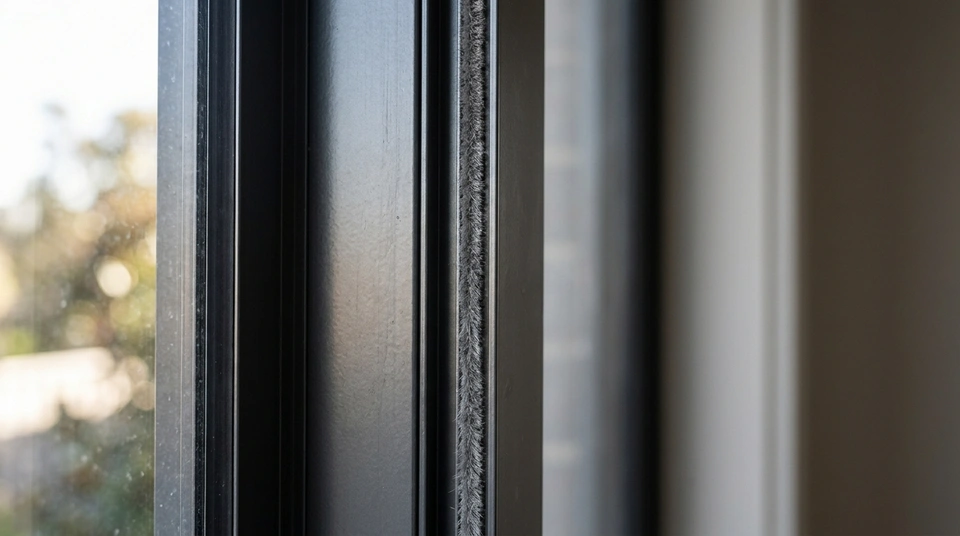
A sliding panel is sealed by pile, the fuzzy strip set into a groove along the rails and stiles. It brushes against the frame as the panel moves, which is why it is also called a brush seal. Pile wears flat, frays or drops out of its backing, and once the fibres stop touching the frame the gap runs the full length of the sash. The second path is the interlock where the panels overlap. The third is the outer frame corners, where extrusions meet.
Awning sashes
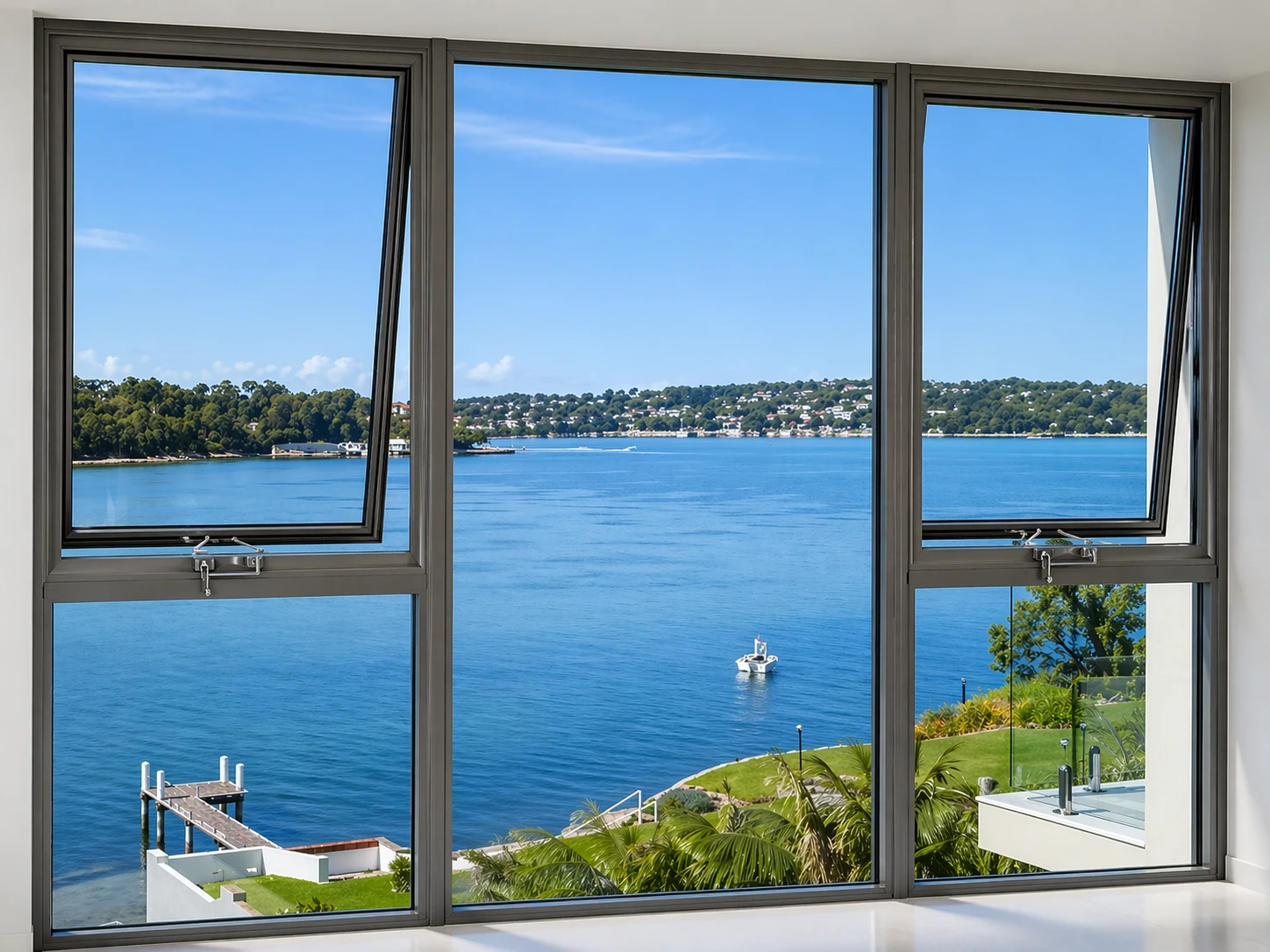
An awning window closes by compression, with the sash pulled onto a rubber or silicone gasket. YourHome notes that compression seals on awning and casement windows control air leakage better than sliding seals that wear through friction. The advantage depends on the gasket staying soft. Ultraviolet exposure hardens it, and a sash that has dropped on its hinges no longer presses evenly on all four sides. Check the hinge line and the winder hole too.
Fixed windows, sills and the wall junction
A fixed window has no sash gap, so when one is draughty the air usually comes from around the frame. The frame-to-wall joint sits behind the architrave, and it is the one the Australian Government's energy advice names: sealant, expanding foam or a gap filler rod around architraves and frames, per the manufacturer's label. The sill has to keep draining, so the weep holes stay open. Sealing them traps water and turns a draught into a damp patch.
How to find the leak without buying equipment
Test on a windy day with the window closed and an exhaust fan running, because the fan makes small leaks easier to see. Hold a lit incense stick near each join: the smoke should rise, and if it bends towards a gap or is pulled through, that is the leak. A tissue held by one corner does the same job.
Work around the perimeter in a fixed order: head, both stiles, sill, the interlock on a slider, the hinge line on an awning, then the architrave inside. If nothing shows at the sash but the room is still cold, put a hand on the glass and then on the frame. A cold frame with no moving air is conduction, and no seal will fix it.
Which seal belongs on which window
Sliding panels need pile, brush or fin seal, pressed into the existing groove. Backing width has to match the channel, and stock sizes run from about 4.8 mm to 9 mm. Adhesive foam is the wrong product: Bunnings Workshop warns that foam in a sliding track adds friction and can stop the window sliding. Do the head, sill and interlock together.
Awning and casement sashes take a bulb gasket in the frame kerf. Match the bulb to the gap rather than choosing the fattest, because an oversized gasket makes the winder and latch work harder. If the sash is not meeting the frame squarely, the gasket is not the fault. Close a strip of paper at top, middle and bottom and pull.
At the frame-to-wall joint, use a sealant that suits the substrate, a backer rod in a wider gap, or expanding foam where the cavity is deep, all according to the label. Work from inside, because that is where the architrave gap usually sits. Never run exterior silicone over a weep hole.
What you can do yourself, and when to call a glazier
Pile replacement, foam or neoprene strip on a hinged sash, sealant at an internal architrave and roller adjustment are reasonable DIY work on a ground-floor window you can reach safely. The sliding track and roller guide covers the adjustment sequence. Stop at anything involving the sealed glass unit, the structural frame, or water that has already got past the window.
Call a glazier when fogging sits between the panes, because the sealed unit has failed; when glass is cracked, since replacement near a floor, door or wet area must satisfy AS 1288; when the outer frame is out of square or corroded, because a new seal in a damaged channel will not hold; when water appears on plaster below the window; or when the window is upstairs.
Rebates that cover part of the work
In Victoria, weather sealing is a recognised activity under the Victorian Energy Upgrades program. Activity 15B covers sealing an openable external window, and the Essential Services Commission's activity guide sets the conditions: the product must be listed on the VEU Register of Products, carry at least a two year warranty, be installed by an accredited provider, and not impair normal operation. Sealing is ruled out at premises with a flueless or open-flued gas appliance.
In New South Wales, draught-proofing an external window is activity E8 under the Energy Savings Scheme, with E7 for external doors. It is also on the Home Energy Saver eligible list. Both schemes need an accredited business, so a DIY strip does not attract the discount. The wider picture is in our guide to window glazing rebates.
When sealing stops being enough
Sealing changes air movement and nothing else. It does not change the U-value of the glass, the solar heat gain, or the conductivity of a frame without a thermal break, so the decision turns on what is left after the draught is gone. Four checks matter. If the frame will not close square, or a channel no longer holds a seal, it is near the end of its service life. Single glazing in a heating-dominated climate is then the dominant problem. A large west-facing window in Queensland is a solar gain problem before it is a draught problem. When two or more apply, new windows are the better spend, because a seal on a failed window buys a small improvement and a familiar disappointment.
For anyone specifying a new window instead, the seal is still the part that decides whether the performance arrives. Awning sashes close onto a compression seal, which is why they control air leakage better than sliders, and every SMIRO series is tested to AS 2047 and WERS-rated, with the label available for the exact glass and frame combination on a quote. SMIRO does not sell seal kits or offer a draught-proofing service.
Frequently asked questions
Why is my aluminium window still draughty after new seals?
Because the sash seal is only one of several air paths. The interlock between sliding panels, the corners where frame extrusions meet, the frame-to-wall joint behind the architrave, the sill and the winder hole can each leak independently. Work around the whole perimeter before buying anything, and check the architrave line inside as well as the window. If the frame is cold but the smoke does not move, the problem is conduction.
Can I use foam weather strip on a sliding aluminium window?
Not in the track. Adhesive foam compresses against the moving panel and adds friction, which makes the window hard to slide and wears the strip away quickly. Sliding sashes need pile, brush or fin seal set into the groove so the fibres brush the frame without binding. Foam and neoprene strip suit hinged sashes and fixed joints where two surfaces close flat.
How do I tell a draught from a cold window?
Hold a tissue or a smoke source at the join. If it moves, air is passing through and sealing will help. If it hangs still, put a hand on the glass and then on the frame. A cold surface with no air movement means heat is conducting through the window, which is a glazing or frame problem rather than a seal problem.
Do I need a professional to get a draught-proofing rebate?
Yes, under both schemes. The Victorian activity requires an accredited provider and a product listed on the VEU Register of Products with at least a two year warranty, and the NSW activities for windows and doors run through accredited certificate providers. A DIY strip does not attract a discount. In Victoria, weather sealing also cannot proceed where a flueless or open-flued gas appliance is installed.
When should I replace a draughty window instead of sealing it?
When the frame is corroded, out of square or has a channel that will not hold a seal; when the sealed glass unit has failed; or when a large single-glazed window is the reason the room is cold. If the frame is sound and the glass intact, sealing is the cheaper first step.
Our Products
Awning Windows
View system

Fixed Windows
View system

Louvre Windows
View system

Sliding Windows
View system

Sliding Doors
View system