
Energy & Thermal Performance
Are aluminium windows energy efficient, and what actually makes them perform?
By Sheng Xu · 27 October 2026
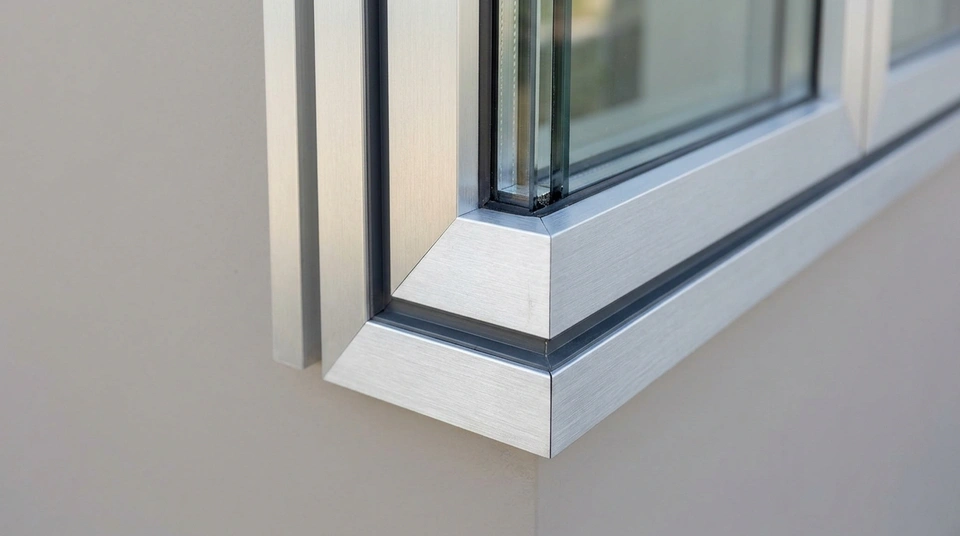
AI-generated illustrative image. Not a product test, certification record or project evidence.
Energy efficient aluminium windows are not made by the aluminium. Aluminium conducts heat readily, so a plain frame with single glazing is one of the weaker window packages sold in Australia. The same metal, built into a system with a thermal break, a good glazed unit, compression seals and a properly sealed opening, performs like a different product entirely.
Energy efficient aluminium windows are a specification, not a product line. The question is worth taking literally. A standard aluminium frame holding a single 3 millimetre pane is the weakest common window on the Australian market: the WERS comparison published by YourHome puts that combination at a whole-window U-value of 6.9 and an SHGC of 0.77. Take the same frame material and add a double glazed unit, and the U-value drops to 4.2. That is not a small correction. It is most of the distance between a window that leaks heat and one that holds it.
Key takeaways. An energy efficient aluminium window is a specification, not a product line. The thermal break, the glazed unit, the SHGC and the installation decide the result, and every SMIRO series is tested to AS 2047 and WERS-rated. In a heating-dominated climate choose the thermal break and U-value first; in a cooling-dominated climate choose SHGC and shading first.
Are aluminium windows energy efficient?
They can be, and in most of Australia they are the practical way to get a high performing window, provided you understand where the performance comes from. Aluminium is a good conductor. That is a material fact and no coating or marketing changes it. What changes is how much the frame is allowed to conduct, and what sits beside the frame in the opening.
The frame matters out of proportion to its size. Research from Lawrence Berkeley National Laboratory notes that frames are typically 20 to 30 per cent of a window's area but can have a much larger impact than that share suggests on how much heat the whole window moves. In an aluminium frame without a thermal break, Renew magazine reports that heat is conducted up to six times more readily through the frame than through the glass. The glass is usually the part people scrutinise and the frame is the part doing the damage.
You can see the result on a cold morning. YourHome's condensation guidance names aluminium frames as a thermal bridge into the home and lists them as prone to condensation, while thermally broken aluminium, uPVC and timber frames reduce it. Water beading on the inside face of a frame while the glass stays clear means the inner surface has dropped close to the outdoor temperature. That is the honest test of whether the window is performing, and it needs no instrument.
The four things that decide an aluminium window's performance
Four levers set the outcome, and they multiply rather than add. A first rate glazed unit in a leaking frame is wasted money, and a well sealed installation cannot rescue glass chosen for the wrong climate. Work through them in this order, because that is also the order in which cost rises.
The frame: thermal break or plain aluminium
A thermal break is an insulating section between the inner and outer aluminium profiles, and it is the single biggest structural decision on an aluminium window. The detail sits in our guide to thermal breaks. What matters for buying is that the break changes both the frame's U-value and the temperature of the surface you touch, which is why it is the difference between a frame that beads water in winter and one that stays dry.
Across the SMIRO range the break is tied to the series. The Comfort series carries a thermal break, and the widest cavity on the range is a 5 millimetre glass, 20 millimetre argon, 5 millimetre glass unit. The Living and Vista series use 5 millimetre, 9 millimetre argon, 5 millimetre, and the Urban and Urban Reinforced series use 5 millimetre, 12 millimetre argon, 5 millimetre. Every double glazed series publishes whole-window U-values from 2.5 to 3.5 and an SHGC range of 0.38 to 0.65, in a 6063-T5 frame.
The glass: cavity, gas and coating
The glazed unit does most of the work on heat retention. A wider argon filled cavity generally insulates better than a narrow one, which is why the Comfort unit uses 20 millimetres while the smaller profiles use 9 or 12. The coating does the rest. A low-emissivity coating changes how much radiant heat crosses the glass, and its solar heat gain coefficient, or SHGC, decides how much direct sun the unit lets through. Both terms have full explanations of their own, and both belong on the quote as whole-window figures rather than glass-only figures.
The seals and the way the window opens
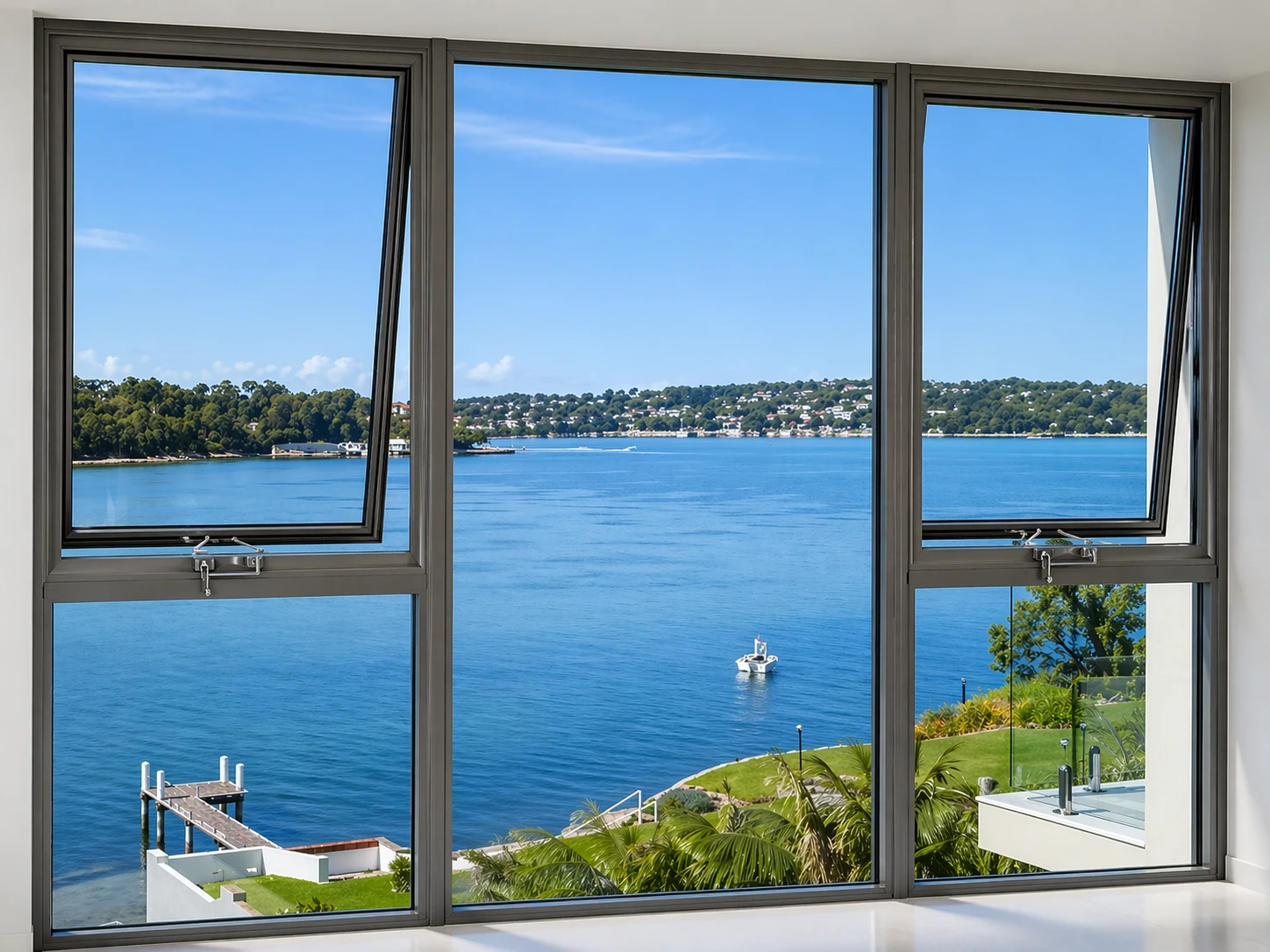
Seals decide how much air moves through a closed window. YourHome draws the line clearly: awning and casement windows seal by compression and control air leakage well, while sliding windows and doors use seals that lose their shape and wear out through constant friction. That does not make sliding windows the wrong choice, and we compare the types on airtightness in a separate guide. It does mean the seal is a maintenance item, and the opening type sets the ceiling before the seal is even fitted.
Air leakage is not a rounding error. YourHome reports, citing CSIRO work from 2015, that air leaks can cause 15 to 25 per cent of winter heat loss in buildings. A well glazed window that does not close tightly enough is competing with a hole in the wall.
The installation and the junction with the wall
The gap between frame and wall is part of the window's performance, and it is the part most often left to whoever turns up. Renew's window buyers guide notes that it is not uncommon to see windows with gaps and considerable air leakage at the wall junction, and that insulation near the frame is often disturbed during installation and not replaced. NCC 2022 deals with this directly in Part 13.4, which sets building sealing provisions for the envelope including windows and doors.
This is why a modest window installed well can outperform a good window installed badly. It also gives you a fair question to ask every supplier: who seals the frame to the wall, with what material, and is that in the price.
A whole-window checklist to take to a quote
Most window quotes are written around products, not performance, which makes them hard to compare. Seven written asks make two quotes comparable on numbers rather than brochure. the whole-window U-value and SHGC for each window type, not glass-only figures; the WERS label for the exact frame, glass and size; the glazing make-up in millimetres, including gas and coating; the frame system name and whether it is thermally broken; the seal type at the sash and at the frame; who seals the frame to the wall; and the climate zone and orientation assumed.
Two of those asks do most of the work. A quoted U-value without a WERS label is an assertion, and a WERS rating is only valid for the combination that was tested, so a window that is rated with one glass and sold with another is not rated at all. Ask for the label that matches the window being delivered. The Australian Glass and Window Association makes the same point about energy reports: the numbers on a report are whole-window values, and the frame and glass have to achieve them together.
Every SMIRO series on sale is WERS-rated and tested to AS 2047, so the label can be produced for your exact combination rather than for a showroom sample. That is the version to ask for, in writing, before you sign.
What changes with climate: heating zones and cooling zones
Not every energy efficient aluminium window suits every state. The Australian Glass and Window Association groups the country into three bands. Zones 6, 7 and 8 cover most of Victoria, the ACT, Tasmania and southern parts of New South Wales and Western Australia. Zones 1, 2 and 3 cover northern Australia, Brisbane and Darwin. Zones 4 and 5, the mixed band, cover Sydney, Perth and Adelaide. Where you sit in that map decides which number you optimise.
In heating dominated climates the priority is keeping heat in. YourHome's climate guidance for zone 6 recommends high SHGC and low U-value glazing, and suggests double glazing where heating needs are higher. In practice that means the thermal break and the better unit come first, and north facing glass is left relatively unshaded so winter sun can enter. A Victorian home that buys a low SHGC unit for every orientation is spending money to block the free heat it most needs.
In cooling dominated climates the order reverses. YourHome's guidance for zone 2 is low SHGC glazing in all cases, with east and west glass shaded year round. The glass carries more of that load than the frame does, because the problem is solar radiation rather than conducted heat. A Queensland home facing west in the afternoon gains more from a low SHGC unit and external shading than from any frame upgrade, and the two together are what make the room usable in February. The frame still earns its place in humid climates, because a warm inner surface is what keeps condensation off the frame in winter.
How to read the numbers on a quote
Three figures do most of the work, and only one of them points the same way in every climate. The U-value measures heat conduction through the whole window, and lower is always better. The SHGC measures how much solar heat the window admits, and whether you want it high or low depends on the climate and orientation. Visible light transmission tells you how much daylight comes with the coating, which matters on a south facing living room but rarely decides the purchase.
The AGWA gives the compliance rule plainly for energy reports: the window's U-value must be lower than or equal to the specified figure, and the SHGC must be within 10 per cent of it, in either direction. That tolerance is why the SHGC on a quote can differ slightly from the one on the report and still be correct. U-values do not get that latitude.
Published figures also disagree between suppliers for innocent reasons. WERS ratings are calculated at standard test sizes, and a large window with the same frame has a lower whole-window U-value than a small one because the frame is a smaller share of the area. The AGWA explains that whole-window figures account for the frame, the edge of glass and the centre of glass separately. Two suppliers quoting different U-values for the same named system may simply be quoting different sizes.
Improving existing aluminium windows without replacing them
If the windows are staying, there is a sensible order to spend money in: seal, then furnish, then glaze, and replace only if those are not enough. The order follows cost and disruption, and the first step is usually the best value per dollar.
Sealing comes first because air movement beats any glazing upgrade you can buy. The Australian Government's energy advice suggests foam strips around window frames and sealant, expanding foam or a gap filler rod around architraves and frames, following the manufacturer's label. The tell is easy to find: a rattling or whistling sound in wind, a curtain that moves near a closed window, or a hand that feels cold air at a join. If the gap is significant and the house is old, a professional air leakage assessment will find the rest of them.
Furnishings and film come next. Heavy curtains with pelmets and close fitting honeycomb blinds cut the draught that rolls off cold glass, which is often the comfort problem people blame on the frame. Window film attacks the summer side: YourHome notes that some films can halve the overall SHGC of a window, and that low-emissivity films are the only type that also reduce the U-value. Films also lower visible light, and glass carrying a film gets hotter in direct sun, so the guidance is to use an accredited installer to avoid thermally induced cracking.
Glazing upgrades come last. Secondary glazing, an acrylic or glass sheet added inside the existing frame, creates an air space that reduces the U-value and air infiltration, but YourHome is candid that it cannot perform as well thermally as a manufactured unit because the perimeter cannot be fully sealed. Retrofit glazing into existing frames has the same ceiling. Both are worth doing on a character home where replacement would destroy the joinery, and both are a compromise against a new thermally broken window. The full comparison between retrofitting glazing and replacing windows is in our guide on that decision, and the detail on where aluminium windows leak, and how to fix each gap, is in our draught proofing guide.
What not to expect from energy-efficient aluminium windows
Expect comfort and peak load relief, not a payback. No window insulates as well as an insulated wall, so the money is recovered in the size of the heating and cooling system you need, in how the room feels at 4 pm, and in the condensation that no longer forms. Treating the window as an investment that pays for itself in energy bills usually leads to disappointment, and to a worse window chosen on a shorter payback.
Do not expect double glazing alone to fix a hot room. This is the most common complaint about new windows, and it is well founded: a glazed unit helps most with retaining heat, while solar gain on a west or north facing room is handled by SHGC and shading. If the sun reaches the glass, glass that insulates well still lets radiant heat in. The two jobs need two decisions.
Do not expect the window to compensate for the rest of the house either. YourHome makes the point that glazing has to work with orientation, thermal mass, insulation and weather sealing to deliver its performance. A well specified window in a leaky, unshaded, poorly insulated room will still leave the room uncomfortable, and it is the wrong purchase to make first.
Frequently asked questions
Are aluminium windows energy efficient enough for an NCC 2022 7-star home?
Yes. NCC 2022 requires houses to reach a NatHERS thermal rating of at least 7 stars. Lower thresholds apply in climate zones 1 and 2 where the home has a compliant outdoor living area. Aluminium windows can be part of a home that achieves the rating, because it applies to the whole house rather than to any single window. The Housing Provisions in Part 13.3 set allowances for external glazing based on whole-window U-value and SHGC alongside shading, room type and orientation. Aluminium systems reach those allowances when the frame and glass are specified together for the house's climate. The energy assessment, not the frame material, decides what the windows must achieve.
Is a thermal break or a better glazed unit more important?
Neither wins on its own, and the order depends on what you are replacing. Moving from single glazing to a double glazed unit does more for heat retention and noise, because the glass covers a larger area than the frame. A thermal break earns its money once the glass is already good, because the frame is then the weak point, and in cold climates where condensation on the frame is the visible problem. If the budget only stretches to one, spend it on the glass first and add the break when you next replace.
Why wouldn't you put aluminium windows on your house?
The honest objections are conductivity, condensation and cost, and two of the three are solved by specification. A plain aluminium frame conducts heat, feels cold in winter and forms condensation, which is why a thermally broken frame exists and why energy.gov.au recommends it when aluminium is chosen. The cost objection is real: thermally broken frames and good glazed units push the price above standard aluminium. What is not fair is the claim that aluminium itself is unsuitable. It is strong, dimensionally stable and needs little maintenance, and performance is decided by the frame section, the glass and the install rather than by the metal.
Can you make existing aluminium windows more energy efficient?
Yes, to a point. Sealing the gaps around frames and between sash and frame gives the best return, because air leakage is a large share of winter heat loss and the work is cheap. Curtains with pelmets, honeycomb blinds and window film improve the glass without touching the frame. Secondary glazing and retrofit units go further and still fall short of a new thermally broken window, because the perimeter cannot be fully sealed. What you cannot do is add a thermal break to a frame that was made without one, so the frame's limitation stays with the window.
Are the most energy efficient aluminium windows the ones with the lowest U-value?
The lowest U-value is best for heat retention in every climate, but it is not the whole answer, because it says nothing about solar gain. In a cooling dominated climate a window with the lowest available U-value and a high SHGC can overheat a west facing room. The most energy efficient choice is the combination that matches the house: low U-value everywhere it can be afforded, with the SHGC selected for the climate and orientation and shading confirmed alongside it. Ask for both numbers, and for the label that shows they were achieved together.
Matching the window to the house, not to the brochure
The decision rule is short. Choose the frame and glass for the climate zone and the orientation of each opening, not for the house as a whole. In Victoria and South Australia the thermal break and the U-value lead, with winter sun allowed in. In Queensland the SHGC and the shading lead, with the frame doing a secondary job. Everywhere, the seal and the wall junction decide whether the specification is delivered or lost at the opening.
Then buy the label rather than the adjective. A quote that names whole-window figures, a glazing make-up in millimetres and the frame system, with a WERS certificate to match, gives you something to compare and something to hold the supplier to. It also tells you, before you sign, whether the window you are buying is the one that was rated.
Our Products
Awning Windows
View system
Fixed Windows
View system
Sliding Windows
View system
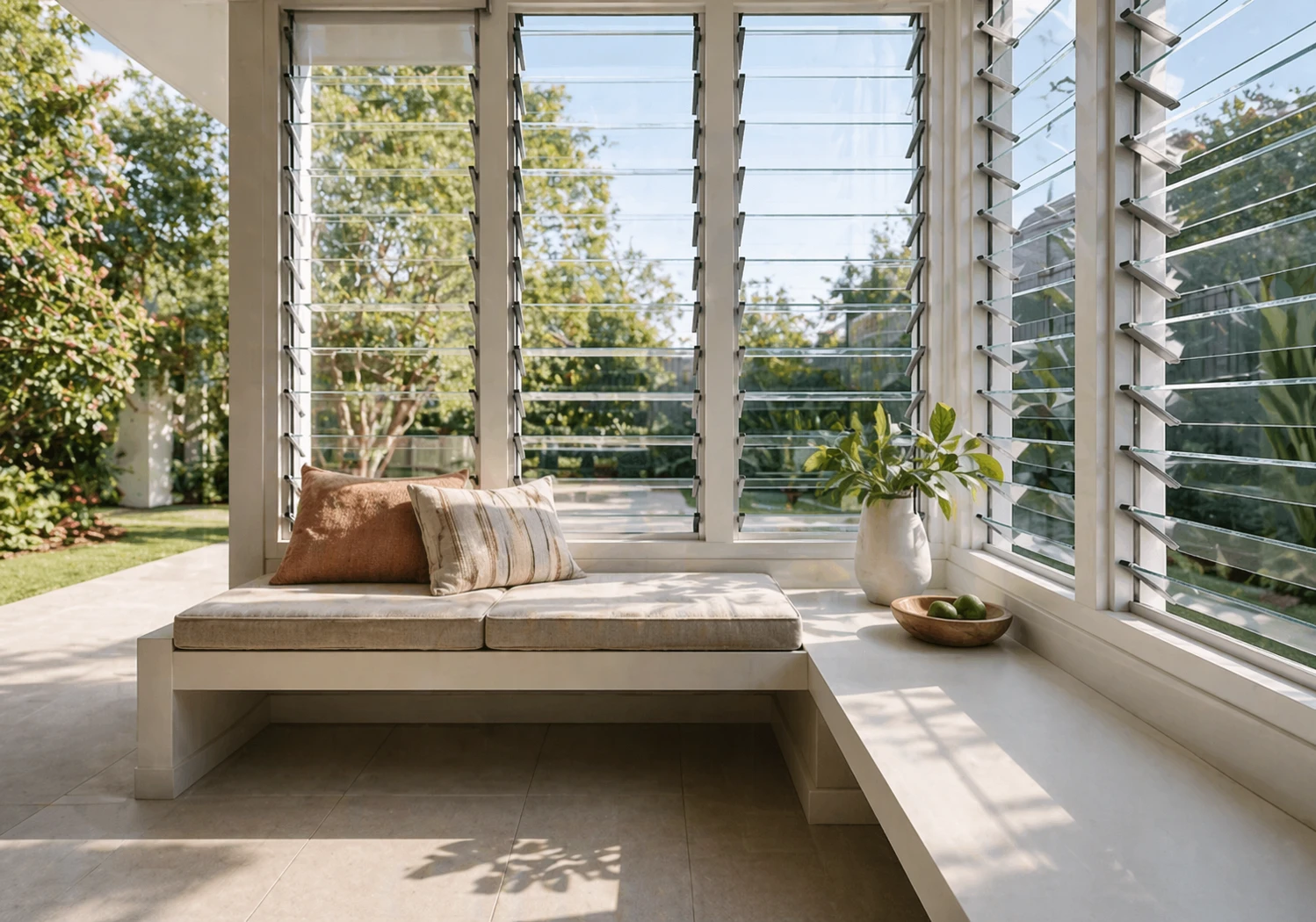
Louvre Windows
View system
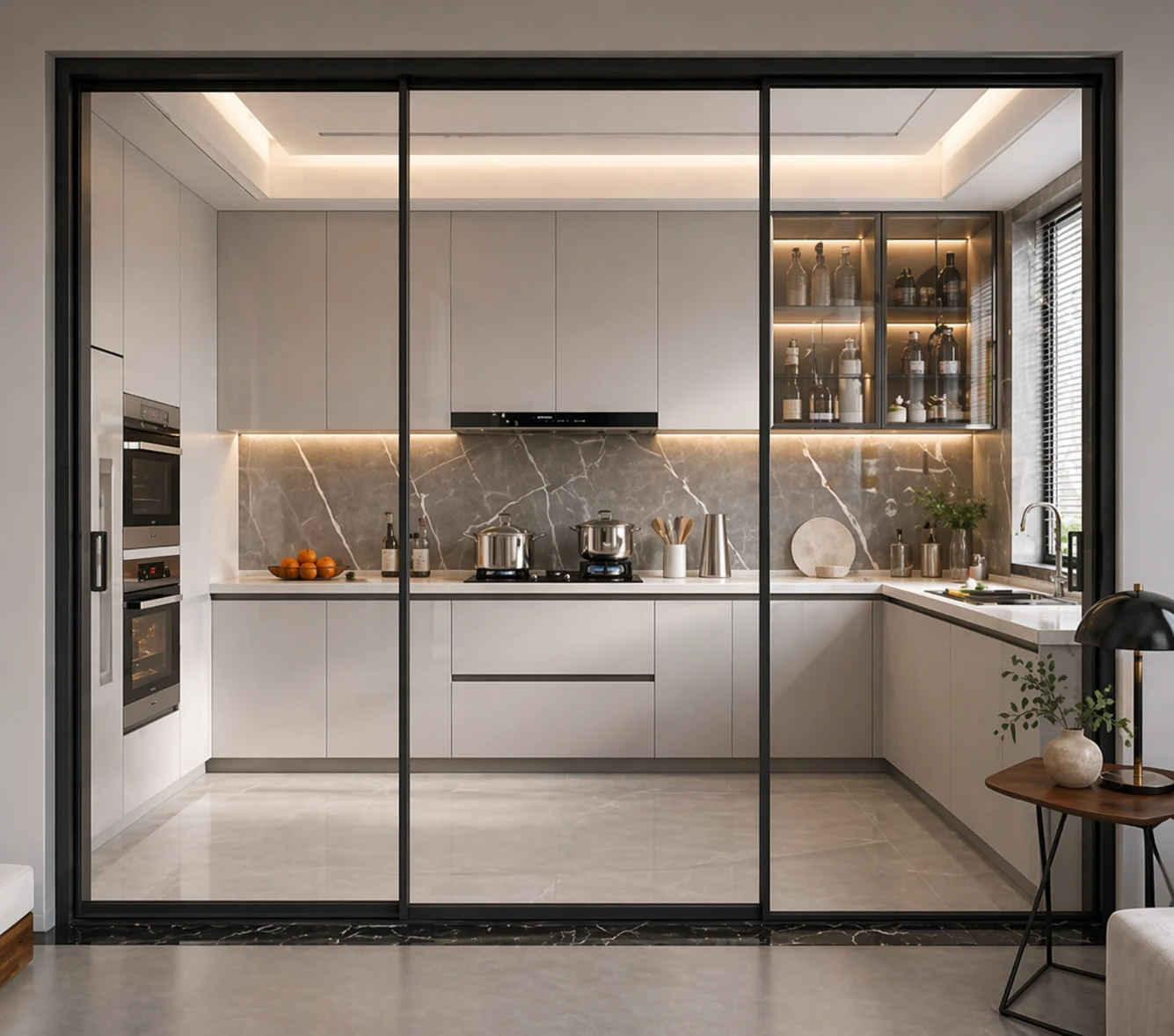
Sliding Doors
View system