Glass & Glazing
What obscure glass should you put in a bathroom window, and can it be double glazed?
By Sheng Xu · 27 October 2026
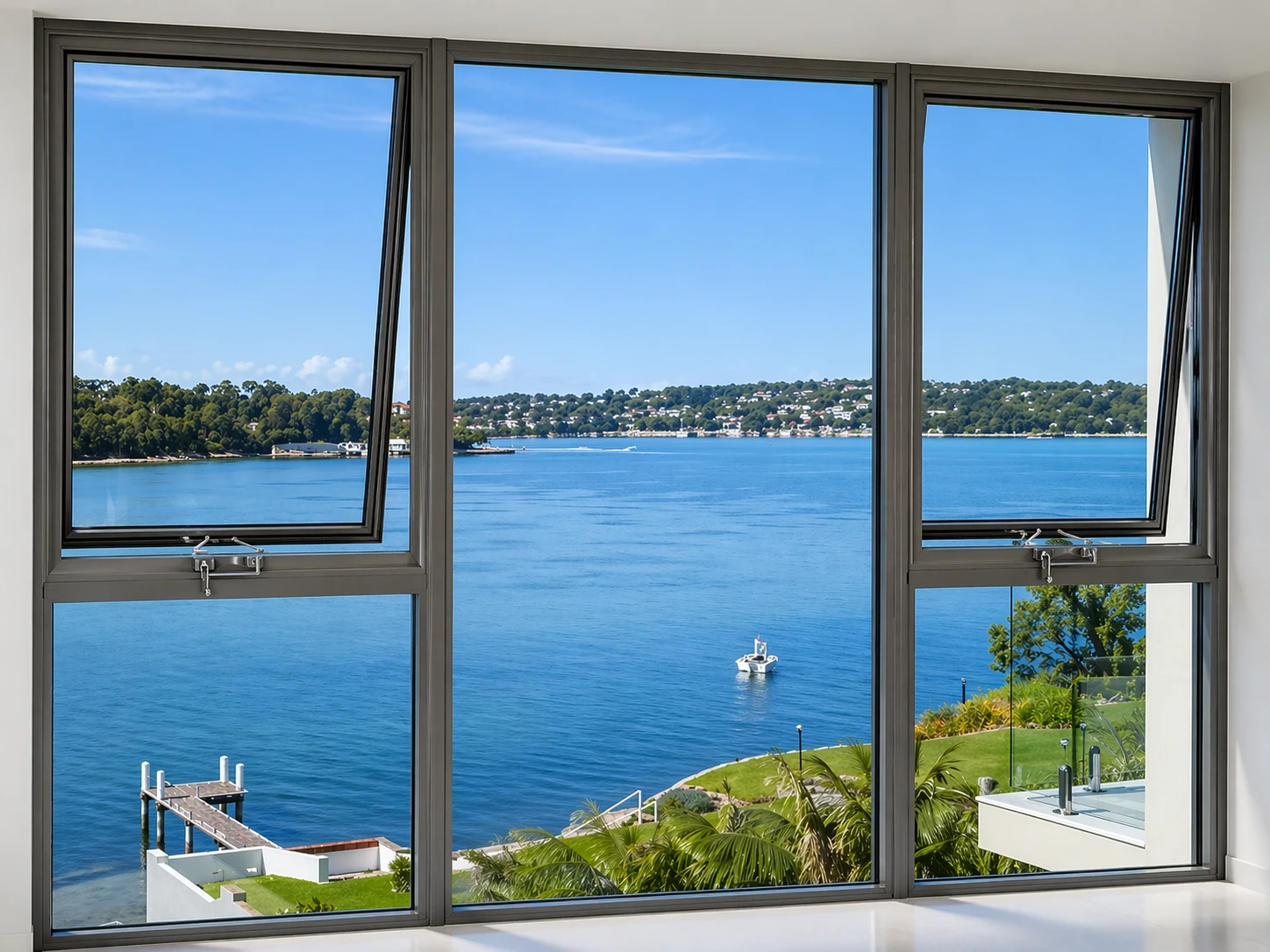
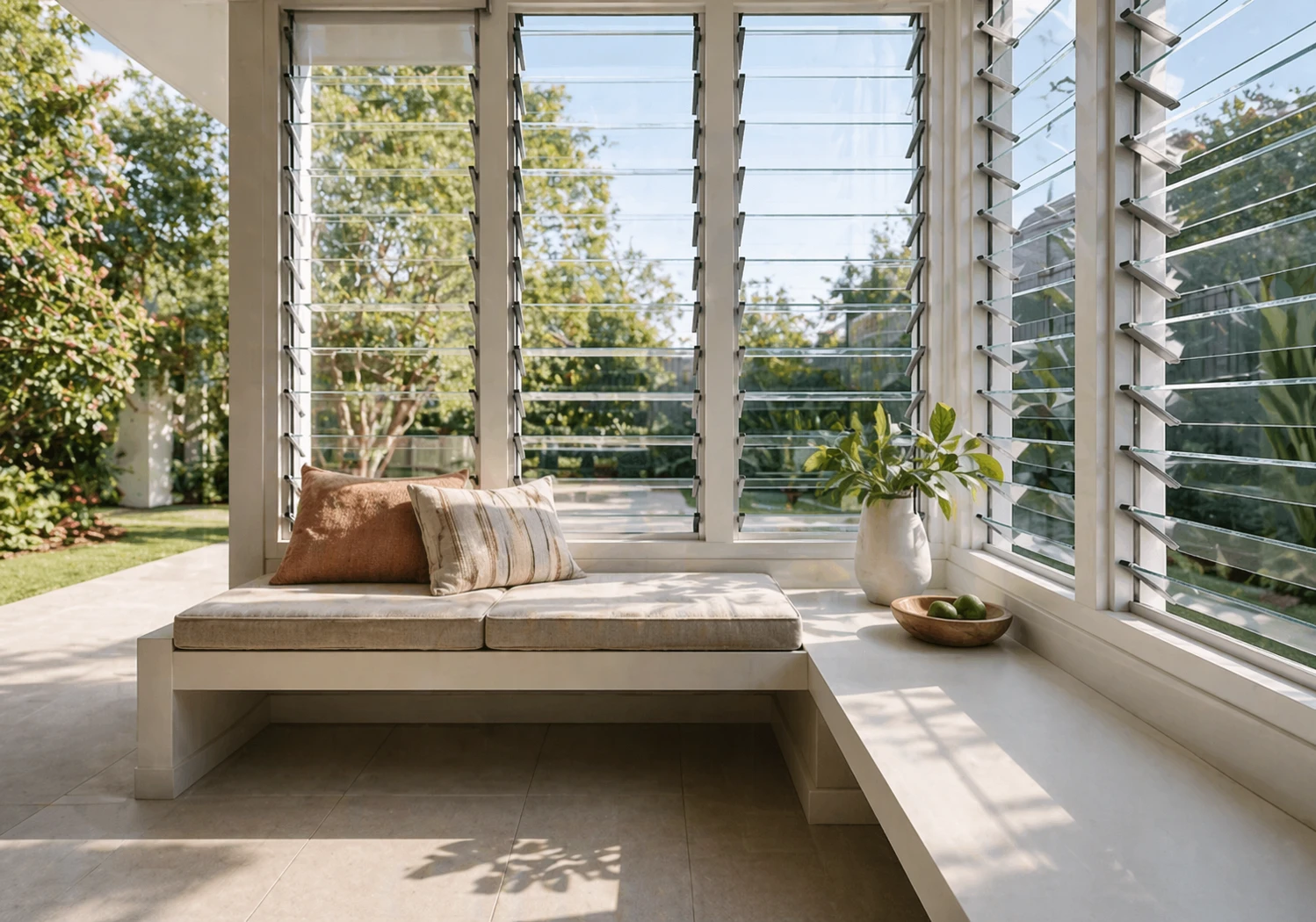
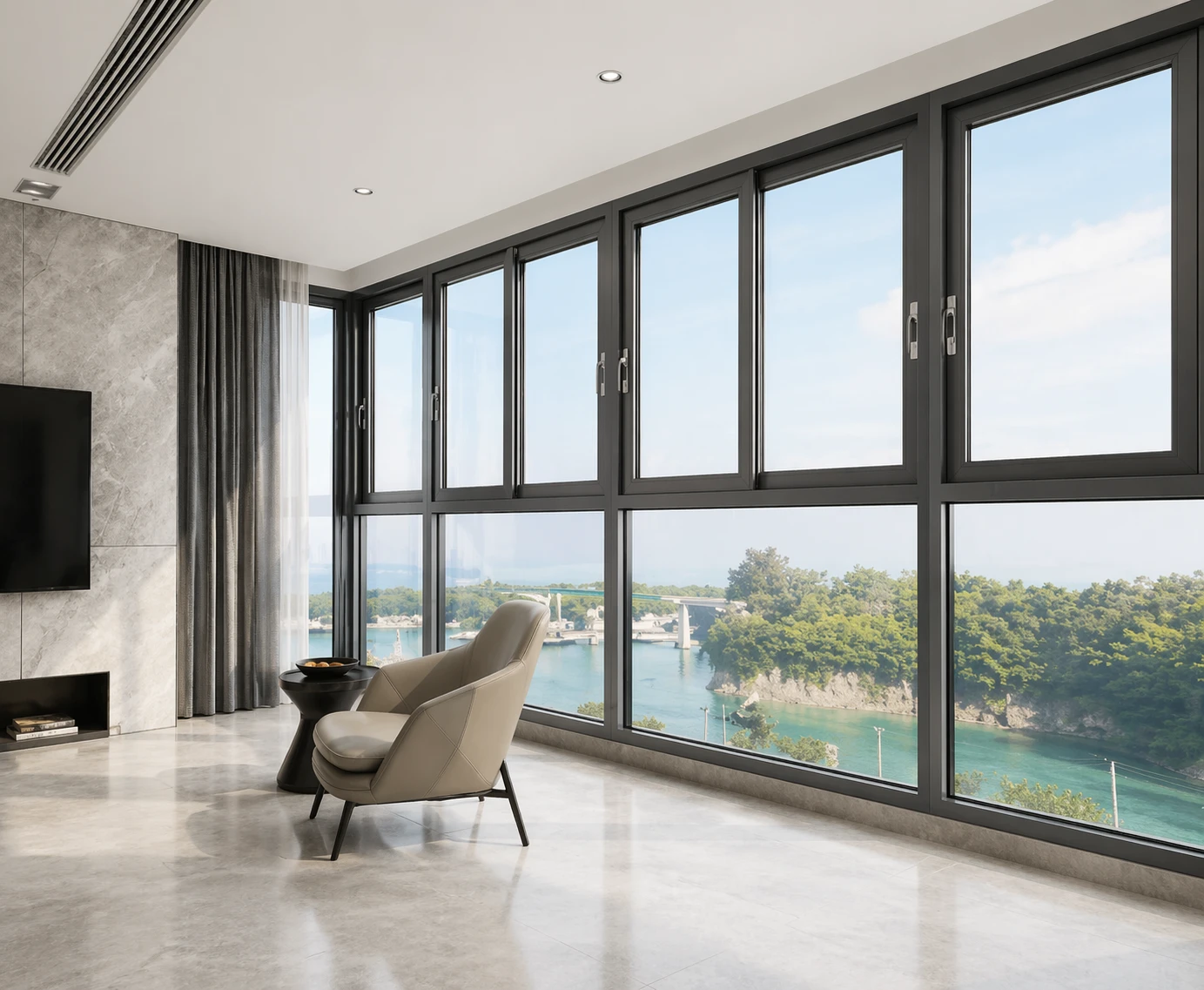
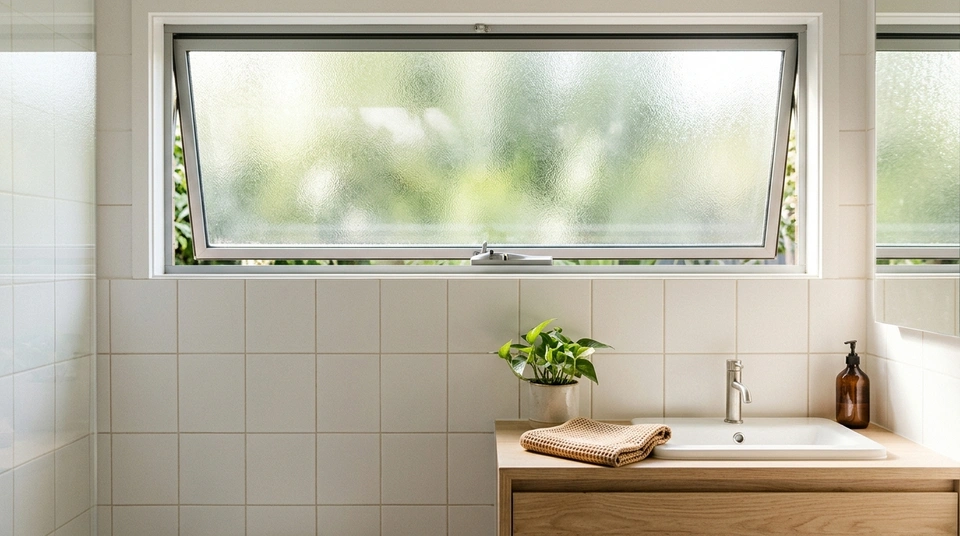
AI-generated illustrative image. Not a product test, certification record or project evidence.
Obscure glass scatters light instead of passing a clear view, and for a bathroom the practical options are a rolled pattern such as Satinlite, Cathedral or Spotswood, an acid-etched pane, a translucent laminate, or a film applied to existing glass. Any of the glass options can be built into a double glazed unit with a Low-E coating, and the unit still carries a rated U-value and SHGC. Two things decide the specification: how private the pattern really is, and the safety glass rule near a bath or shower.
Most advice online stops at picking a pattern. The question that decides the quote is narrower: can that patterned pane sit inside the sealed unit you are being quoted, and does it cost any energy performance? It does not, provided the unit is assembled properly. What changes is which surface carries the texture and which carries the coating.
Key takeaways. Satinlite, Cathedral and Spotswood are the widely stocked rolled patterns; acid etch and translucent laminate are the non-patterned options. Privacy depends on the pattern, the viewing distance and which side is brighter, so a light texture can show a silhouette at night. A patterned pane can be the inboard pane of a double glazed unit, and the unit keeps the same U-value and SHGC as a clear one. NCC 2025 clause 8.4.6 requires Grade A safety glazing below a 2.0 m sight line, and AGWA says both panes of an IGU must comply. An awning window pairs best with obscure glass here, because the top-hinged sash sheds light rain while the room is vented.
Three ways to make a bathroom window obscure
Rolled patterned glass has a pattern pressed into one surface by a roller while the glass is semi molten. The texture is part of the glass, so it cannot peel, and most patterns can be toughened to Grade A safety glass. National Glass and Glass Australia describe the process this way. Acid-etched glass is treated to a flat satin finish instead, which obscures just as thoroughly and is easier to keep clean in a room full of soap film. Translucent laminated glass uses a white interlayer and carries the safety benefits of lamination.
Applied film is the cheapest option and the most reversible, which suits a rental, but it is the one most likely to lift at an edge in a steamy room, and film makers commonly exclude textured glass.
Which obscure glass pattern is the most private?
Three names appear across almost every Australian supplier range: Satinlite, Cathedral and Spotswood. Jason Windows lists them as its obscured forms, Stegbar lists the same three, and National Glass and Ventora Glass stock them. Thickness depends on the pattern, with 4 mm, 5 mm and 6 mm between them. Wider ranges add Everglade, Seadrift and Kosciusko.
Privacy is usually graded from 1 to 5, where 5 obscures most. On Patterned Glass Perth's scale, Cathedral and Medium Reed sit at 2, Spotswood and Kosciusko at 4, and Everglade and Seadrift at 5. Satinlite is not on that list, but glaziers describe it as a fine even texture and the most private of the common three, and Affordable Glass Online grades it highest of the patterns it sells.
Treat those grades as a starting point. Privacy depends on the pattern, the distance to the nearest pair of eyes, and which side is brighter. In daylight the outdoors is brighter, at night the room is. Look at a sample at the distance your neighbour would stand, then again after dark.
Can obscure glass go inside a double glazed unit?
Yes. The usual build is one patterned pane and one clear pane, sealed with an argon filled cavity between them. Australian Glass Group publishes patterned double glazed combinations alongside its clear ones, using a 12 mm argon gap, so this is a stocked configuration rather than a special order.
The patterned pane is normally the inboard lite, on the room side. Clayton Glass explains why: a texture facing outward collects dirt and moss, so it is kept where it can be cleaned. Some units turn the texture into the cavity instead, leaving both outer faces smooth. Neither changes thermal performance, but the glazier should state which surface carries the texture and which carries the coating.
Low-E is the part that needs care. A soft coat low-e is designed for surface 3, counting from outside, the cavity face of the inner pane. When a textured pane takes the inner position the coating usually moves to surface 2. Clayton Glass states the U-value is unchanged by that move.
What obscure glass does to a window's energy rating
Nearly nothing, at glass level. Australian Glass Group publishes both clear and patterned versions of the same build. Its 5 mm patterned unit with a 12 mm argon gap and low-e gives 79 per cent visible light transmission, a U-value of 1.4 W/m2K, an SHGC of 0.58 and an Rw of 33. The clear equivalent is identical, and the 4 mm and 6 mm versions track the same pattern.
Two cautions. Those figures are glass-only, at the centre of the pane. A whole window rating is worse because the frame conducts heat, and that is what a WERS certificate reports. SMIRO's awning windows sit at a whole-window U-value of 2.5 to 3.5 W/m2K. Second, a pattern that cuts too much light makes you switch the lights on, and YourHome warns that costs more than it saves.
SMIRO builds double glazed units as 5 mm plus 9 mm argon plus 5 mm, 5 mm plus 12 mm argon plus 5 mm, or 5 mm plus 20 mm argon plus 5 mm with a thermal break on the Comfort series. Low-E, laminated and acoustic glass are available on request. The pattern comes from the glazier's range, so ask for the WERS label for that combination.
Safety glass rules near a bath or shower
A bathroom window is a human impact location under the National Construction Code, and the trigger is a height. NCC 2025 Housing Provisions clause 8.4.6 requires all glazing in bathrooms, ensuites and spa rooms, including associated windows, to be Grade A safety glazing where the lowest sight line is less than 2.0 m above the highest abutting floor, bath or shower base. An exposed edge needs toughened glass at least 6 mm thick.
A double glazed unit gets no exemption. AGWA's Guide to Glass and Glazing states that where an IGU sits in a location subject to human impact on either side, both panes must meet the human impact requirements of AS 1288 as amended. In a bathroom both sides are reachable, so both panes are normally toughened.
Why an awning window suits a bathroom
A bathroom needs daylight, privacy and ventilation, three things that usually fight each other. An awning window, hinged at the top and opening outward at the bottom, resolves them better than most. The open sash forms a small canopy over its own opening, so light rain runs off rather than in. Heavy or wind driven rain still means closing it.
The sash closes onto a compression seal all round, which is what makes an awning more airtight than a slider. Mount it high on the wall, glaze it in an obscure pattern, and the sightline from outside passes above head height while steam still escapes.
Choosing the glass for a bathroom window
Work in order. Start with safety: is the lowest sight line under 2.0 m, and is any edge exposed? Then privacy, from a sample at night. Then energy: the unit make-up, the coating and the surfaces. A quote naming the pattern and coating leaves nothing to guess at.
Frequently asked questions
What type of obscure glass is best for a bathroom window?
It depends on how close the nearest viewer is. For a ground floor window onto a footpath, choose a dense pattern such as Spotswood, Everglade or Seadrift, or an acid-etched or translucent laminated pane, because these hold up after dark. For a high window with no close sightline, Satinlite or Cathedral lets more light through.
Can you see through obscure glass at night with the light on?
Often yes, at least as a silhouette. Obscure glass scatters light, and the brighter side is always the more visible side. During the day that is the outdoors; at night, with the bathroom light on, it is the room. A heavier pattern, or a blind left open, handles this better than a light texture.
What obscure glass types are available in Australia?
The three most widely stocked are Satinlite, Cathedral and Spotswood, in 4 mm, 5 mm and 6 mm depending on the pattern. Suppliers also carry Everglade, Seadrift and Kosciusko depending on state. Acid-etched and translucent laminated glass are the non-patterned alternatives.
Can you put frosted film on a bathroom window?
On clear single glazing, usually yes, and it is the cheapest fix for a rental. On a double glazed unit, check first: many manufacturers exclude applied film from their seal warranty without written consent, because film changes how much heat the glass absorbs.
Does obscure glass block heat or UV?
The pattern itself does very little to either. Australian Glass Group's patterned and clear units share the same U-value and almost the same SHGC, so texture is not a solar control measure. Heat rejection comes from the coating, the tint and the cavity, and UV is best handled by lamination.
Obscure glass does three jobs at once, and it only does all three when it is specified rather than assumed. Decide the safety requirement from the height of the glass, choose the pattern from a sample at night, and put the pattern and the coating in the same unit. Then ask for the WERS label.