
Cost & Practical Guides
Are thermally broken aluminium windows worth the extra cost?
By Sheng Xu · 27 October 2026
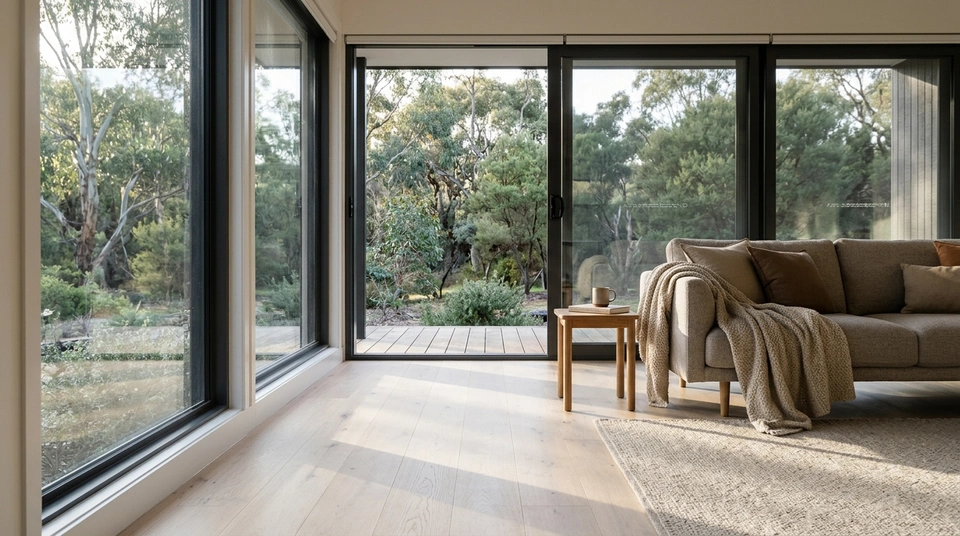
AI-generated illustrative image. Not a product test, certification record or project evidence.
Are thermally broken windows worth it? In a heating-dominated climate such as Melbourne or the Adelaide Hills, usually yes, because the frame is the part of the window double glazing cannot fix. In Adelaide metro the case is softer, and in Brisbane the money goes further on glass and shading first.
Most people reach this question holding a quote. The thermal break is a line item, or the gap between a standard and a premium range, and the difference is a few hundred dollars a window. The honest comparison is not the break against nothing, but the break against what the same money buys inside the window. Where the house sits decides which wins.
Key takeaways. A thermal break insulates the frame, a modest share of window area but a larger share of heat flow. It matters most in cool climates and least in hot ones. It is the one upgrade here that reliably lifts the winter temperature of the frame surface, which is why it changes condensation. Australian premiums run to a few hundred dollars a window, and published percentages are not comparable.
What the frame changes, and what your glazing cannot
A window is not one material. Whole-window U-value, the figure WERS publishes, takes in glass, frame, seals and spacers, and AGWA notes that ratings for Australian products generally fall between 2.0 and 10.0 W/m2K. Double glazing improves the glass part and leaves the frame untouched. Lawrence Berkeley National Laboratory research puts frames at roughly 20 to 30 per cent of window area, while their share of heat transfer can be larger than their share of area, and larger again once the glass is well insulated.
A thermal break is a low conductivity section bonded between the inside and outside aluminium, so the frame stops behaving as one continuous piece of metal. The thermal break explainer covers the construction. What matters here is that the improvement is local to the frame. It cannot change how much sun comes through the glass, and it cannot stop air leaking around a poor seal.
Heating-dominated climates: Melbourne and the Adelaide Hills
The NCC puts Melbourne in climate zone 6, and the Adelaide Hills council area in zone 6 as well, while the Adelaide plains are zone 5. YourHome is direct about these climates: in cool climates the key driver of energy use through glazing is the U-value, because it governs heat loss. This is where the frame premium has its clearest case, since the frame is a permanent conductor on every elevation.
What changes in practice is the interior surface. A plain aluminium frame in a zone 6 winter runs close to the outside temperature and draws heat out along its whole perimeter. A broken frame interrupts that path, so the inner face stays warmer and the cold band around the edge goes away.
What glass alone cannot fix is exactly that perimeter. A good double glazed unit in a plain aluminium frame can still sweat on the frame and still lose heat through it. The two upgrades solve different halves of the problem, which is why a quote that adds better glass while keeping the standard frame is not the same product. If the budget is fixed in a zone 6 house, the usual order is glass first, then the thermal break, then seals and installation.
Mixed climates: Adelaide metro
Adelaide sits in zone 5, where heating and cooling both shape the year. The frame premium is a smaller share of the annual result than in zone 6, because the heating season is shorter and cooling carries more of the load, and cooling is largely a solar problem rather than a conduction one. YourHome's guidance for temperate climates is high SHGC glazing on north faces that is properly shaded.
The condensation argument still holds in winter, which is why many Adelaide owners tick the box. The economic argument is thinner. Where the quote already includes good glass and the house is air-conditioned, the break is a durability purchase rather than a bill reduction.
Cooling-dominated climates: Brisbane and south east Queensland
Brisbane is climate zone 2. YourHome is explicit that in hot climates from Brisbane north, SHGC matters more than the glazing U-value. A thermal break does very little about solar gain, because heat arriving as sunlight through the glass never passes through the frame on its way in.
That does not make the break pointless in Queensland. It still helps in air-conditioned houses that run the heating on cold mornings, in shaded south-facing rooms, and in the shoulder season when cool nights and warm days condense on metal frames. But the order of spending changes: shading, low SHGC glass and good seals come first, and the break is a later refinement. If a schedule offers either a thermal break or better glass for similar money, and the house has unshaded west or north glazing, the glass will do more in zone 2.
Frame condensation is the benefit that survives a long payback
Forum arguments about the break usually become a payback calculation, and on that measure it often loses. The calculation prices energy only. Condensation is the other half of the benefit and never appears in the sum.
AGWA's condensation fact sheet sets out the mechanism: condensation forms when a surface is colder than the dew point of the air around it. At 23 degrees indoors and 50 per cent relative humidity, that dew point is about 12 degrees. AGWA also notes that condensation may form on metal window frames before it appears on the glass, which matches what people see in a cold bedroom. YourHome adds that aluminium frames form a thermal bridge and are prone to condensation, and that thermally broken aluminium may reduce it.
This is a durability benefit as much as a comfort one. Water sitting on a frame runs down onto reveals, sills and plaster, and NCC 2022 requires that risks from water vapour and condensation be managed to minimise their impact on occupant health. The honest limit is that a break reduces frame condensation rather than eliminating it. A bedroom with poor ventilation will still produce water on the coldest surface in the room.
Where the money is better spent if the answer is no
If the climate case is weak, four other purchases return more per dollar, and the energy-efficient aluminium windows guide sets out how the whole assembly fits together. Glass matched to orientation comes first, in hot climates SHGC dominates, and in cool climates a Low-E coating and a wider argon gap lift the glass without touching the frame. External shading comes second and is often cheapest, because an eave or blind stops summer sun before it reaches the glass. Seals and airtightness come third, since a window that leaks around the sash loses more heat than one with a worse frame, and the comparison of opening style and air leakage shows how much the sash design decides. Installation quality is the fourth: the junction between frame and wall is a thermal bridge whatever the frame.
The curtain counter argument deserves an answer. Heavy curtains and pelmets do improve the inside face of a window and cost far less. They also leave the frame cold, so the reveal still condenses, and they do nothing when the curtain is open.
What a thermal break actually costs
Australian installers publish actual numbers. Berwick Window Replacement, working in Melbourne's outer east, lists the thermal break as a premium of 250 to 400 dollars per window over standard aluminium. EZ Windows quotes supply only at 650 to 1,200 dollars plus for thermally broken aluminium, against 450 to 950 dollars for double glazing on a standard frame. Smart Doors and Windows quotes installed thermally broken windows from 1,000 to 1,500 dollars, against 700 to 1,200 dollars for a standard casement.
Published percentage premiums are scattered, from single digits to about 40 per cent, because each is measured against a different baseline. Some compare bare frames, some compare glazed windows, and some fold the glass upgrade into the frame premium. Ask for two quotes with identical glass, hardware and installation scope, one with a thermally broken frame and one without. Then the difference is real.
Frequently asked questions
Are thermally broken windows worth it if I already have double glazing?
They address different parts of the window. If your glazing is good and your frame is plain aluminium, the break is the upgrade that remains. If both are already in place, there is nothing left to buy here.
Is a thermal break worth it in Brisbane?
Less often than in Melbourne. Brisbane is climate zone 2, where solar control through the glass matters more than frame conduction. It is still useful in air-conditioned homes, in shaded south-facing rooms, and wherever winter condensation on frames is a problem.
Why does my thermally broken frame still have condensation?
Because condensation is a humidity problem first. A thermal break raises the frame surface temperature, which buys margin, but where indoor humidity is high and ventilation is poor, water will still form on the coldest surface. Reducing moisture at the source and ventilating the room is what fixes it.
Can I add a thermal break to my existing windows?
No. The break is part of the extrusion, and the frame is manufactured as one unit. Existing windows can be improved with seals, draught proofing and glazing changes, but the frame itself would need replacing.
How do I check that a quote really includes a thermal break?
Ask for the frame system name and the WERS certificate for the exact frame and glass combination. The certificate shows the whole-window U-value, which includes the frame. If the supplier cannot produce one for the combination on your quote, the claim is unverified.
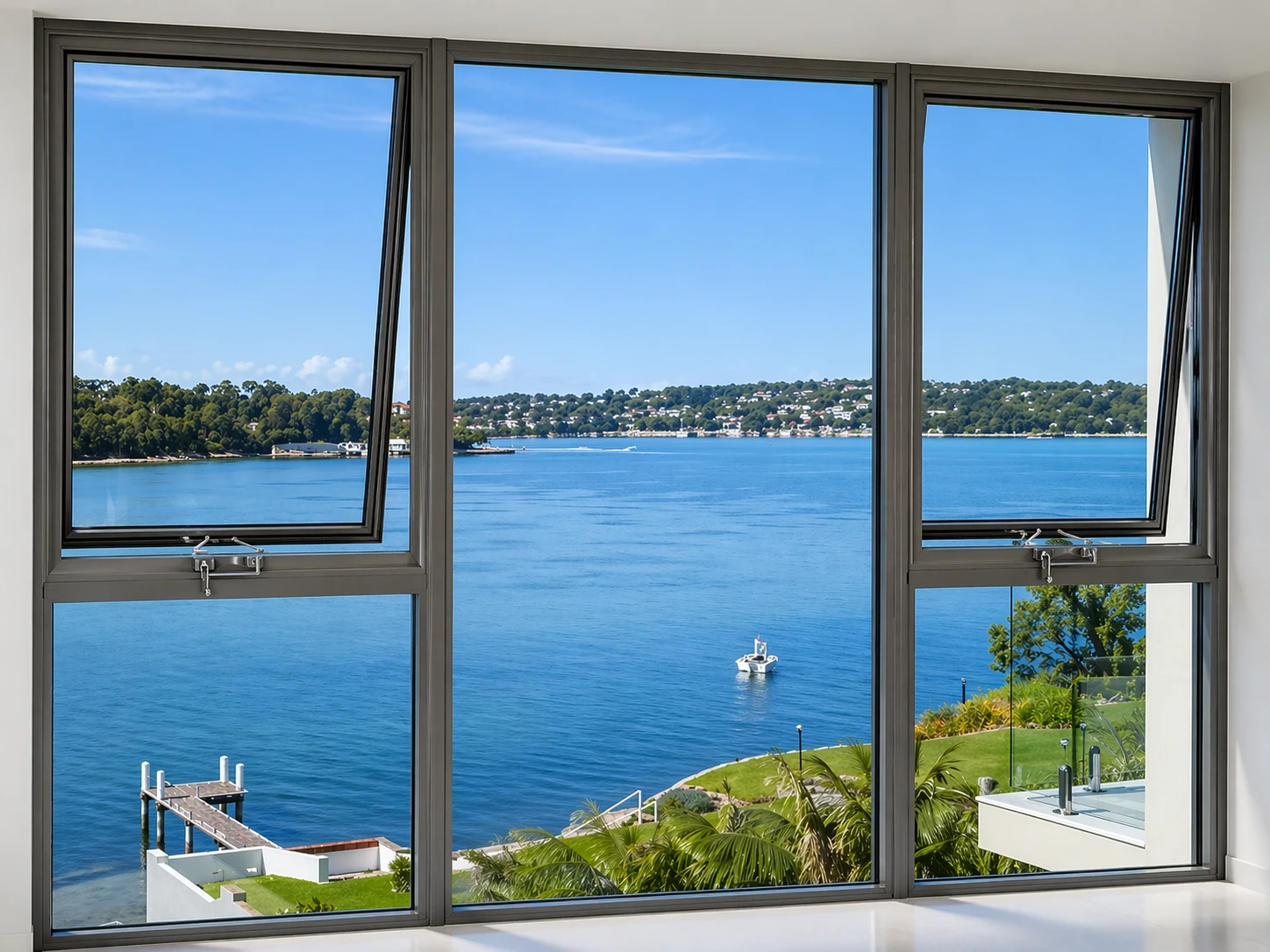
Every SMIRO series is tested to AS 2047, and every series on sale is WERS-rated. The Comfort series is the thermally broken option, and the awning window is where the sash closes against compression seals, so the frame and the seal do their work together. Ask for the WERS label for the exact glass and frame on your quote, then compare it with the alternatives on the same basis. If a rebate is part of the budget, check the current glazing rebates before you choose the frame.
Our Products
Awning Windows
View system
Fixed Windows
View system
Louvre Windows
View system
Sliding Windows
View system
Sliding Doors
View system