
Energy & Thermal Performance
How do you read a WERS rating label, and what does each figure on it actually measure?
By Sheng Xu · 27 October 2026
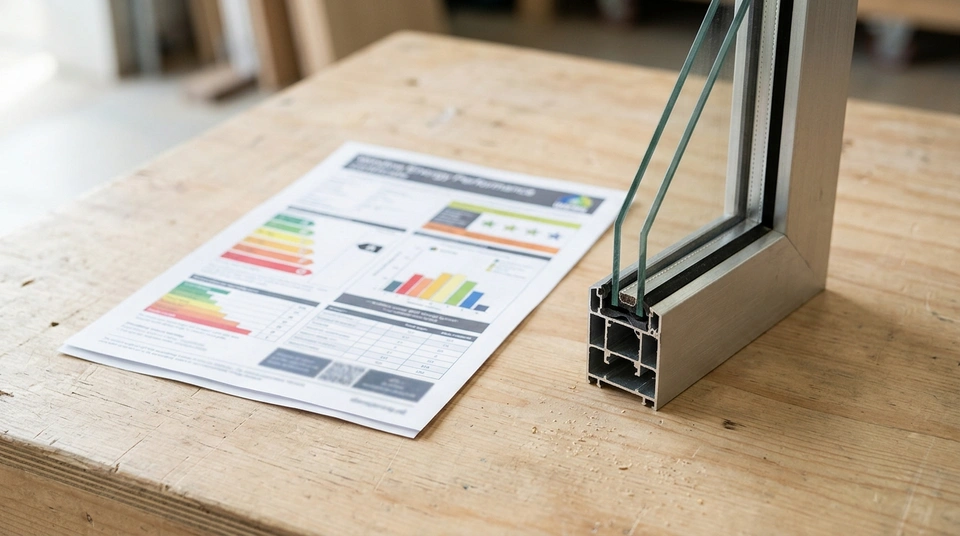
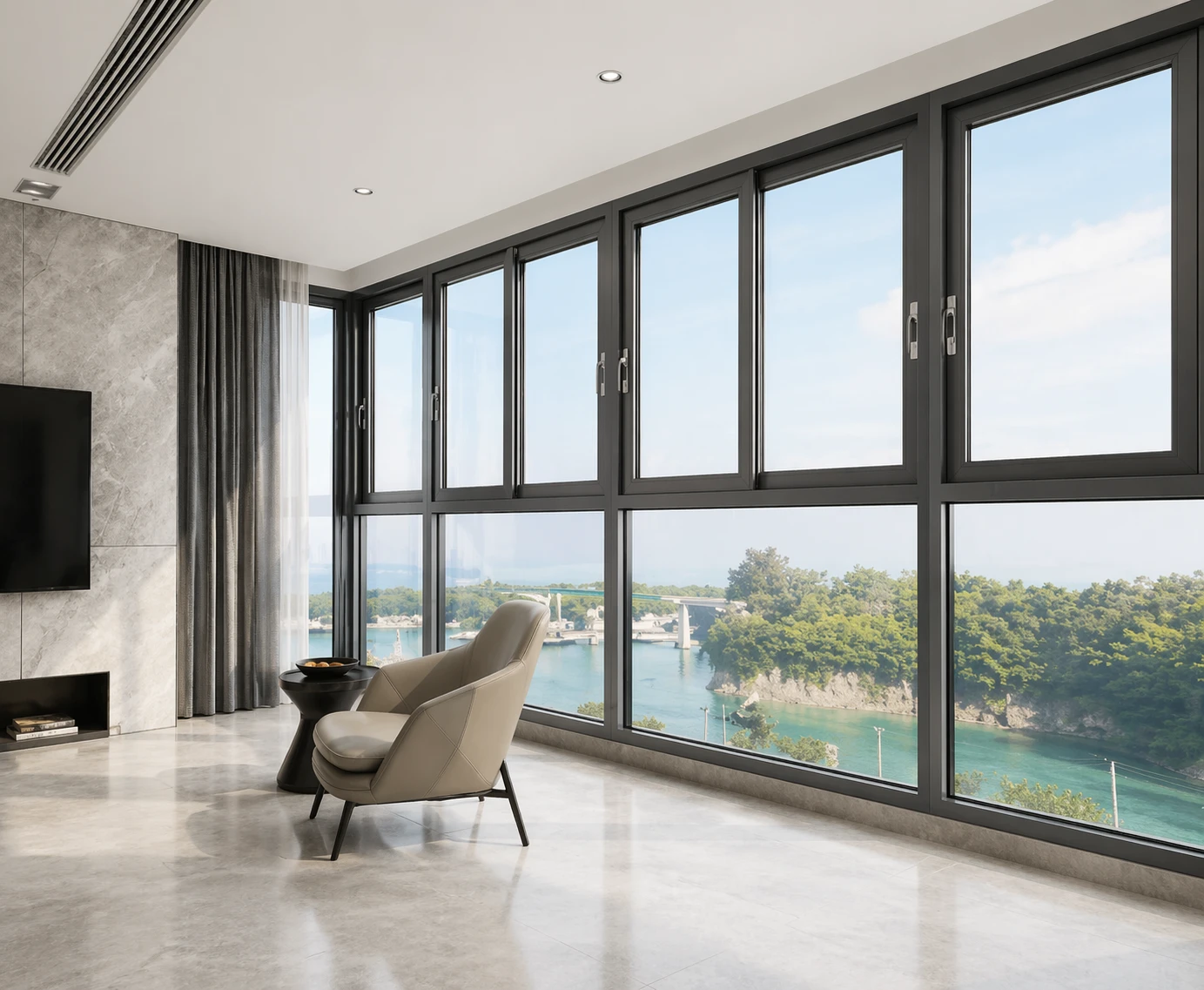
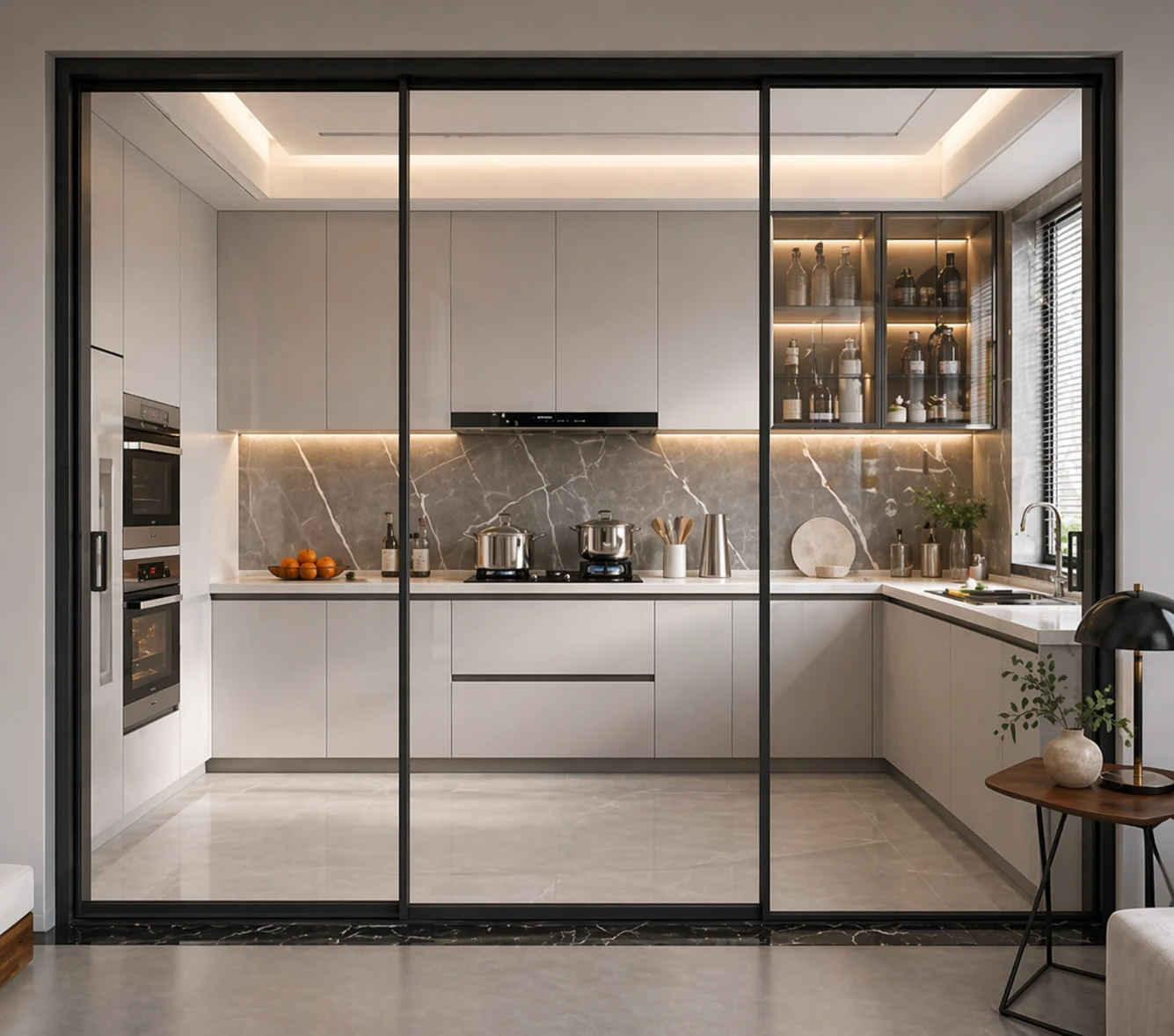
AI-generated illustrative image. Not a product test, certification record or project evidence.
A WERS rating is a third-party, whole-window energy rating issued under the Window Energy Rating Scheme. It reports two star bands, one for heating and one for cooling, plus the whole-window Uw, SHGCw, Tvw and air infiltration for one specific frame and glass combination. The stars compare that product with a plain single-glazed aluminium window on a model house, and each figure underneath measures something different.
A good window quote arrives with two documents. One is the AS 2047 certificate, covering wind, water and structural performance. The other is the WERS certificate, which says what the window will do to a house's energy use. Most buyers file both and read neither. The second is the one to read before you sign, because it is the only place where a supplier's performance claim has been checked by someone else.
Key takeaways. A WERS certificate rates a complete window, not a pane of glass. Read the whole-window Uw, the whole-window SHGCw and the heating and cooling stars together, and check that the certificate names the exact frame, glass and size on your quote. A glass-only U-value in a supplier quote is not a WERS figure, and the same glass in two frames gets two different ratings. Every SMIRO series is tested to AS 2047 and WERS-rated, and the label for your exact combination is the document to ask for.
What a WERS rating actually certifies
The Window Energy Rating Scheme is managed by the Australian Glass and Window Association, and its ratings come from organisations accredited by the Australian Fenestration Rating Council. AFRC protocols are the ones the construction code references, so a certificate figure was produced by a third party from the manufacturer's specifications, not by the supplier.
A certificate carries three levels of information: heating and cooling stars, indicative percentage reductions, and thermal and optical data. Only the stars are building-specific, because they describe annual energy impact on a model house. The U-value, SHGC, visible transmittance and air infiltration figures describe the product itself.
Reading the label field by field
The two star bands
Heating and cooling are rated separately, each from zero to ten stars. AGWA describes the scale as a ranking against 17 generic window types, with 3 mm clear glass in a standard aluminium frame as the base case. Zero stars means the product is about as bad as that window for that purpose; ten is the theoretical best.
The bands move independently. A tinted unit that keeps summer sun out can score well for cooling and poorly for heating, because the coating blocking summer heat also blocks winter warmth. Below the stars, the same comparison appears as two percentages: a certificate reading 52 per cent better for cooling and 33 per cent better for heating is the same result in a different unit.
Uw, the whole-window U-value
Uw accounts for the frame, the edge of the glass and the centre of the glass together, at standard test sizes. Lower is better in every Australian climate, and the whole-window U-value guide covers how the number is built up. AGWA separates Uw for the whole window, Uc for the centre of the glass and Uf for the frame.
SHGCw, the whole-window solar heat gain coefficient
SHGCw is a decimal between zero and one describing how much solar heat passes through the frame and glass together, with no centre-of-glass distinction. Lower is better in a cooling-dominated climate, but in a heating-dominated one a very low figure throws away useful winter sun. The SHGC explainer sets out that logic.
Tvw, air infiltration, and what the label omits
Tvw is whole-window visible transmittance: the glazing's visible transmittance multiplied by the ratio of glazing area to frame area. Air infiltration is measured in litres per second per square metre at 75 pascals and comes from the AS 2047 test report. Opening type shows up here: AGWA notes it has little direct effect on U-value or SHGC but a significant effect on leakage, and awnings and casements leak less than sliders.
The label does not show your house, your orientation or your installation, and it does not print a column of star ratings for each climate zone, which is a common assumption. It prints one heating band and one cooling band.
What the climate zones change, and what they do not
AGWA groups the construction code's climate zones into three bands for its selection guides: zones 1 to 3 hot, 4 and 5 mixed, 6 to 8 cold. The cold-zone guide, covering most of Victoria, the ACT, Tasmania and southern New South Wales and Western Australia, recommends a low U-value and a high SHGCw. The hot-zone guide recommends a low U-value and a low SHGCw.
What changes is which band you weight, and what target you are hitting. In a new build, the energy report from NatHERS software or BASIX sets the whole-window U-value and SHGC each opening must meet. AGWA gives the rule plainly: the installed U-value must be lower than or equal to the report figure, and the SHGC within 10 per cent of it.
Why the same glass gets two different ratings
Because the frame is inside the rating. A glazed unit does not carry a Uw, an SHGCw or a star band on its own. Put the same unit in a thermally broken frame and in a plain aluminium frame and the whole-window figures diverge, even though the glass did not change. That is why the certificate names the frame system and the glazing make-up together.
The published directory shows the pattern. An A&L thermally broken awning window with 6 mm clear, an 8 mm argon gap and 6 mm grey glass carries a Uw of 3.00, an SHGCw of 0.41, 6.10 heating stars and air infiltration of 0.46. An Alspec ViewMax sliding window in a different frame carries a Uw of 3.40 and 4.50 heating stars. To compare frames, find entries with the same glazing code and look at the Uw each produces.
A WERS rating is not an AS 2047 certificate
AS 2047 is the Australian Standard for windows and external glazed doors in buildings. It sets requirements for materials, construction, installation and glazing, and compliance is shown by testing to the AS 4420 series: deflection under wind load, operating force, air infiltration, water penetration resistance and ultimate strength. It says nothing about heat flow. A WERS rating covers energy performance and feeds NatHERS. A compliant window needs both documents, and air infiltration is the one figure that crosses between them.
Comparing two quotes in practice
Find three things on each quote first: the frame series and opening type, the glass make-up written pane by pane in millimetres, and the performance figure the supplier printed. If any is missing, that is the first question to ask, before price.
Then ask each supplier for the WERS certificate for that exact combination. Not the brochure, not a star badge, and not a figure copied from another product in the range. If the combination has no listing, the supplier should say so rather than substitute a rating.
Compare Uw first in a heating-dominated climate, SHGCw first in a cooling-dominated one, and check air infiltration if either quote is for sliding windows. Treat any figure described as a glass U-value as a component number, not a WERS figure. Watch for two red flags: one rating for every window in the house including sliders, awnings and doors, and a U-value that looks unusually low for the frame offered. AGWA says results calculated to overseas protocols are not certified here, so an imported number cannot be read alongside a WERS one.
Every SMIRO series on sale is WERS-rated and tested to AS 2047. The practical use of that claim is the one to make of any supplier: ask for the WERS label for the exact glass and frame combination on your quote, and read it before you compare prices.
The Victorian rebate threshold
Rebates are where the star bands start being money. Victorian Energy Upgrades Activity 13 covers double glazed windows, and the criteria are specific. The product must comply with AS 2047 and AS 1288, have a total U-value of not more than 4, be WERS rated and labelled to at least 4 stars for heating, and be listed on the VEU register of approved products. The regulations also set a 5 square metre minimum.
Two conditions are read straight off the certificate: the total U-value and the heating band. The cooling band is not part of the test, so a product sold on summer performance may not clear a heating-based threshold. In label order: check the Uw field is 4.0 or lower, check the heating band reaches four stars, confirm the certificate names the same frame and glazing, then check the VEU register. The indicative household discount is up to $210 for 10 square metres of replacement, or $140 for secondary glazing, per the Victorian government page updated in October 2026.
Frequently asked questions
What is a good WERS rating?
There is no single good number, because the two bands measure opposite problems. In a heating-dominated climate a strong heating band is what you want; in a cooling-dominated climate it is the cooling band. In a mixed climate such as Sydney, Perth or Adelaide you want both to be respectable.
Is the WERS rating the same as the U-value on my quote?
Only if the quote says whole-window, usually written Uw. A glass-only U-value describes the centre of the glazed unit and excludes the frame, the glass edge and the seals, so it usually looks better than the whole-window figure for the same product.
Why do two quotes with the same glass have different star ratings?
Because the frame, the seals and the opening type are all inside the rating. The same glazed unit in a thermally broken awning frame and in a plain aluminium slider produces different whole-window figures and different stars.
Does a WERS rating mean the window complies with AS 2047?
No. AS 2047 is the product standard for wind, water and structural performance, tested to the AS 4420 series. A WERS rating covers energy performance only. A compliant window should produce both documents, and neither substitutes for the other.
Buy the label, not the adjective
A WERS rating is useful for one thing: it lets you compare two windows on the same terms. The certificate names the product, prints the whole-window figures calculated from it, and puts the star bands beside the base case so you can see what the improvement is measured against. Ask for it for the exact combination on your quote, then read the two figures that matter in your climate. If it cannot be produced, the claim has not been checked by anyone.
Our Products
Awning Windows
View system
Fixed Windows
View system
Louvre Windows
View system
Sliding Windows
View system
Sliding Doors
View system